Da NangVietnam
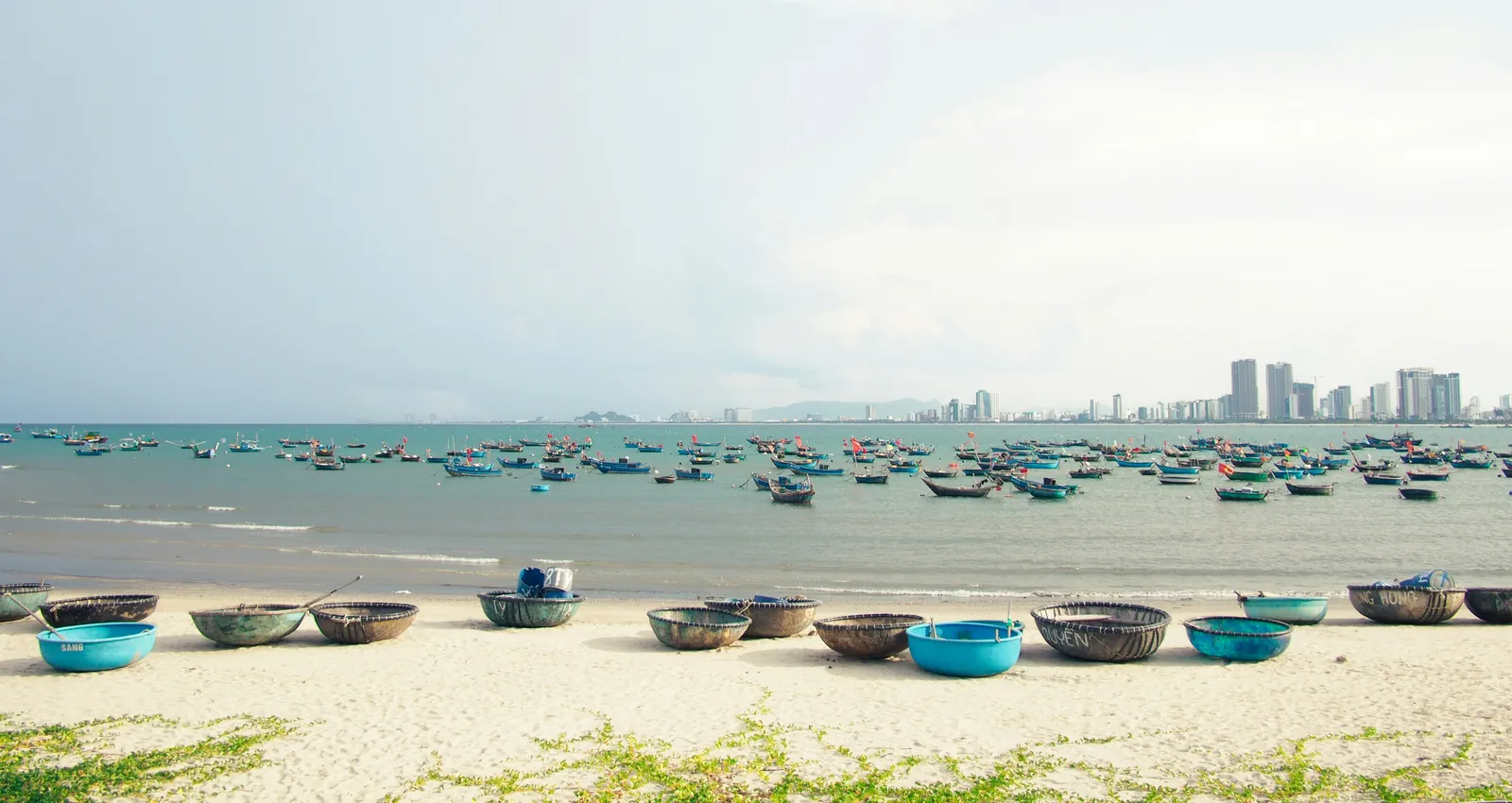
A long city beach, with the old town of Hoi An about 30 km away.
- A month, couple
- About A$2,470
- Weather
- Drier February to August

A 90-day eVisa covers a winter away. Day-to-day costs are low and the beaches are long.

Checked 21 October 2026, re-checked monthlyBy the Retirees Abroad teamGeneral information only, how we check
The short answer
Our estimate for a month in Da Nang is about A$2,470 for a couple or A$1,810 for one person, rent included (October 2026). Australians need an eVisa before they fly, for up to 90 days, and Vietnam has no retirement visa. Your Age Pension keeps paying, but Medicare never pays for treatment in Vietnam.
Costs are mid-range estimates in Australian dollars, rent included, for a comfortable month. For comparison, a comfortable month in Australia is about A$6,580 for a couple who own their home (ASFA, June quarter 2026).
Vietnam suits you if you want a winter away of up to 90 days, or a string of long stays with trips out in between. Day-to-day costs are low by Australian standards. The centre has long beaches, and Ho Chi Minh City has the widest choice of private hospitals.
Staying for years is the hard part. Vietnam has no visa for retirees, and the 2025 changes to its immigration law didn’t add one. You can’t apply for an eVisa from inside the country, so each new one means leaving and coming back. Our guide to retirement visa ages by country shows where the options are wider.
Health care is the other thing to weigh up. Smartraveller says the standard is generally below Australia’s and care at most public hospitals is poor. Serious cases can mean evacuation to Bangkok or Singapore.
On property, foreigners can own a flat or a house in a commercial housing project for up to 50 years, extendable once, but never land.
Our estimate for a month in Da Nang is about A$2,470 for a couple and A$1,810 for one person, rent included.
| A month in Da Nang | Couple | One person |
|---|---|---|
| Rent, one-bedroom flat in the centre | A$750 | A$750 |
| Living costs (food, transport, bills) | A$1,150 | A$640 |
| Eating out, local trips and extras (30%) | A$570 | A$420 |
| Total | A$2,470 | A$1,810 |
For a couple
About A$4,110 a month less than a comfortable month in Australia.
For one person
About A$2,870 a month less than a comfortable month in Australia.
Not built the same way: Australia's figure (ASFA Retirement Standard, comfortable, June quarter 2026) assumes you own your home and includes health insurance; our estimate for Vietnam includes rent and leaves health insurance out. Age Pension: the most paid in Australia from 20 September 2026; living overseas for good, the base rate is about A$3,710 a month for a couple and A$2,460 for one person.
Our estimate: Numbeo’s living costs for one person (without rent) plus a one-bedroom city-centre rent, plus 30% for eating out, local trips and extras. For a couple, living costs times 1.8. Converted at the Reserve Bank of Australia’s average exchange rate for the 12 months to September 2026 (A$1 = 18,160 dong). Health insurance is not included. Numbeo’s Da Nang page, updated 19 October 2026, puts living costs for one person at about 11.6 million dong a month (about A$640) and a central one-bedroom flat at 13.6 million dong (about A$750).
Short furnished lets usually cost more than the long-term rent in this table. Our guide to what retiring overseas really costs compares a month in Da Nang with Penang, Chiang Mai, Hua Hin, Bali and the Algarve.
Against the Age Pension. After 12 weeks away, the most the pension pays is the base rate: about A$2,460 a month for one person and A$3,710 for a couple. Both are before tax, at rates from 20 September 2026. In Australia the most it pays is about A$2,680 and A$4,040. The base rate is about A$1,240 a month more than our Da Nang estimate for a couple, and about A$650 more for one person, before health insurance.
What costs more than you’d expect. Health cover is the big one, and our estimate leaves it out. Smartraveller says international health insurance can be costly, and with a pre-existing condition you may not get it at all. Electricity is sold in six steps, so each unit costs more the more you use. On the rates set in May 2025, VTC News worked out that a household using 400 kWh in a month pays about 1.16 million dong (about A$64), VAT included. Da Nang’s average high is 33°C or more from May to August, so the air conditioning works hard. Then there are the trips out of Vietnam for each new eVisa: US$25 (about A$36) for single entry or US$50 (about A$72) for multiple entry, plus the flights.
Renting long term. Expat Arrivals, a guide for people moving abroad, reports that one-year leases are the most common. Rent is paid monthly or a quarter in advance, and the deposit is one to three months’ rent. Ending a lease early takes 30 days’ written notice unless the lease says otherwise, and most rentals come furnished. On our rent figure, a quarter in advance plus a month’s deposit comes to about A$3,000 at signing.
Smartraveller says hosts must register foreign guests with the local police, so a landlord registers you as a tenant. Good questions before you sign: what the rent covers, how the power bill is worked out, and who pays for repairs.

You need a visa for any stay in Vietnam, and Smartraveller says Australians can’t get one on arrival. There is no visa for retirees, so without family, work or investment ties a long stay means a string of eVisas, with trips out of the country in between.
Visiting. The official eVisa site, run by Vietnam’s Immigration Department, gives up to 90 days, with single or multiple entry. It costs US$25 (about A$36) for single entry and US$50 (about A$72) for multiple entry, paid online and not refunded if the visa is refused. You can apply up to a year ahead, and the eVisa has to end at least 30 days before your passport expires. Smartraveller says your details must match your passport exactly, and suggests printing the approval.
Fake visa sites. The Immigration Department names two official addresses, evisa.gov.vn and thithucdientu.gov.vn, and warns that other sites may charge fees it doesn’t allow. Smartraveller says travellers have been scammed by private online visa services and travel agents.
Staying longer. You can’t apply for an eVisa while you are in Vietnam, the Immigration Department says, so a new one means leaving first. Smartraveller adds that extensions are possible only before your visa expires, with at least 6 months left on your passport. You can’t switch to a different type of visa inside Vietnam, either. The eVisa site says a holder may get a new visa if a person or organisation in Vietnam invites or guarantees them.
Longer residence is tied to investment, work or a Vietnamese family member. The 2025 amendment to the immigration law (Law 118/2025/QH15) added visas for skilled digital workers and their families, but no route for retirees, Vietnam’s State Management Journal reported in August 2026.
What the visa allows. An eVisa is for a visit; working needs a work permit, the Immigration Department says. Smartraveller says every foreigner must be registered with the local police within 24 hours of arriving. Hotels do this at check-in, and in a private home your host does it.
If your partner is Vietnamese. Smartraveller says a person whose spouse or parent is a Vietnamese national can apply for a visa exemption certificate. No visa here depends on your age, so a younger partner is on the same footing as you. If you are partners but not married, ask what applies to you.
Documents to get in Australia before you go. If you plan to apply for a residence card, ask which papers it needs while you are still in Australia. An Australian Federal Police national police check costs A$57, and the AFP says most online checks arrive within a few days; one with fingerprints costs A$114 and takes 15 to 30 business days. DFAT legalises Australian documents with an apostille, for A$105 a document from 1 January 2026, at a passport office by appointment or by mail. Processing times vary, DFAT says.
Vietnam joined the Apostille Convention, which took effect there on 11 September 2026, and the Hague Conference’s status table shows no objection from Australia. Smartraveller’s marriage advice still mentions authentication by Vietnam’s embassy, so ask the office that wants your papers which form it accepts. Smartraveller also says a legalised birth certificate may be needed for someone to be recognised as next of kin for medical consent.
For stays longer than 90 days, Smartraveller points you to a Vietnamese embassy or consulate; a licensed visa agent in Vietnam can also explain the options. Our guide to overseas retirement scams covers the warning signs before you pay anyone.
Services Australia says you may be able to get the Age Pension for the whole time you are outside Australia, even if you move to another country. After 6 weeks away the Energy Supplement stops and your Pensioner Concession Card is cancelled. The Pension Supplement stops completely at 12 weeks (since 20 September 2026). If you lived in Australia less than 35 years between age 16 and pension age, your rate can drop after 26 weeks. Our guide to the 6, 12 and 26-week rules goes through each step.
Vietnam has no social security agreement with Australia. On the day you claim, you must be living in Australia and physically here, so you need to claim the Age Pension before you leave. If you move for good, you get the base rate only from the day you leave: A$29,520.40 a year single, A$44,506.80 for a couple.
Department of Social Services figures released under freedom of information show 103 people getting the Age Pension in Vietnam in December 2025, down from 145 five years earlier. They were paid an average of about A$788 a fortnight each.
Medicare never pays for treatment in Vietnam, and none of Australia’s 11 reciprocal health care agreements is with a country in Asia. If you are an Australian citizen and move overseas, you can still use Medicare for treatment in Australia for up to 5 years after you leave. Visits home do not restart that clock. After 5 years, you re-enrol when you move back. For permanent residents, enrolment ends 12 months after they leave.

Smartraveller says the standard of care varies, is generally below Australia’s, and hospitals may lack medicine and supplies. Foreign private clinics in Hanoi, Ho Chi Minh City and Da Nang may not meet Australian standards either, and care at most public hospitals is poor. Doctors and hospitals expect payment before they treat you, even in an emergency. Some will deal with your insurer; others want the money first.
What is where. The Australian Consulate-General in Ho Chi Minh City keeps a list of hospitals, last updated in July 2026, and it shows how care thins out away from the big cities. Ho Chi Minh City has several international and private hospitals with 24-hour emergency care, and specialist public hospitals. Da Nang has two private hospitals with 24-hour emergency care, a foreign-run family clinic and a psychiatric hospital. Hoi An has a general hospital with a 24-hour emergency service. Nha Trang has a private international hospital and the provincial hospital. The public hospital in Vung Tau lists no English-speaking staff, so you need an interpreter there.
When care means travelling. The ambulance number is 115, but Smartraveller says emergency lines run in Vietnamese only, may be unreliable, and help can be slow to arrive. It says you may need evacuation to a major centre even for minor operations. On Phu Quoc island, the consulate’s list notes helicopter evacuation to Ho Chi Minh City. Serious illness or injury can mean evacuation to Bangkok or Singapore, which Smartraveller says can be very expensive. Its page on retiring overseas puts a medical repatriation at up to hundreds of thousands of dollars.
Your medicines. Smartraveller says some addictive and psychotropic medicines are controlled in Vietnam. It suggests checking each one is legal there, carrying them in the original packs, and asking Vietnam’s embassy about the limits on the value and quantity you bring in. A copy of the prescription and a doctor’s letter with each medicine and dose go with them. Our guide to taking PBS medicines overseas covers the Australian side.
Other health risks. Dengue, Japanese encephalitis and malaria are present, and rabies occurs. Air pollution in the big cities can reach hazardous levels, mostly from January to March, and Smartraveller says it can affect heart and lung conditions.
Which cover. For a visit, Smartraveller says travel insurance must cover all medical costs, including evacuation. A winter away usually means travel insurance for one long trip; our guide to travel insurance for long stays covers age limits and trip caps. Living there means international health insurance instead. Ask an insurer the oldest age it takes new members, whether cover continues as you get older, how it treats existing conditions, and whether it pays for evacuation. Our guide to international health insurance by age lists what to ask. If you’d like help working out where to start, book a free planning session on Zoom.
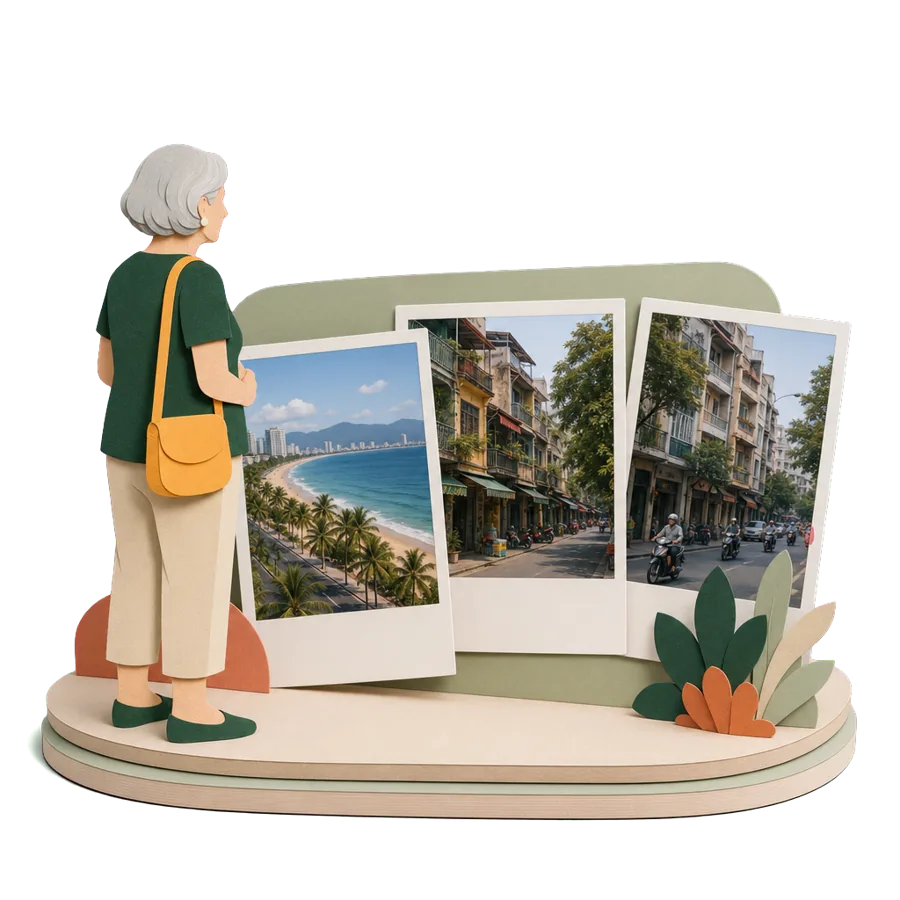
There are no official figures on where Australians settle in Vietnam. Here are six places to compare; driving times are rough.
| Area | What it’s like | Getting around | Hospital | Airport |
|---|---|---|---|---|
| Da Nang | Beach city in the centre; our cost base | Flat; long beachfront; taxis and ride-hailing apps | Two private hospitals with 24-hour emergency care | Da Nang International, in the city |
| Hoi An | Old town about 30 km south, part of Da Nang city since July 2025 | Flat; the old town is walkable | General hospital with a 24-hour emergency service | Da Nang International, about 45 minutes |
| Ho Chi Minh City | The big southern city | Flat; heavy motorbike traffic; ride-hailing apps | Several international and private hospitals | Tan Son Nhat International, non-stop to four Australian cities |
| Hanoi | The capital, in the north, with cool winters | Flat; crowded old quarter; ride-hailing apps | Foreign private clinics | Noi Bai International, non-stop to Sydney and Melbourne |
| Nha Trang | Beach city on a bay on the south-central coast | Flat along the bay; taxis | Private international hospital and the provincial hospital | Cam Ranh International, about 45 minutes |
| Vung Tau | Seaside town, now part of Ho Chi Minh City | Flat near the beaches; taxis | Public hospital with no English-speaking staff listed | None; Tan Son Nhat is about 2 hours |
Da Nang is our cost base, a beach city with the Han River through the middle. Our Da Nang page covers its neighbourhoods.
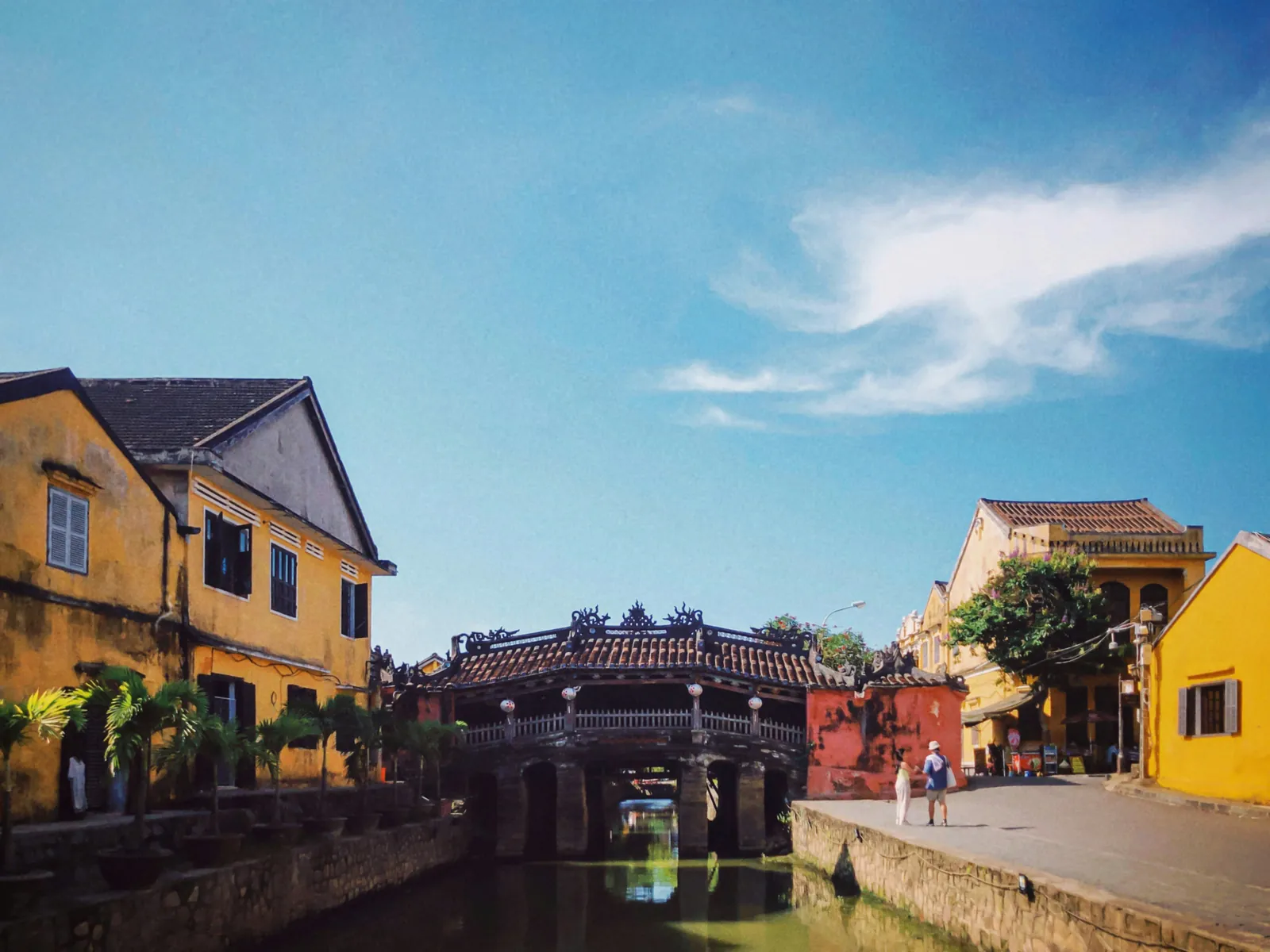
Hoi An is smaller and slower, an old town about 30 km south of Da Nang. It has been part of Da Nang city since 1 July 2025.
Ho Chi Minh City has the widest choice of private hospitals, the Australian Consulate-General and the most non-stop flights home.
Hanoi is the capital, with the Australian Embassy. The average January high is 20°C, and air pollution is worst from January to March.
Nha Trang is a beach city on a bay, with its airport at Cam Ranh to the south.
Vung Tau is on the coast south-east of Ho Chi Minh City and is now part of it. The Long Tan Cross site is nearby, near Ba Ria; the rules for visiting are under Day to day.
Foreigners can rent, and can buy a flat or a house in a commercial housing project, but never land. The US State Department’s 2025 investment report says the state owns and manages all land in Vietnam, and grants rights to use it.
Vietnam’s 2023 Housing Law has been in force since 1 August 2024. A Viet Nam News explainer from April 2026 sets out what it allows. A foreigner who entered Vietnam on a passport can buy, lease-purchase, inherit or be given a flat or a house in a commercial housing project outside defence and security areas. A house in an ordinary street is off limits.
Ownership lasts up to 50 years from the date of the certificate, and the province can extend it once, for up to 50 more. Foreigners can own no more than 30% of the flats in a building, and no more than 250 houses in an area of about 10,000 people. A purchase over those limits, or in a project that isn’t eligible, is invalid and gets no certificate. People married to Vietnamese citizens have wider rights.
A change on the way. A draft revision of the Housing Law, released on 13 September 2026, would limit foreigners to flats, Viet Nam News reported on 2 October 2026. It had not passed when we checked.
Risks to know about. A home in a Vietnamese partner’s or friend’s name is theirs. Smartraveller’s retirement advice says you may not have the same rights as a local partner over real estate. The State Department says protection of property rights is still developing, and land disputes often lead to protests. A business or civil dispute can also bring an exit ban, Smartraveller says.
The person to ask is a property lawyer in Vietnam who acts for you, not the seller, about the project, the foreign quota and what happens after 50 years. The consulate in Ho Chi Minh City keeps a list of lawyers. Smartraveller suggests reviewing your will if you buy overseas. For the Australian side, see whether to keep, rent or sell the family home.
Vietnam’s new Personal Income Tax Law (No. 109/2025/QH15) took effect on 1 July 2026, Vietnam Law Magazine reported. A foreigner is tax resident after 183 days in Vietnam in a calendar year, or in the 12 months from first arriving. A habitual home there also counts. Decree 253/2026/ND-CP, which sets out the detail, includes the address on a residence card and leases adding up to 183 days or more in the tax year, hotels included.
A resident’s wages and salary are taxed in five steps. The rate starts at 5% on taxable income up to 10 million dong a month (about A$550) and reaches 35% above 100 million dong a month (about A$5,510). Each resident can first deduct 15.5 million dong a month (about A$850).
Pensions are treated differently. Article 27 of the decree exempts pensions paid by the social insurance fund, including pensions paid from abroad to people living and working in Vietnam. How that applies to the Age Pension or a super income stream is a question for a tax adviser in Vietnam.
Australia and Vietnam signed a tax treaty on 13 April 1992. Its pensions article says pensions, government pensions included, and annuities paid to a resident of one country are taxable only in that country. If both countries treat you as a resident, the treaty looks first at where you have a permanent home, then at where your personal and economic ties are closer. How that works for the Age Pension, super or rent from a house in Australia depends on your details.
On the Australian side, the ATO’s residency tests decide whether you are still a resident for tax; our guide to tax residency when you retire overseas walks through them. A foreign resident loses the tax-free threshold, so Australian income such as rent is taxed at 30% from the first dollar (2025-26), as the foreign resident tax rates show. Sell your Australian home while you are a foreign resident and, for sales after 30 June 2020, there is no capital gains tax main residence exemption, apart from narrow life events.
Talk to a registered tax agent in Australia, and to a tax adviser in Vietnam about how it treats your pension and super, before you go.
The dong is Vietnam’s currency. Smartraveller says to declare foreign currency over US$5,000 (about A$7,230), or more than 15 million dong (about A$830), when you arrive or leave. Undeclared cash or gold can be taken, and you can be fined or arrested.
Cash and cards. Credit cards are widely accepted in the major cities, and ATMs are widespread in Hanoi, Ho Chi Minh City and Da Nang. Card skimming happens throughout Vietnam, so Smartraveller suggests machines inside banks, reputable hotels and shopping centres. Replacement cards can be hard to get, and the post is unreliable.
Your pension. Services Australia pays every 2 weeks into your Australian account if you’ll be away less than 12 months. Away longer, it pays every 4 weeks into an Australian or overseas account. Paid overseas, the money comes in the local currency or US dollars, depending on the country, usually within 2 to 6 days, and bank fees are yours. Our guide to living overseas on the Age Pension has the numbers.
A local account. The State Bank of Vietnam’s 2024 rules on payment accounts (Circular 17/2024/TT-NHNN) ask a foreigner for a passport and a visa or similar document, checked face to face. Each bank sets the rest, so the bank itself can tell you what it needs from someone on your visa.
Moving money. The options are a transfer from your Australian bank, a currency transfer service, or an ATM on an Australian card. Each charges a fee and builds a margin into its exchange rate; ask for both.
Currency swings. Your pension is in Australian dollars and your bills are in dong, so the exchange rate sets what a month really costs. At the RBA’s 12-month average rate (A$1 = 18,160 dong), 20 million dong is about A$1,100. If the Australian dollar fell 10%, the same 20 million dong would cost about A$1,220.
Language. Daily life runs in Vietnamese. Smartraveller suggests taking a translator when you report a crime, and the consulate’s hospital list shows several public hospitals with no English-speaking staff.
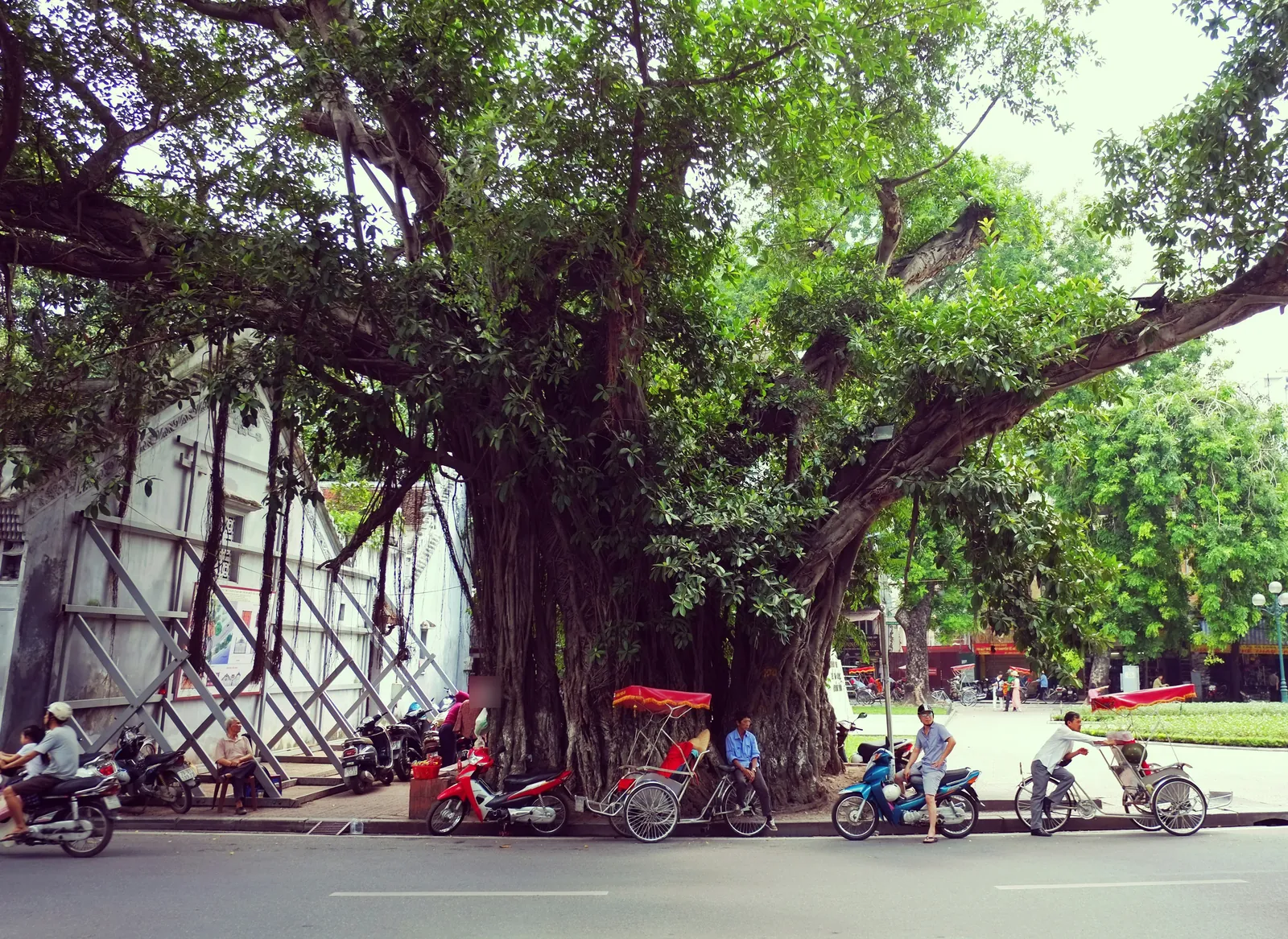
Getting around without driving. Smartraveller says official metered taxis are generally reliable; check the meter is on, and for an app booking, that the car and driver match. It discourages motorcycle taxis unless you wear a helmet that meets Australian standards. Inter-city buses have a high accident rate, and boats have sunk, including in Ha Long Bay. Domestic flights need the passport you entered on.
Driving. You can’t drive or ride in Vietnam on an Australian licence or an International Driving Permit issued in Australia. Smartraveller says you need a Vietnamese licence for a car or a motorbike of 50cc or more. Converting an Australian licence to a temporary Vietnamese one needs a residence permit valid for at least 3 months, so an eVisa holder can’t. After an accident you can face criminal charges whoever was at fault, and be asked to pay the injured person or their family a large sum.
Safety. Smartraveller’s advice for Vietnam is to exercise normal safety precautions, its lowest level (updated 24 September 2026). Thieves on motorbikes often snatch bags, and break-ins at homes happen. It names Hanoi, Ho Chi Minh City, Da Nang and Nha Trang among the places where aggravated theft and assault occur. Some Australians have lost thousands of dollars after friendly locals invited them home, where rigged card games followed. Methanol in bad alcohol has killed people, Australians among them.
Drug offences can bring the death penalty, and having drugs in your system is a crime, even if you took them outside Vietnam. E-cigarettes and vapes are illegal. A business, civil or traffic dispute, or an unpaid debt, can lead to an exit ban that keeps you in the country.
For veterans and their families. Vietnam doesn’t permit official commemorations at the Long Tan Cross site. Small groups can still make private visits, but visitors can’t wear medals or uniforms, or carry banners or flags. Owning or sharing images or objects linked to the former Republic of Vietnam, including war service items, is an offence with harsh penalties. Unexploded ordnance and landmines remain on former battlefields, especially in central Vietnam and along the Laos border, so Smartraveller says to stay on marked paths.
The weather, month by month. Smartraveller says the storm season usually runs from June to November, when typhoons mostly hit the northern and central coasts. Average highs and rain (Viet Nam Meteorological and Hydrological Administration normals, 1991 to 2020, published by the World Meteorological Organization):
| Month | Hanoi high | Hanoi rain | Da Nang high | Da Nang rain | Ho Chi Minh City high | Ho Chi Minh City rain |
|---|---|---|---|---|---|---|
| January | 20°C | 28 mm | 25°C | 83 mm | 32°C | 12 mm |
| February | 21°C | 19 mm | 26°C | 22 mm | 33°C | 8 mm |
| March | 24°C | 55 mm | 28°C | 36 mm | 34°C | 18 mm |
| April | 28°C | 79 mm | 31°C | 50 mm | 35°C | 57 mm |
| May | 32°C | 188 mm | 33°C | 71 mm | 35°C | 202 mm |
| June | 34°C | 231 mm | 35°C | 68 mm | 34°C | 224 mm |
| July | 33°C | 300 mm | 34°C | 92 mm | 33°C | 231 mm |
| August | 33°C | 335 mm | 34°C | 167 mm | 33°C | 219 mm |
| September | 32°C | 195 mm | 32°C | 394 mm | 33°C | 273 mm |
| October | 30°C | 126 mm | 30°C | 658 mm | 32°C | 240 mm |
| November | 26°C | 48 mm | 28°C | 486 mm | 32°C | 128 mm |
| December | 22°C | 24 mm | 25°C | 272 mm | 32°C | 41 mm |
Da Nang’s wet months are September to December, and its drier months, February to August, line up with the Australian winter. Ho Chi Minh City is driest from December to April, in our summer.
Public holidays. Vietnam’s Labour Code sets 11 days: New Year’s Day, five for the Lunar New Year (Tet), 30 April, 1 May, two for National Day and the Hung Kings’ day. Government offices close for the whole Tet break. In October 2026 the government set Tet 2027 for public servants at 4 to 10 February, VietnamPlus reported. It also set a new Vietnamese Culture Day holiday on 24 November 2026.
Household help. Pay is agreed between you and the worker. As a guide to local wages, the highest regional minimum wage for 2026 is 5,310,000 dong a month (about A$290), under Decree 293/2025/ND-CP.
Making friends. A language class or a walking group gives you the same faces each week. If you’re going alone, see retiring overseas single.

BITRE’s June 2026 airline figures show non-stop flights to Ho Chi Minh City from Sydney, Melbourne, Brisbane and Perth, and to Hanoi from Sydney and Melbourne. There were none to Da Nang, and none from Adelaide. From Sydney, non-stop flights to Ho Chi Minh City take about 8.5 hours. For Da Nang, Hoi An or Nha Trang you connect through Ho Chi Minh City, Hanoi or another Asian hub. Routes change, so check from your city when you book. Smartraveller says storms from June to November can delay or cancel flights.
Vietnam is 3 hours behind Brisbane all year. It is 3 hours behind Sydney and Melbourne in our winter and 4 hours in daylight saving, and 1 hour behind Perth.
One order that works, from a first visit to living there. The right order for you depends on your health, your home and your money.
Yes, but not on a retirement visa, because Vietnam has none. Without family, work or investment ties, the option is a run of eVisas of up to 90 days, leaving Vietnam for each new one. Your Age Pension keeps paying if you claim it before you leave.
No. Vietnam’s 2025 immigration changes added visas for skilled digital workers and their families, and nothing for retirees. Longer residence comes through family, investment or work. Vietnam’s embassy or immigration office, or a licensed visa agent there, can say what fits you.
Our estimate for a month in Da Nang is about A$2,470 for a couple and A$1,810 for one person, rent included, before health insurance. After 12 weeks away, the base rate of the Age Pension is about A$1,240 a month more than that for a couple. Add eVisa fees and the trips out between visas.
There are no official figures on where Australians live. Da Nang and Hoi An put beaches and an old town close together. Ho Chi Minh City has the widest choice of private hospitals, and it and Hanoi have the non-stop flights.
Smartraveller advises normal safety precautions, its lowest level. It warns about bag snatching, scams and storms from June to November. For older people the bigger issues are health care and the roads.
A flat or a house in a commercial housing project, yes, for up to 50 years, extendable once. Foreigners can own at most 30% of a building’s flats, and never land. A draft law from September 2026 would limit foreigners to flats; it had not passed when we checked.
Thailand’s retirement visas start at 50, and Vietnam has no retirement visa. Our estimate for a couple is about A$2,470 a month in Da Nang and A$2,790 in Chiang Mai. Both countries have a tax treaty with Australia. See our Thailand page to compare.
For it: low costs, a base-rate pension that covers our Da Nang estimate, a tax treaty with Australia and non-stop flights from four Australian cities. Against it: no retirement visa, a trip out for every new eVisa, health care below Australian standards, no driving on an Australian licence and no land for foreigners.
A long city beach, with the old town of Hoi An about 30 km away.
General information only, not financial, tax, legal, migration or insurance advice. Rules change: check the official source before you act, and talk to a licensed professional about your own situation.
Tell us what you have in mind, and we will help you plan it on a free Zoom call: when to go, how long for, and who with.
No pressure and no card details. You decide what comes next.