
Vietnam
A 90-day eVisa covers a winter away. Day-to-day costs are low and the beaches are long.
- A month, couple
- About A$2,470
- Weather
- Da Nang is drier February to August

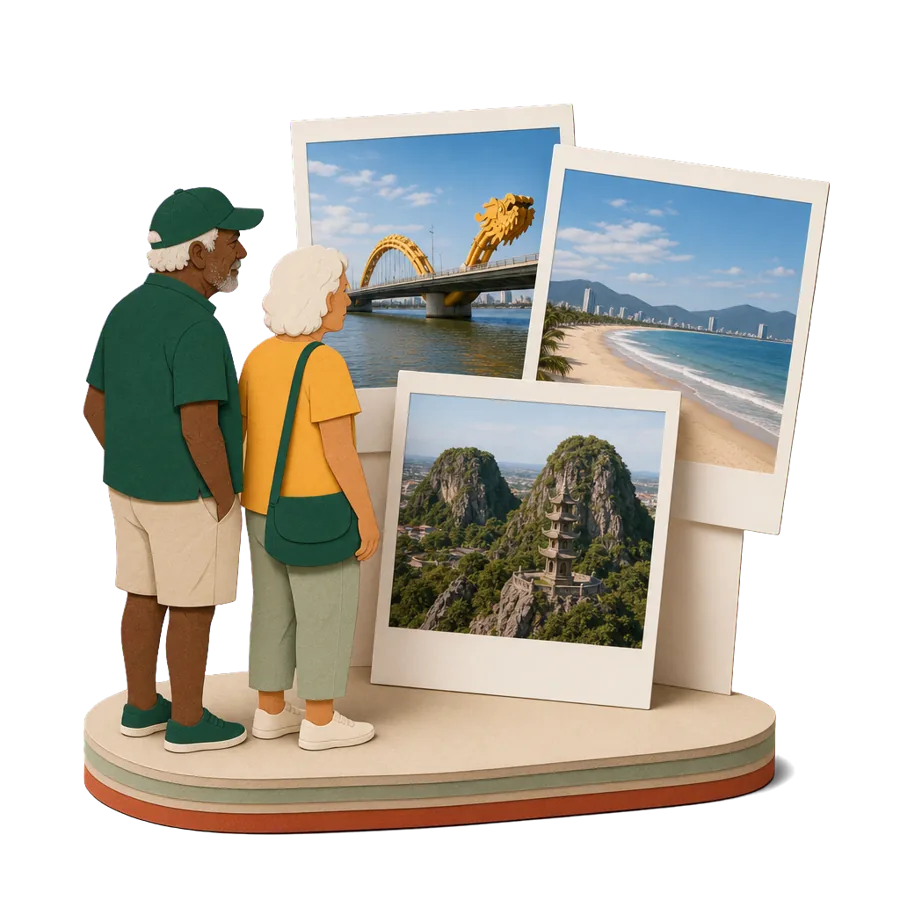
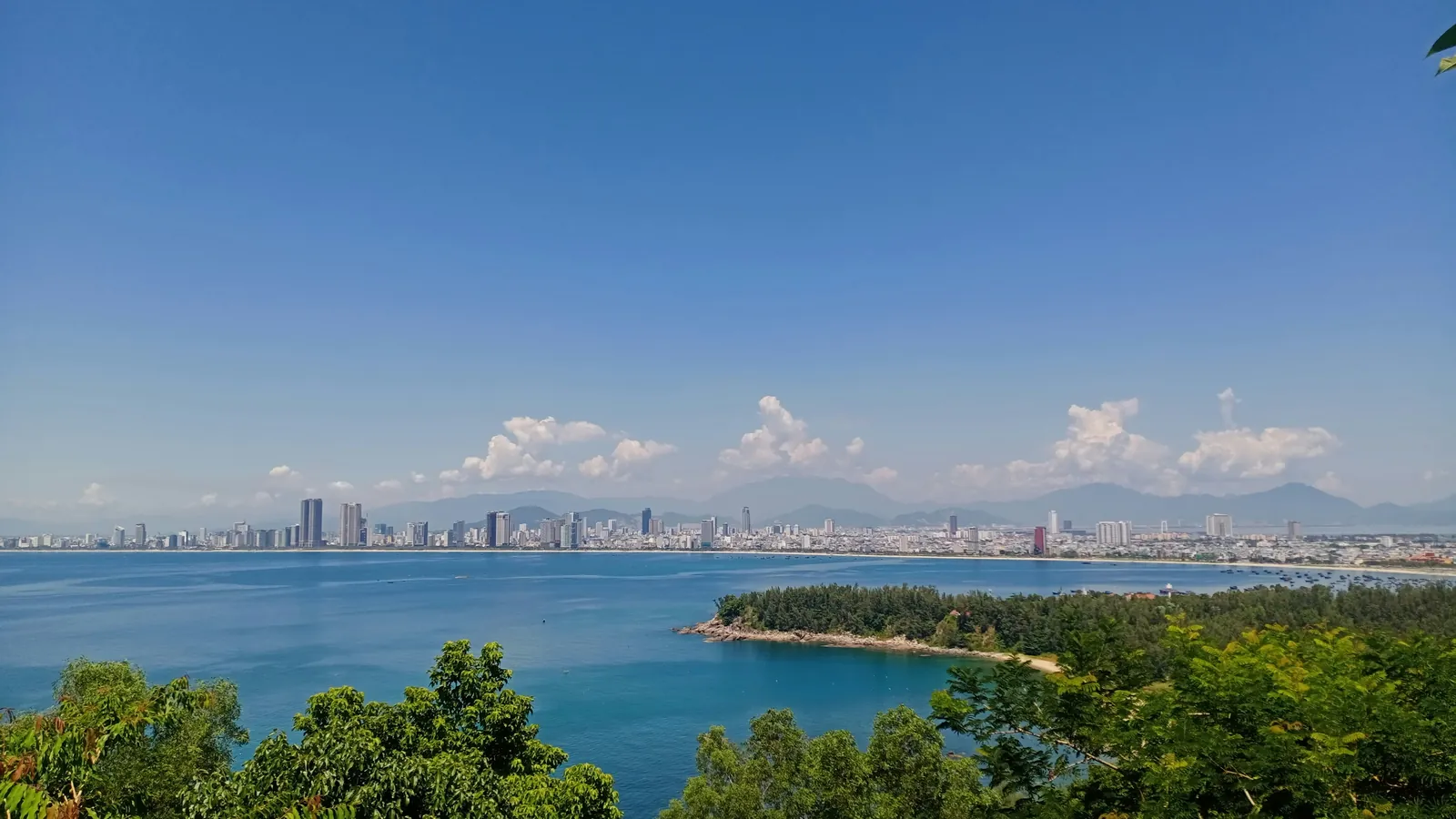
A long city beach, with the old town of Hoi An about 30 km away.
Checked 21 October 2026, re-checked monthlyBy the Retirees Abroad teamGeneral information only, how we check
The short answer
A month in Da Nang costs about A$2,470 for a couple or A$1,810 for one person, rent included (our estimate, October 2026). Australians need an eVisa before they fly, for up to 90 days. The city has private hospitals with 24-hour emergency care. Your Age Pension keeps paying, but Medicare does not cover you in Vietnam.
Costs are mid-range estimates in Australian dollars, rent included, for a comfortable month. For comparison, a comfortable month in Australia is about A$6,580 for a couple who own their home (ASFA, June quarter 2026).

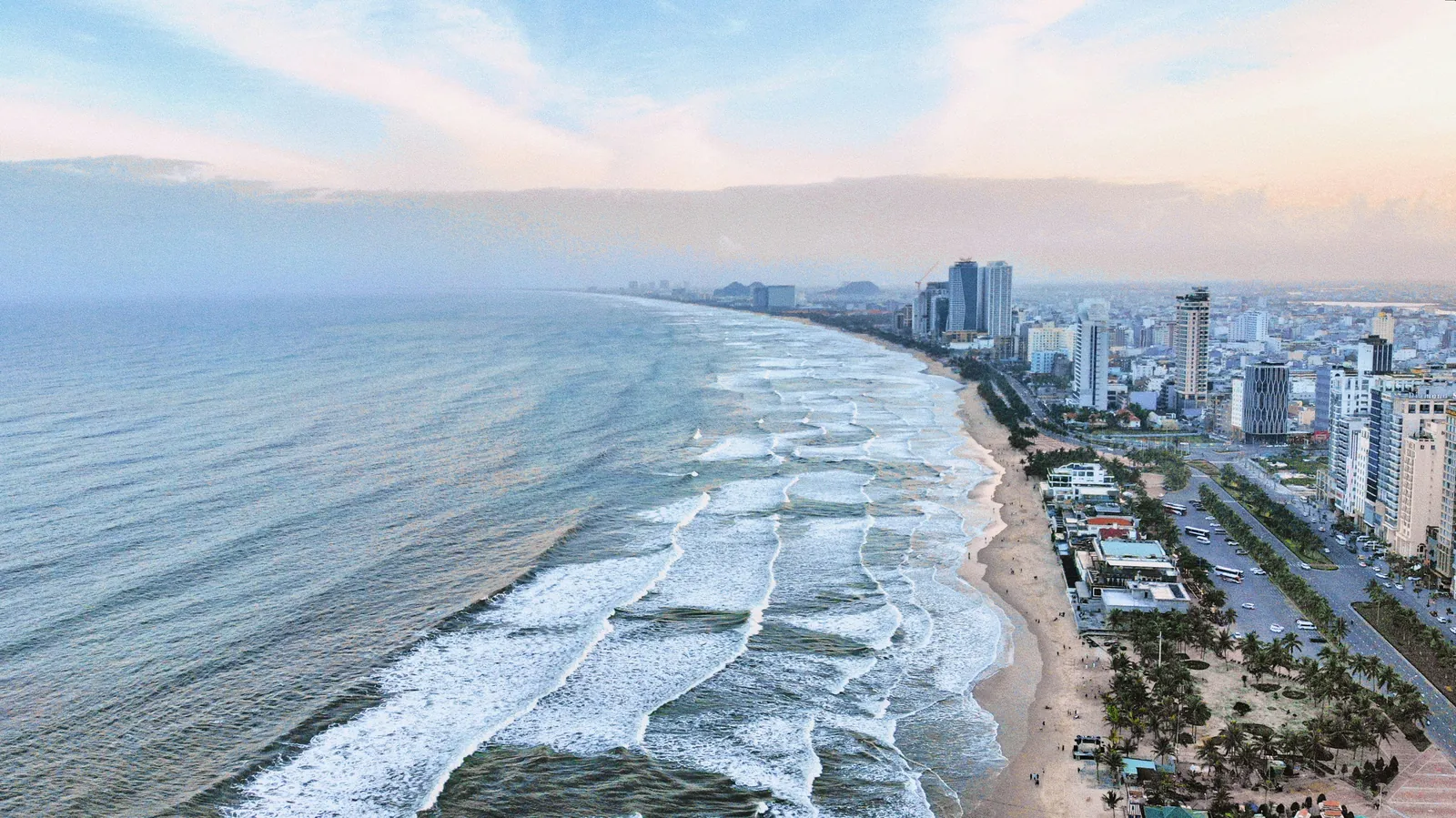
Da Nang suits you if you want a long city beach and low day-to-day costs, with an old town within reach. Hoi An is about 30 km to the south. The city’s drier months, February to August, take in the Australian winter. That fits a winter away on a 90-day eVisa, or a trial stay before you move.
The weather turns in September. From then to December, Da Nang gets about three-quarters of its year’s rain, worked out from the Vietnamese weather service’s averages. Typhoons can come in those months too, Smartraveller says.
Health care is the other thing to weigh up. Smartraveller says the standard of care in Vietnam is generally below Australia’s, and serious cases may need evacuation to another country. Vietnam has no retirement visa either, so Da Nang works more easily as a long stay than as a permanent home.
A month is about A$2,470 for a couple and A$1,810 for one person, rent included, on our estimate. We started with Numbeo’s living costs for one person (without rent), added a one-bedroom city-centre rent, then added 30% for eating out, local trips and extras. For a couple we multiplied the living costs by 1.8. Everything is converted at the Reserve Bank of Australia’s average exchange rate for the 12 months to September 2026 (A$1 = 18,160 dong). Health insurance is not included. Numbeo updated its Da Nang figures on 19 October 2026.
| A month in Da Nang | Couple | One person |
|---|---|---|
| Rent, one-bedroom flat in the centre | A$750 | A$750 |
| Living costs (food, transport, bills) | A$1,150 | A$640 |
| Eating out, local trips and extras (30%) | A$570 | A$420 |
| Total | A$2,470 | A$1,810 |
For a couple
About A$4,110 a month less than a comfortable month in Australia.
For one person
About A$2,870 a month less than a comfortable month in Australia.
Not built the same way: Australia's figure (ASFA Retirement Standard, comfortable, June quarter 2026) assumes you own your home and includes health insurance; our estimate for Da Nang includes rent and leaves health insurance out. Age Pension: the most paid in Australia from 20 September 2026; living overseas for good, the base rate is about A$3,710 a month for a couple and A$2,460 for one person.

Short furnished lets usually cost more than the long-term rent in this table. Away from the centre, Numbeo puts a one-bedroom flat at about 8.96 million dong a month (about A$490). A three-bedroom flat in the centre is about 26.9 million dong (about A$1,480). Our guide to what retiring overseas really costs sets Da Nang beside Penang, Chiang Mai, Hua Hin, Bali and the Algarve.
Against the Age Pension. After 12 weeks away, the most the pension pays is the base rate. That is about A$2,460 a month for one person and A$3,710 for a couple, before tax (rates from 20 September 2026). In Australia the most it pays is about A$2,680 and A$4,040. On our estimate, the base rate leaves about A$1,240 a month spare for a couple in Da Nang and about A$650 for one person, before health insurance.
What costs more than you’d expect. Health cover is the big one, and our estimate leaves it out. Smartraveller says international health insurance can be costly, and with a pre-existing condition you may not get it at all. Numbeo has a cheap restaurant meal at 60,000 dong (about A$3), but a kilo of local cheese at 337,500 dong (about A$19). Power climbs in summer, when the average high is 33°C or more from May to August. Electricity is sold in steps, each dearer than the last, and VTC News worked out that 400 kWh in a month costs about 1.16 million dong (about A$64). Then come the trips out of Vietnam for each new eVisa.
Renting long term. A Way Abroad, a blog whose author lived in Da Nang for a year and a half, gives local-market rents by area (see Where Australians live). She warns that English-language rental sites and expat social media groups ask close to double the local price. Good questions before you sign: what the rent covers, how power is billed, and whether the street floods. Leases, deposits and police registration of tenants are on our Vietnam page under what a month costs.

Smartraveller says Australians need a visa for any stay in Vietnam and can’t get one on arrival. The official eVisa site, run by Vietnam’s Immigration Department, gives up to 90 days. It costs US$25 (about A$36) for single entry and US$50 (about A$72) for multiple entry. You can’t apply from inside Vietnam, so each new eVisa means leaving first. Vietnam has no visa for retirees; longer residence comes through family, work or investment.
Documents from Australia. A residence card through one of those routes needs papers from home. An Australian Federal Police national police check costs A$57, and the AFP says most online checks arrive within a few days. One with fingerprints costs A$114 and takes 15 to 30 business days. DFAT legalises documents with an apostille, and the Apostille Convention has applied in Vietnam since 11 September 2026.
The eVisa rules, fake visa sites, a Vietnamese partner and the full list of papers are on our Vietnam page under visas for Australians. For your own case, ask Vietnam’s embassy or consulate, or a licensed visa agent in Vietnam.
Services Australia says your Age Pension can keep paying while you are overseas. After 6 weeks away the Energy Supplement stops and your Pensioner Concession Card is cancelled. At 12 weeks the Pension Supplement stops completely (since 20 September 2026). After 26 weeks, the rate can be reduced for people who lived in Australia less than 35 years between age 16 and pension age. Our guide to the 6, 12 and 26-week rules goes through each step.
Vietnam is not a social security agreement country, so you claim the pension while living in Australia, before you go. Medicare never pays for treatment in Vietnam. An Australian citizen who moves overseas can still use Medicare back in Australia for up to 5 years after leaving. More in our guide to Medicare when you live overseas, and on our Vietnam page under your Age Pension and Medicare.

Smartraveller says foreign private clinics are available in Da Nang, Hanoi and Ho Chi Minh City, but they may not meet Australian standards. Care at most public hospitals is poor, especially outside Hanoi and Ho Chi Minh City, and hospitals may lack medicine and supplies. Doctors and hospitals expect payment before they treat you.
What is where, by type. The Australian Consulate-General in Ho Chi Minh City keeps a list of hospitals, last updated in July 2026. For Da Nang and Hoi An it lists:
None of the listed addresses is in the beach suburbs, Son Tra or Ngu Hanh Son, so from there care means a trip across the river.
Public hospitals. The consulate’s list leaves out Da Nang’s public hospitals. Tuoi Tre News reported in July 2026 that foreign visitors had posted videos praising them, and that an American tourist paid 45,000 dong (about A$2) for an eye check. Hospital managers told the paper they were improving doctors’ foreign-language skills and planned more cooperation with international insurers.
When care means travel. The ambulance number is 115, but Smartraveller says emergency lines run in Vietnamese only and help can be slow to arrive. You may need evacuation to a major centre even for minor operations, and serious cases can mean Bangkok or Singapore. Smartraveller’s page on retiring overseas puts a medical repatriation at up to hundreds of thousands of dollars. In the storm months, floods can also cut roads and power on the way to a clinic.
Your medicines. Smartraveller says some addictive and psychotropic medicines are controlled in Vietnam. The paperwork is on our Vietnam page under health care and insurance, and our guide to taking medicines overseas covers the Australian side.
Which cover. For a visit, Smartraveller says travel insurance must cover all medical costs, including evacuation; see travel insurance for long stays. Living there means international health insurance, priced on your age and health. Our guide to international health insurance by age lists what to ask an insurer, or book a free planning session on Zoom.
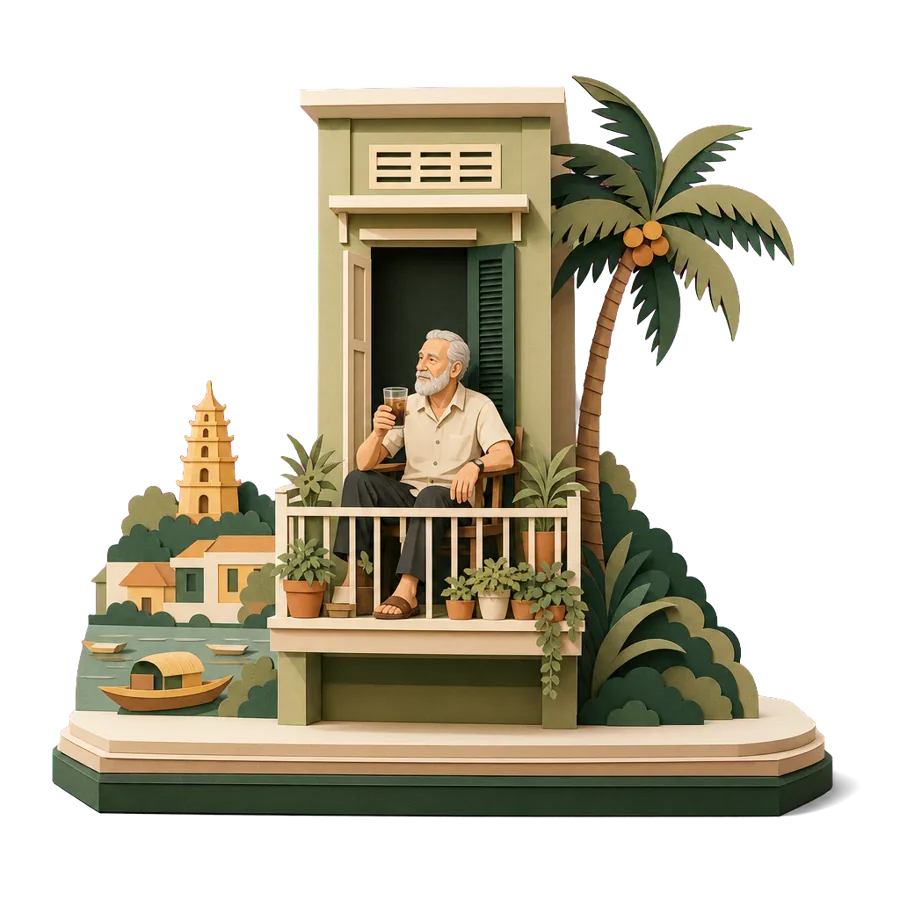
There are no official figures on where Australians live in Da Nang. The Han River splits the city: the beach side is east of the river, along the coast, and the city side is to the west, A Way Abroad explains. These are the areas the guides we read name.
| Area | What it’s like | Getting around | Hospital | Airport |
|---|---|---|---|---|
| My Khe and An Thuong | Beach suburbs behind My Khe beach, with cafes, bars and restaurants | My An is walkable, A Way Abroad reports | Across the river | In the city, across the river |
| The Han River centre (Hai Chau) | The city side: markets and local life | Walkable to restaurants and cafes | Foreign-run clinic; private hospitals in nearby wards | In the city |
| Son Tra | The peninsula to the north-east, with sea views | A motorbike or a ride to the beach | Across the river | In the city, across the river |
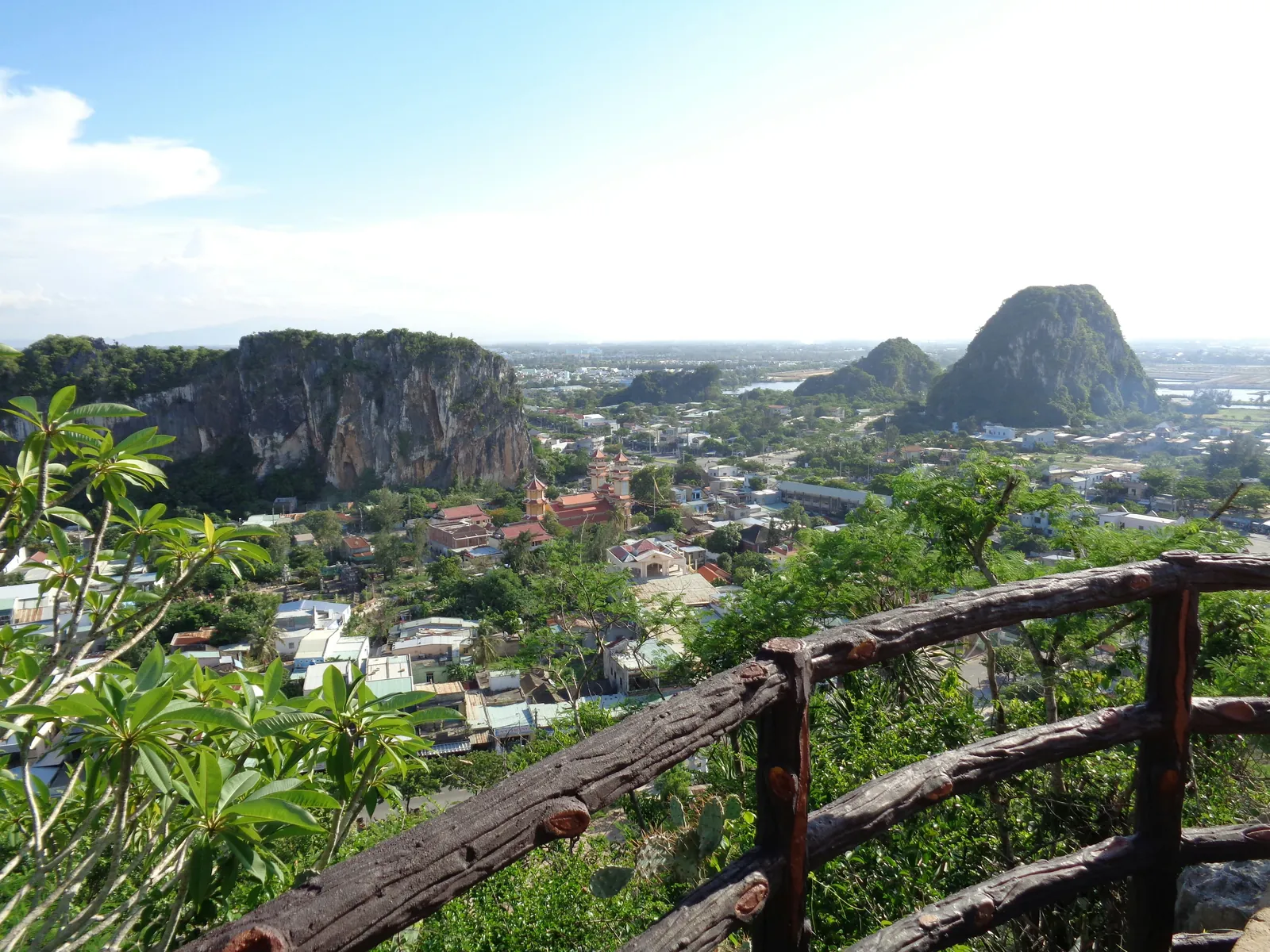
| Ngu Hanh Son | The south, around the Marble Mountains, about 8 km from the centre and 800 metres back from the sea | On the coastal plain, the tourism portal says; transport not covered by the guides we read | None listed | In the city |
| Hoi An | Old town about 30 km south | A bus to Da Nang, reported in 2024 | General hospital; public medical centre | In Da Nang, about 30 km north |
The rents below are what A Way Abroad’s author reported at local prices for a one-bedroom flat, not our estimate.
My Khe and An Thuong. A Way Abroad’s author lived in My An, behind My Khe beach, and found it quiet, with everything within walking distance. She puts a furnished one-bedroom there at about 7.45 million dong (about A$410). An Thuong, next door, has the bars, international restaurants and nightlife, and she found it chaotic. Khue My, across the main road, is local, with few foreigners, at about 7.75 million dong (about A$430). From there you need a ride to the beach.
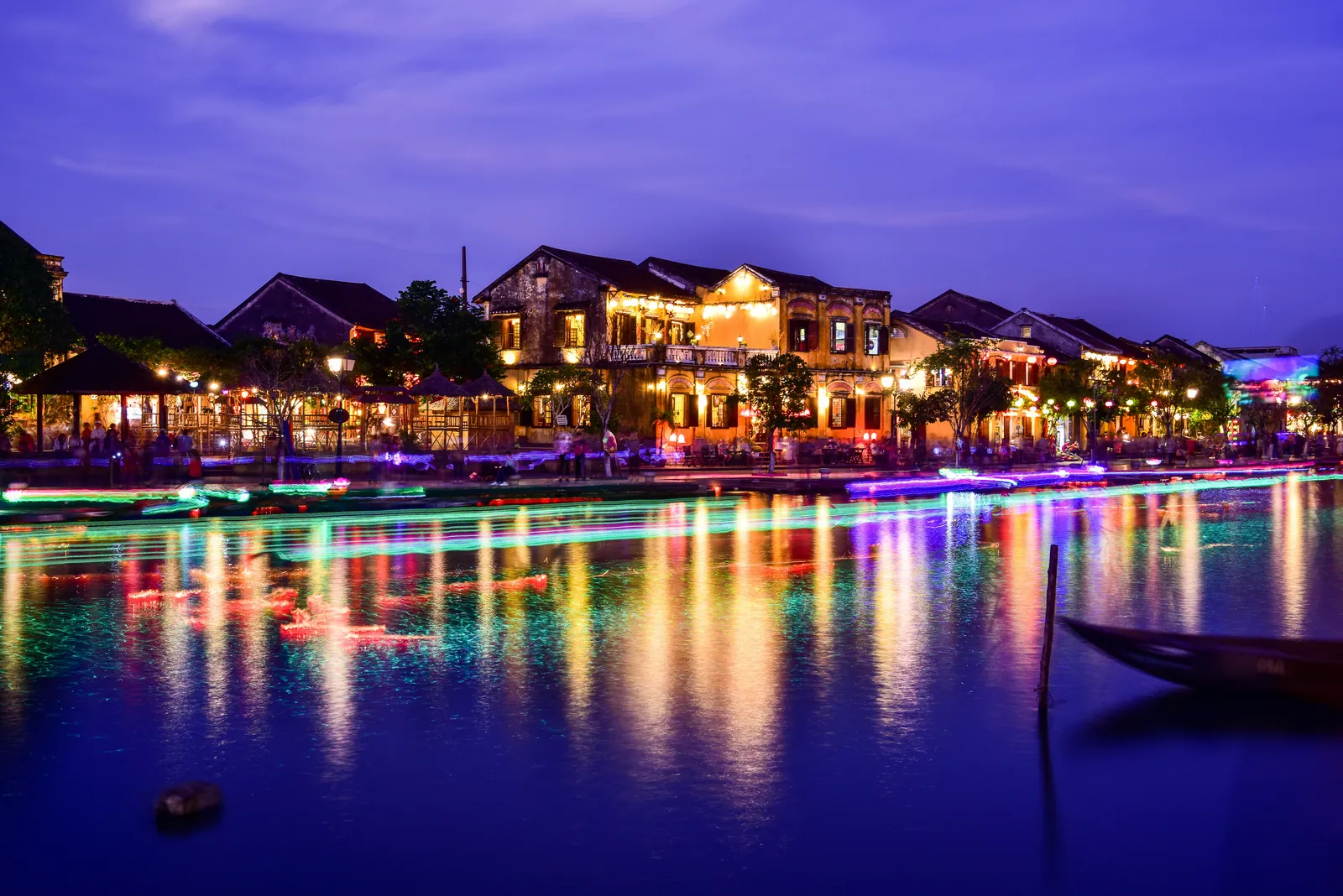
The Han River centre. Hai Chau is the city side, with the markets, the Dragon Bridge, restaurants and coffee shops. A modern serviced mini-flat there is about 10 million dong a month (about A$550). The foreign-run clinic is here, and both private hospitals on the consulate’s list are in neighbouring wards.
Son Tra. The Son Tra Peninsula, also called Monkey Mountain, is at the north of the beach side. A Way Abroad found it more local, with ocean views, but it needed a motorbike for the beach and felt cut off socially. A one-bedroom near Phuoc My is about 9 million dong (about A$500).
Ngu Hanh Son. The city’s tourism portal puts the Marble Mountains about 8 km south-east of the centre, on the heritage route that runs on to Hoi An. They were once islands, it says, and now rise from the coastal plain about 800 metres from the sea, with a stone-carving village at their foot. None of the guides we read covered living there.
Hoi An. The old town is about 30 km south of central Da Nang and has been part of Da Nang city since 1 July 2025. It floods: in October 2025 parts of Hoi An and Hue had more than 1,000 mm of rain in 24 hours, a record for Vietnam, Al Jazeera reported. A bus route to Da Nang started in 2024, with a 35,000 dong fare (about A$2), the city’s tourism portal reported.
Foreigners can rent, and can buy a flat or a house in a commercial housing project, but never land. Ownership lasts up to 50 years from the certificate, and the province can extend it once. Foreigners can own no more than 30% of the flats in a building. A draft revision of the Housing Law released in September 2026 would limit foreigners to flats, Viet Nam News reported; it had not passed when we checked.
Numbeo puts a flat in central Da Nang at about 99 million dong a square metre (about A$5,450). Smartraveller says you may not have the same rights as a local partner over real estate. A property lawyer in Da Nang who acts for you, not the seller, can check the project, the foreign quota and what happens after 50 years.
The full rules and risks are on our Vietnam page under renting or buying a home. Our guide to keeping, renting or selling the family home covers the Australian side.
Vietnam’s new personal income tax law has applied since 1 July 2026. Vietnam Law Magazine reported that a foreigner is tax resident after at least 183 days in Vietnam in a calendar year, or in the 12 months from first arriving. A habitual home there also counts. Australia and Vietnam have had a tax treaty since 1992, and its pensions article says pensions paid to a resident of one country are taxable only in that country.
At home, a foreign resident for Australian tax loses the tax-free threshold, so income such as rent is taxed at 30% from the first dollar (2025-26). How Vietnam treats pensions from abroad, and what the treaty means for you, are on our Vietnam page under tax there and at home. Talk to a registered tax agent in Australia, and a tax adviser in Vietnam, before you go.
The dong is the currency. Smartraveller says ATMs are widespread in Da Nang, but card skimming happens throughout Vietnam, and it suggests machines inside banks, reputable hotels and shopping centres. Away from Australia for more than 12 months, Services Australia pays your pension every 4 weeks, into an Australian account or an overseas one. Bank fees are yours.
Your pension is in Australian dollars and your rent is in dong. A central one-bedroom at about 13.6 million dong is about A$750 a month at the RBA’s average rate; if the Australian dollar fell 10%, it would cost about A$830. Opening a local account, moving money and the cash you must declare at the border are on our Vietnam page under money and banking.
Language. Daily life runs in Vietnamese. The public medical centre in Hoi An and the psychiatric hospital list little or no English. Smartraveller suggests taking a translator when you report a crime to the police.
Getting around without driving. Smartraveller says an Australian licence or an International Driving Permit issued in Australia isn’t accepted for a car or a motorbike of 50cc or more. A Vietnamese licence needs a residence permit of at least 3 months, so an eVisa holder can’t get one. Official metered taxis are generally reliable, Smartraveller says, and for an app booking the car and driver should match the details given.
Smartraveller discourages motorcycle taxis unless you wear a helmet that meets Australian standards. Numbeo puts a taxi at 27,500 dong to start (about A$2), then 15,000 dong a kilometre (about A$1), and a monthly bus pass at 130,000 dong (about A$7). On foot, thieves on motorbikes snatch bags from pedestrians, Smartraveller warns.
Safety. Smartraveller’s advice for Vietnam is to exercise normal safety precautions, its lowest level. It names Da Nang with Hanoi, Ho Chi Minh City and Nha Trang among the places where aggravated theft and assault happen. Drug offences can bring the death penalty. Exit bans, Long Tan and other laws that differ from home are on our Vietnam page under day to day.
The weather, month by month. Da Nang is warm all year, hot from May to August, and wet from September to December:
| Month in Da Nang | Average high | Average low | Rain | Rain days |
|---|---|---|---|---|
| January | 25.2°C | 19.7°C | 83 mm | 14 |
| February | 26.3°C | 20.4°C | 22 mm | 7 |
| March | 28.4°C | 22.1°C | 36 mm | 7 |
| April | 30.9°C | 24.0°C | 50 mm | 7 |
| May | 33.4°C | 25.4°C | 71 mm | 10 |
| June | 34.9°C | 26.3°C | 68 mm | 9 |
| July | 34.4°C | 26.0°C | 92 mm | 12 |
| August | 34.0°C | 25.8°C | 167 mm | 14 |
| September | 32.0°C | 24.8°C | 394 mm | 17 |
| October | 29.6°C | 23.7°C | 658 mm | 21 |
| November | 27.7°C | 22.5°C | 486 mm | 21 |
| December | 25.3°C | 20.5°C | 272 mm | 21 |
Figures: the Viet Nam Meteorological and Hydrological Administration’s Da Nang averages for 1991 to 2020, published by the World Meteorological Organization. Worked out from these, Da Nang gets about 2,400 mm of rain a year, and about 1,810 mm of it falls from September to December. February is the driest month, and February to August the drier part of the year.
Typhoons and floods. Smartraveller says Vietnam’s storm season usually runs from June to November. Typhoons mostly affect the northern and central coasts, and floods can bring landslides, even in built-up areas. Storms can disrupt flights, roads, power and phone services: in the October 2025 floods, more than 306,000 households and businesses in Hue, Da Nang and Quang Tri lost power, Al Jazeera reported. Smartraveller suggests keeping your passport in a waterproof bag and checking that your insurance covers bad weather.
Public holidays. Government offices close for the whole Lunar New Year (Tet) break, which in 2027 runs from 4 to 10 February for public servants. The full list is on our Vietnam page.
Making friends. Something weekly, such as a Vietnamese class or a walking group, means seeing the same people again and again. If you’re going alone, see retiring overseas single.
There are no non-stop flights from Australia to Da Nang, BITRE’s June 2026 figures show. Non-stop flights from Sydney to Ho Chi Minh City take about 8.5 hours on 2026 schedules, and Ho Chi Minh City also has non-stop flights from Melbourne, Brisbane and Perth. From there, or from Hanoi, a domestic flight takes you to Da Nang. Smartraveller says storms from June to November can delay or cancel flights. Routes change, so check from your city when you book.
Da Nang is 1 hour behind Perth and 3 hours behind Brisbane. It is 3 hours behind Sydney and Melbourne in our winter, and 4 in daylight saving.
One order that works, from a first visit to living there. The right order for you depends on your health, your home and your money.
You can live there on a run of eVisas of up to 90 days, leaving Vietnam for each new one, because Vietnam has no retirement visa. Longer residence comes through family, work or investment. Your Age Pension keeps paying if you claim it before you leave Australia.
Our estimate for a month is about A$2,470 for a couple and A$1,810 for one person, rent included (October 2026). Health insurance, eVisa fees and the trips out between visas come on top.
The guides we read name the beach suburbs of My Khe and An Thuong, the Han River centre in Hai Chau, Son Tra and Ngu Hanh Son, with Hoi An about 30 km away. The table above compares them for walking, hospitals and the airport.
Numbeo puts a one-bedroom flat in the centre at about 13.6 million dong a month (about A$750), and about 8.96 million dong (about A$490) away from the centre. A Way Abroad found local-market rents near the beach lower than that, and warns that English-language listings ask close to double.
Smartraveller advises normal safety precautions for Vietnam, its lowest level. It names Da Nang among the places where aggravated theft and assault happen, and says thieves on motorbikes often snatch bags.
Smartraveller says Vietnam’s storm season usually runs from June to November. In Da Nang the heaviest rain falls from September to December, with 658 mm in an average October.
The Australian consulate’s list shows two private hospitals with 24-hour emergency care and English-speaking staff, and a foreign-run family clinic. Smartraveller says foreign private clinics may not meet Australian standards, and serious cases can mean evacuation to another country.
The pension keeps paying in Vietnam, and the base rate covers our estimated month for one person or a couple, before health insurance and trips home. Our page on living overseas on the Age Pension goes further.
A 90-day eVisa covers a winter away. Day-to-day costs are low and the beaches are long.
General information only, not financial, tax, legal, migration or insurance advice. Rules change: check the official source before you act, and talk to a licensed professional about your own situation.
Tell us what you have in mind, and we will help you plan it on a free Zoom call: when to go, how long for, and who with.
No pressure and no card details. You decide what comes next.