Chiang MaiThailand
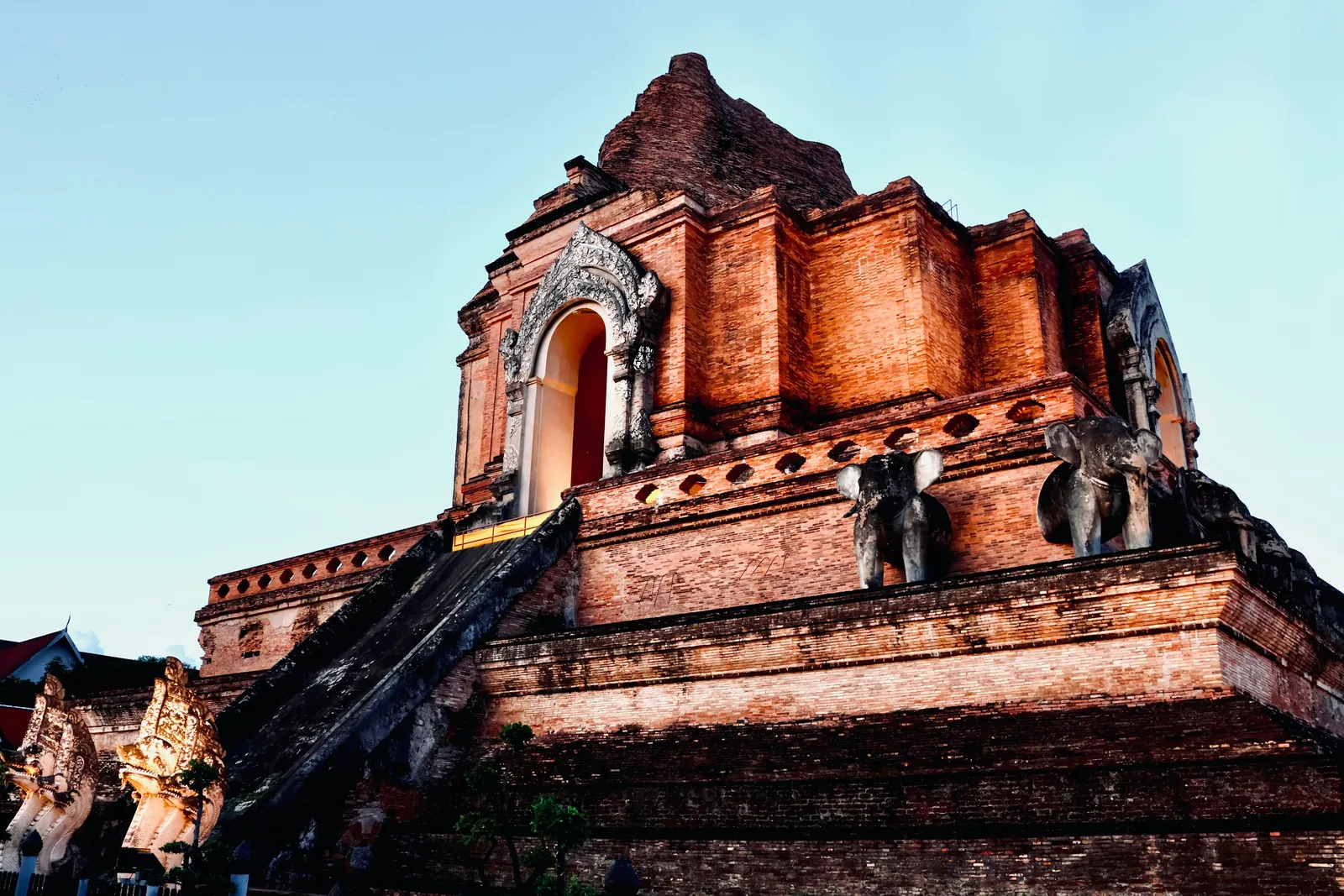
Cooler evenings, temples, mountains nearby and a slower pace.
- A month, couple
- About A$2,790
- Weather
- Coolest November to February

Retirement visas start at 50 and day-to-day costs are low. The big cities have private hospitals.
Checked 21 October 2026, re-checked monthlyBy the Retirees Abroad teamGeneral information only, how we check
The short answer
Our estimate for a month in Chiang Mai is about A$2,790 for a couple or A$1,950 for one person, rent included (October 2026). Since 15 September 2026, Australians get 30 days without a visa, and retirement visas start at age 50. Your Age Pension keeps paying, but Medicare never pays for treatment in Thailand.
Costs are mid-range estimates in Australian dollars, rent included, for a comfortable month. For comparison, a comfortable month in Australia is about A$6,580 for a couple who own their home (ASFA, June quarter 2026).

Thailand suits you if you are 50 or over and can meet the money test for a retirement visa. Our estimate for a couple in Chiang Mai, about A$2,790 a month with rent, is below the Age Pension’s base rate for a couple, though health cover comes on top.
The visa-free stay is shorter now. Since 15 September 2026, Australians get 30 days without a visa, down from 60, the Royal Thai Embassy in Washington says. A winter away now means an extension or a proper visa.
Health care is the big thing to plan for, and the health care section below sets out the deposits, insurance and evacuation costs.
Smoke haze is an issue across the north and north-east from December to April, which takes in Chiang Mai’s cool months. Foreigners can’t own land. Live there more than 180 days a year and Thailand can tax foreign income you bring in. Smartraveller also says Thailand has one of the highest road death rates in the world.
A month in Chiang Mai costs about A$2,790 for a couple and A$1,950 for one person, rent included. That is our estimate. We took Numbeo’s living costs for one person (without rent), added a one-bedroom city-centre rent, then added 30% for eating out, local trips and extras. For a couple we multiplied the living costs by 1.8. Everything is converted at the Reserve Bank of Australia’s average exchange rate for the 12 months to September 2026 (A$1 = 22.44 baht). Health insurance is not included. The Numbeo figures are for Chiang Mai, updated 15 October 2026: about 18,080 baht a month (about A$810) in living costs for one person and 15,580 baht (about A$690) for the flat.
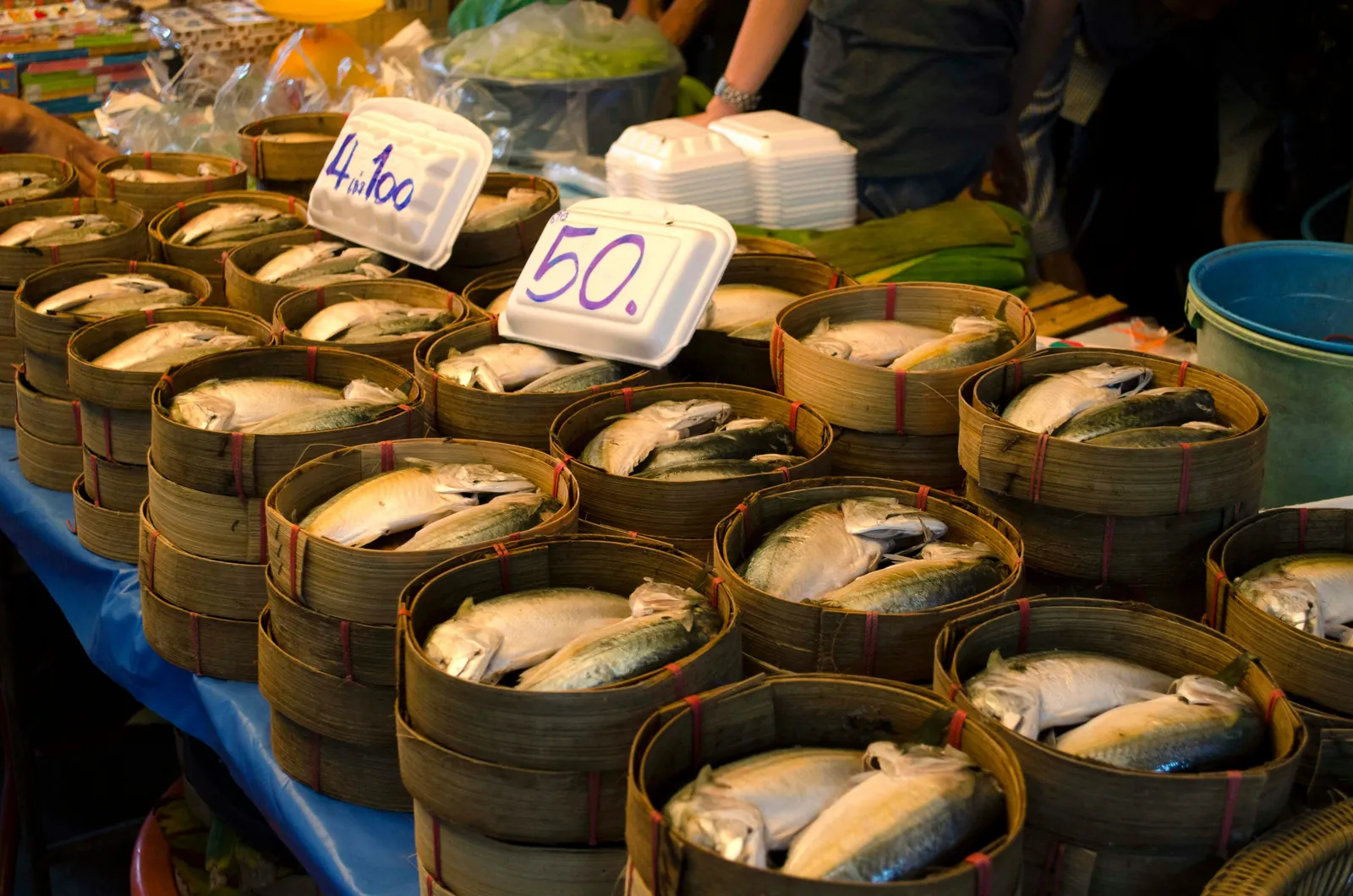
| A month in Chiang Mai | Couple | One person |
|---|---|---|
| Rent, one-bedroom flat in the centre | about A$690 | about A$690 |
| Living costs (food, transport, bills) | about A$1,450 | about A$810 |
| Eating out, local trips and extras (30%) | about A$650 | about A$450 |
| Total | about A$2,790 | about A$1,950 |
For a couple
About A$3,790 a month less than a comfortable month in Australia.
For one person
About A$2,730 a month less than a comfortable month in Australia.
Not built the same way: Australia's figure (ASFA Retirement Standard, comfortable, June quarter 2026) assumes you own your home and includes health insurance; our estimate for Thailand includes rent and leaves health insurance out. Age Pension: the most paid in Australia from 20 September 2026; living overseas for good, the base rate is about A$3,710 a month for a couple and A$2,460 for one person.
Short furnished lets usually cost more than the long-term rent in this table. Beach towns cost more too. Worked out the same way, a month in Hua Hin is about A$3,280 for a couple and A$2,310 for one person.
Against the Age Pension. After 12 weeks away, the most the pension pays is the base rate: about A$2,460 a month for one person and about A$3,710 for a couple, before tax (rates from 20 September 2026). That is about A$920 a month more than our Chiang Mai estimate for a couple, and about A$510 more for one person, before health insurance. The 6, 12 and 26-week rules explain what stops and when.
What costs more than you’d expect. Health cover is the big one, and our estimate leaves it out. Smartraveller says your age and health affect the cost and type of policy you need. Visas have running costs: Samut Prakan Immigration lists 1,900 baht (about A$85) for each extension of stay. A re-entry permit for a trip home is 1,000 baht (about A$45). Expat Arrivals, a guide for people moving abroad, reports that electricity is the dearest utility by far, and suggests inverter air conditioners to cut it. Smartraveller says many vehicle hire companies have no insurance, and after a motorbike accident police may hold you until compensation is agreed, often costing thousands of dollars.
Renting long term. Expat Arrivals reports that a 12-month lease is standard in Bangkok, though some owners accept 6 months. Since September 2025, it says, landlords with five or more units can ask for no more than one month’s deposit plus one month’s rent in advance; smaller landlords may ask for two months’ deposit. Renewal isn’t automatic. In flats and condos the building usually meters the electricity and adds it to your rent.
Under section 38 of the Immigration Act, whoever houses a foreigner must tell the local immigration office within 24 hours. The form is known as TM.30, so it’s worth asking a landlord whether they lodge it. Before you sign, it helps to have the rent, deposit terms, electricity rate and repairs in writing. A furnished short let for the first month or two shows you the street in the wet season and the haze months.

You can visit for 30 days without a visa. To stay longer as a retiree you need to be 50 or over and meet a money test. Our Thailand retirement visa guide goes through each visa in detail; this is the short version.
Visiting. Australians get 30 days visa-free for arrivals from 15 September 2026. Thai immigration can grant one extension of up to 30 days, for 1,900 baht (about A$85 at the RBA’s 12-month average rate). Your passport must be valid for more than 6 months. Thailand requires the free Thailand Digital Arrival Card (TDAC), lodged on the Thai Immigration Bureau website within 3 days before you land. Smartraveller warns about fake websites that charge for it.
Smartraveller says you may only be allowed 2 visa-free entries each calendar year without a justifiable reason, and Thai consular pages set the same limit for land borders. All crossings on the Thailand-Cambodia border are closed. Overstaying can mean arrest, deportation and a ban on coming back.
Staying longer, by age.
| Visa | Who it is for | The main money test | How long |
|---|---|---|---|
| Non-O (retirement) | 50 and over | 800,000 baht (about A$35,650) in a Thai bank, or 65,000 baht (about A$2,900) a month in income, or a mix | 90 days, then extended a year at a time in Thailand |
| Non-O-A (long stay), applied for before you go | 50 and over | The same money, plus health insurance of at least 3,000,000 baht (about A$134,000) or US$100,000 (about A$145,000) | 1 year |
| O-X (long stay, 10 years) | 50 and over, from 14 countries including Australia | 3,000,000 baht (about A$134,000) in a Thai bank, or 1,800,000 baht (about A$80,210) plus 1,200,000 baht (about A$53,480) a year in income | 5 years, then 5 more |
| Long-Term Resident, “wealthy pensioner” | 50 and over | US$80,000 (about A$116,000) a year in pension or passive income, or US$40,000 (about A$57,810) plus a US$250,000 (about A$361,000) investment in Thailand | 5 years, then 5 more |
Sources: the Thai Ministry of Foreign Affairs, Thai embassies and the Board of Investment. The income test of 65,000 baht a month (about A$2,900) is more than the Age Pension pays one person, even at the maximum rate in Australia (about A$2,680 a month). Thailand also sells a membership visa, Thailand Privilege, from 650,000 baht (about A$28,970) for 5 years.
What the visas ask of you. These are not work visas. The Oslo embassy says employment of any kind is strictly prohibited on the Non-O-A, and the O-X is for people who don’t intend to work. Stay more than 90 days and you report your address to immigration every 90 days, online, by mail or in person. A late report costs a 2,000 baht fine (about A$89), the Thai government’s information site says. Each year’s extension needs fresh proof of the money. Permanent residence is a separate application, and GOV.UK says the Thai Immigration Bureau decides who is eligible.
A partner under 50. The Thai embassy in Singapore says a legally married spouse who doesn’t qualify for the Non-O-A can apply for a single-entry Non-O, with the marriage certificate; it doesn’t accept a civil partnership certificate. The O-X and Long-Term Resident visas also take a spouse as a dependant. If you are de facto, ask the Royal Thai Embassy in Canberra what applies.
Documents to get in Australia before you go. The Non-O-A and O-X ask for a police check and a medical certificate, each issued within 3 months. An Australian Federal Police check costs A$57, and the AFP says most online checks arrive within a few days; with fingerprints it costs A$114 and takes 15 to 30 business days. Some embassies want papers legalised, and DFAT does this with an apostille or authentication certificate, in times that vary.
Applications go through the official Thai e-Visa website. The embassy in Canberra says processing takes at least 10 business days, and up to 4 to 6 weeks; New South Wales residents apply through the consulate in Sydney. Smartraveller says not to get a visa, extension or entry stamp from visa shops or travel agents in Thailand. Terms change, so check with the Royal Thai Embassy, Thai immigration or a licensed visa agent in Thailand.
Services Australia says your Age Pension can keep paying while you live overseas. What changes are the extras. After 6 weeks the Energy Supplement stops and your Pensioner Concession Card is cancelled. The Pension Supplement stops completely after 12 weeks (since 20 September 2026). After 26 weeks, your rate drops if you lived in Australia less than 35 years between age 16 and pension age. Ten years’ residence, for example, gets you 10/35ths.
Thailand has no social security agreement with Australia. On the day you claim, Services Australia says you must be living in Australia and physically here, so the claim has to be made before you leave. If you move for good, you get the base rate only from the day you leave: A$29,520.40 a year single, A$44,506.80 for a couple.
Department of Social Services figures released under freedom of information show 730 people getting the Age Pension in Thailand at the end of 2025, up from 625 five years earlier. They were paid an average of about A$969 a fortnight each.
Medicare never pays for treatment in Thailand. If you are an Australian citizen and move overseas, you can still use Medicare for treatment in Australia, on a visit home for example, for up to 5 years after you leave. Visits home do not restart that clock. After 5 years, you re-enrol when you move back. Permanent residents are different: their enrolment ends 12 months after they leave. Australia’s 11 reciprocal health care agreements do not include any country in Asia.
Expect good private care in the cities, and to pay for all of it. Smartraveller says private hospitals in major cities have high standards, while services can be limited in rural areas and public facilities. Before they admit you, hospitals want a deposit, and they check your insurance and that your visa is valid. Without those you may pay cash up front, and costs can be very high.
What is where. The Australian Embassy in Bangkok keeps a list of hospitals, last updated in August 2025. Bangkok has the most: about a dozen private hospitals and several government hospitals. Chiang Mai has four private hospitals, a large government hospital and a government psychiatric hospital. Hua Hin has two private hospitals and a government one. Pattaya has two private hospitals and a government hospital, with a navy hospital further down the coast. Phuket has two private hospitals. The list’s only entries in the north-east are a private and a government hospital in Udon Thani.
When care means travelling. Smartraveller says hospitals in Bangkok and other large cities can treat serious illnesses and accidents. Elsewhere you may need to be moved to a place with better facilities, and medical evacuation can be very expensive. The Australian Government won’t pay for it. In an emergency, call 1669 for an ambulance anywhere in Thailand, or 1724 in Bangkok.
Medicines. Smartraveller says Australians have been arrested for carrying medicine for ADHD, depression and anxiety without the right documents, and for medicine bought at a Thai pharmacy without a prescription. Thailand’s Food and Drug Administration allows up to 30 days’ supply of psychotropic medicines with a prescription. More, up to 90 days, needs a permit applied for online at least 15 days ahead, as do narcotic medicines. The Royal Thai Embassy can say whether each medicine is legal. Our guide to taking medicines overseas has the Australian side.
Other health risks. Smartraveller says air pollution in Bangkok and Chiang Mai can reach hazardous levels and make bronchial, sinus and asthma conditions worse. Dengue and other insect-borne diseases are common in the rainy season.
Insurance. For a visit, Smartraveller says your travel insurance must cover all medical costs, evacuation included. To live there, the usual type is international health insurance, made for people based overseas. The visas set minimums too. The Non-O-A needs at least 3,000,000 baht (about A$134,000) of cover. The O-X needs a Thai policy with at least 400,000 baht (about A$17,830) inpatient cover. Ask the oldest age you can join, whether cover continues as you get older, and whether it pays a Thai hospital directly. The age limits for international health insurance are worth checking early. If you’d like help working out where to start, book a free planning session on Zoom.
There are no official figures on where Australians settle in Thailand. Here are five to compare, with rough travel times from Bangkok.
| Area | What it’s like | Getting around | Hospital | Airport |
|---|---|---|---|---|
| Chiang Mai | Northern city with temples, markets and mountains nearby; our cost base | Flat city; walkable old centre; ride-hailing apps and shared trucks; about 1 hour 15 minutes by air | Four private hospitals and a large government hospital | Chiang Mai International |
| Bangkok | The capital, with the widest choice of hospitals; higher rents | Flat; heavy traffic; city trains, metered taxis and ride-hailing apps | About a dozen private hospitals and several government hospitals | Suvarnabhumi and Don Mueang |
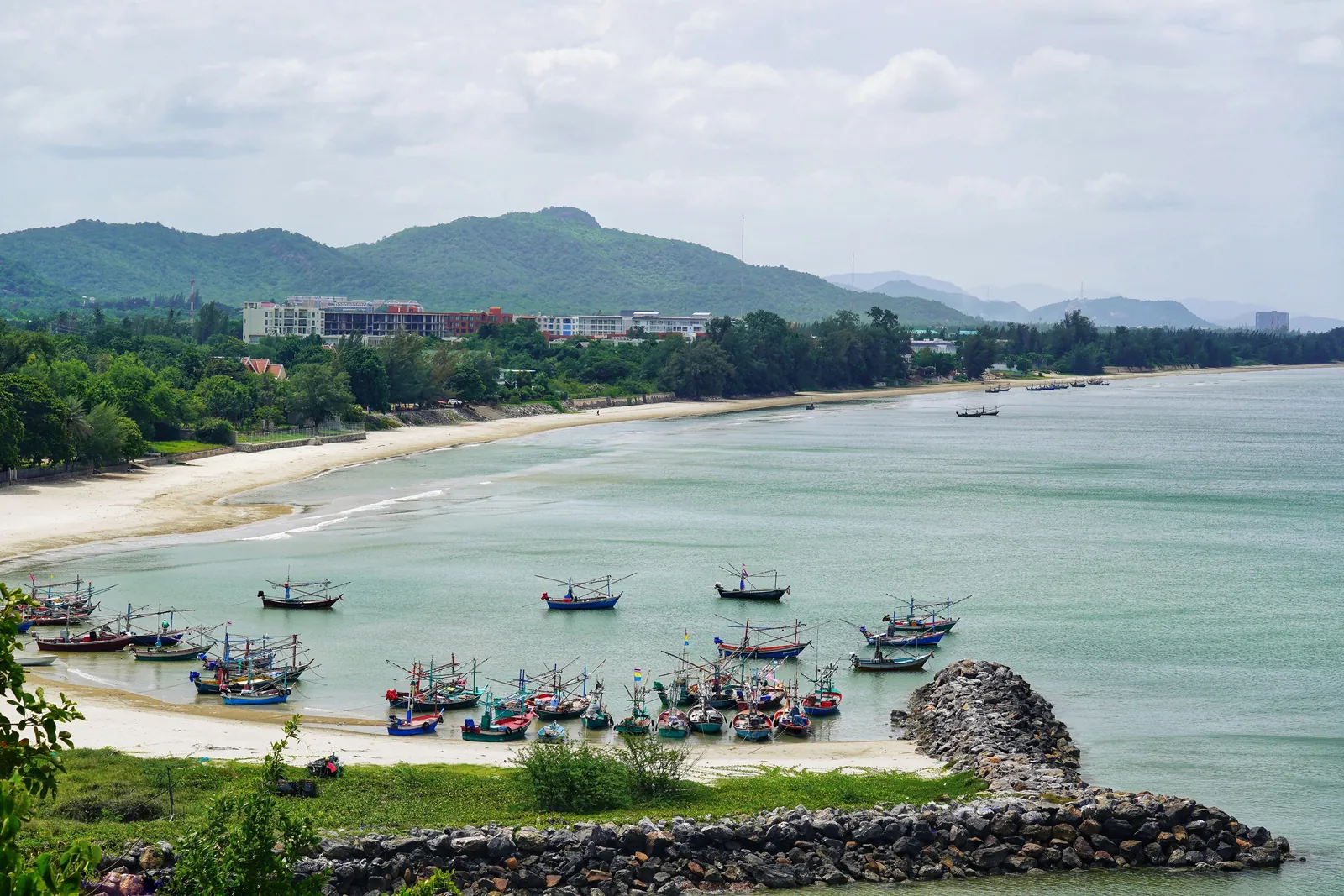
| Hua Hin | Beach town on the Gulf of Thailand, about 200 km south | Flat beach town; ride-hailing and shared trucks; about 3 hours by road | Two private hospitals and a government one | Bangkok, about 3 hours by road |
| Pattaya | Large beach city on the eastern seaboard | Mostly flat; shared trucks and ride-hailing; about 2 hours by road | Two private hospitals and a government hospital | U-Tapao, south of the city, or Bangkok |
| Phuket | Island in the Andaman Sea | Hilly; few buses, so taxis, ride-hailing or a car; about 1 hour 25 minutes by air | Two private hospitals | Phuket International |
Chiang Mai is the base for our costs. Smartraveller says smoke haze affects the north from December to April, which takes in the coolest months. Bangkok’s hospitals are a domestic flight away.
Bangkok has the Australian Embassy, two international airports and the longest list of hospitals. Smartraveller says large protests happen there at times.
Hua Hin sits on the Gulf of Thailand about 200 kilometres south of Bangkok, according to the Tourism Authority of Thailand. It costs more than Chiang Mai on our estimate.
Pattaya is on the coast south-east of Bangkok. Smartraveller lists it, with Phuket and Koh Samui, among the resort areas where road accidents are common.
Phuket is an island in the south-west, with the Australian Consulate-General. Its rainy season runs from May to November, Smartraveller says.
Smartraveller advises a high degree of caution in Thailand overall. It says do not travel within 10 kilometres of the Cambodian border in seven provinces: Sa Kaeo, Buriram, Si Saket, Surin, Ubon Ratchathani, Chanthaburi and mainland Trat. It also says reconsider your need to travel to Yala, Pattani and Narathiwat in the far south. None of the five places above is in those areas.
Foreigners can rent and can own a condo, but in general can’t own land. The US State Department’s 2025 investment report says Thai policy generally doesn’t permit it, though foreigners can lease land for a fixed period.
The Thai government’s information site sets out the routes. Land needs an investment of at least 40 million baht (about A$1.8 million) and the Interior Minister’s permission, for up to 1 rai (1,600 square metres). A condo unit is the usual way to own. Under the Condominium Act 1979, foreigners together can own no more than 49% of the unit area in a building. The money must come from a bank overseas into a Thai bank, with the bank’s paperwork to show it. The building then confirms the foreign share in a letter for the Land Department.
A lease can run for up to 30 years. The same government page says it can be renewed with the owner’s consent, so a renewal depends on the owner agreeing at the time. The page also mentions buying in a Thai spouse’s name, but then the land belongs to the Thai spouse. Smartraveller’s retirement advice warns that you may not have the same rights as a local partner when it comes to owning real estate.
Some buyers set up a Thai company with Thai shareholders to hold land. The Thai government says the Foreign Business Act bars Thais from acting as nominee shareholders for a foreigner, with up to 3 years’ jail for the nominee. In 2021 and 2022 the Department of Business Development checked 148 businesses in tourism, real estate and services suspected of using nominees, 140 of them in Phuket. Smartraveller says scams in Thailand can involve property ownership, and to get legal advice before any major financial decision.
The person to ask is a property lawyer in Thailand, who can check the title, the building’s foreign quota and the lease terms. Smartraveller says the Australian Embassy and the Consulate-General in Phuket list lawyers on their websites. GOV.UK warns that Thai authorities are unlikely to recognise a UK will unless a Thai court has approved the executor, so ask how an Australian will would be treated. Our guide to overseas property and visa scams covers the warning signs. For the Australian side, see whether to keep, rent or sell the family home.
Thailand’s Revenue Department says you are a Thai tax resident if you spend more than 180 days there in a calendar year, counting separate stays together. A resident pays tax on Thai income and on foreign income brought into Thailand.
That second part changed in 2024. Under Revenue Department instructions Paw. 161/2566 and Paw. 162/2566, foreign income earned from 1 January 2024, in a year you are resident, is taxed in the year you bring it into Thailand. That can be the same year or a later one. Income earned before 2024 is excluded, even if you bring it in later. The Board of Investment says Long-Term Resident visa holders in the wealthy pensioner stream are exempt from tax on overseas income.
Australia and Thailand have a tax treaty, signed on 31 August 1989 and in force since 27 December 1989. Its pensions article (Article 18) says pensions and annuities paid to a resident of one country are taxable only in that country, apart from pensions for government service. How that applies to the Age Pension, a super income stream or a lump sum depends on the details, so it’s a question for an adviser.
At home, the ATO’s residency tests decide whether you are still an Australian resident for tax; our guide to tax residency when you retire overseas walks through them. If you become a foreign resident, you lose the tax-free threshold. Australian income such as rent is then taxed at 30% from the first dollar up to A$135,000 (2025-26), as the foreign resident tax rates show. Sell your Australian home while a foreign resident and you generally lose the main residence exemption from capital gains tax (sales after 30 June 2020), apart from narrow life events.
Talk to a registered tax agent in Australia, and to a tax adviser in Thailand about how it treats your pension and super, before you go.
The baht is Thailand’s currency. Smartraveller says to change money only at authorised money changers, and that ATMs are found in cities and regional centres. Card skimming happens.
Your pension. Services Australia pays every 2 weeks into your Australian account if you’ll be away less than 12 months. Away longer, it pays every 4 weeks into an Australian or overseas account. Paid overseas, the money comes in the local currency or US dollars, depending on the country, usually within 2 to 6 days. Bank fees are yours. Our guide to living overseas on the Age Pension has the numbers.
A local account. Thai banks set their own rules for foreigners, so ask the bank what it needs from someone on your visa. A Thai account matters here, because the retirement visas count money held in a Thai bank, and a condo purchase has to be paid from overseas through one.
Moving money. The main options are a transfer from your Australian bank, a currency transfer service, or cash from an ATM on an Australian card. Each charges a fee and builds a margin into its exchange rate; ask for both. The Thai embassy in London says foreign currency over US$20,000 (about A$28,910) must be declared when you bring it in or take it out.
Currency swings. Your pension is in Australian dollars and your costs are in baht. At the RBA’s 12-month average rate, 60,000 baht a month is about A$2,670. If the Australian dollar fell 10%, the same 60,000 baht would cost about A$2,970.
Language. Thai is the official language. Smartraveller says most doctors at private city hospitals speak English; in rural areas and public facilities most speak limited English.
Getting around without driving. Smartraveller says official metered taxis are generally safe, and to insist on the meter. Agree the fare first for a tuk-tuk or motorcycle taxi, and check a ride-hailing car’s plate matches the app. Buses and trains, it says, are widely used and can be crowded.
Driving. Visitors need an International Driving Permit plus their Australian licence, Smartraveller says, and a motorbike needs a motorcycle licence, whatever rental shops say. Thai licences come from the Department of Land Transport. Smartraveller blames speeding, reckless passing and drink driving for the road toll.
Safety. Smartraveller reports bag snatching by thieves on motorcycles, and scams involving property, business ventures and online relationships. Methanol in bad alcohol has killed people, Australians among them. It also says never to hand over your passport as a deposit for a jet ski or motorbike hire.
Laws that catch people out. Drug penalties include the death penalty, and cannabis is for medical use only, with a Thai prescription. Vapes are illegal, even for personal use. Insulting the monarchy, including online, can mean up to 15 years in prison. Smartraveller says travellers have been arrested over social media posts, including negative reviews, under strict defamation laws. You must carry ID.
Weather. Smartraveller says the wet season in the north and centre runs from May to November. In Koh Samui and the south-east of the peninsula it runs from November to March. In Chiang Mai, the coolest months are December and January, and August is the wettest:
| Month in Chiang Mai | Average high | Average low | Rain |
|---|---|---|---|
| January | 29°C | 14°C | 8 mm |
| February | 32°C | 16°C | 9 mm |
| March | 35°C | 19°C | 19 mm |
| April | 36°C | 22°C | 54 mm |
| May | 34°C | 24°C | 153 mm |
| June | 33°C | 24°C | 117 mm |
| July | 32°C | 24°C | 153 mm |
| August | 31°C | 24°C | 225 mm |
| September | 32°C | 23°C | 200 mm |
| October | 31°C | 22°C | 118 mm |
| November | 30°C | 19°C | 51 mm |
| December | 28°C | 15°C | 18 mm |
Figures: the Thai Meteorological Department, published by the World Meteorological Organization.
Public holidays. The Bank of Thailand has set 18 bank holidays for 2027, including Songkran (Thai New Year) on 13 to 15 April. Banks close on these days. Smartraveller says selling or drinking alcohol may be illegal on some religious holidays and election days.
Household help and friends. We haven’t found an official figure for what a cleaner or carer costs, so ask locally rather than plan on a number. Clubs and Thai classes are ways to meet people, and a trial stay shows what’s on nearby.
Non-stop flights from Sydney to Bangkok take about 9.5 to 10 hours, and from Perth about 7 hours, Executive Traveller reported. BITRE’s June 2026 airline figures show scheduled flights to Bangkok from Sydney, Melbourne, Brisbane and Perth, and to Phuket from Sydney, Melbourne and Perth. For Chiang Mai, Hua Hin or Pattaya, you change in Bangkok or go on by road. Routes change, so check when you book.
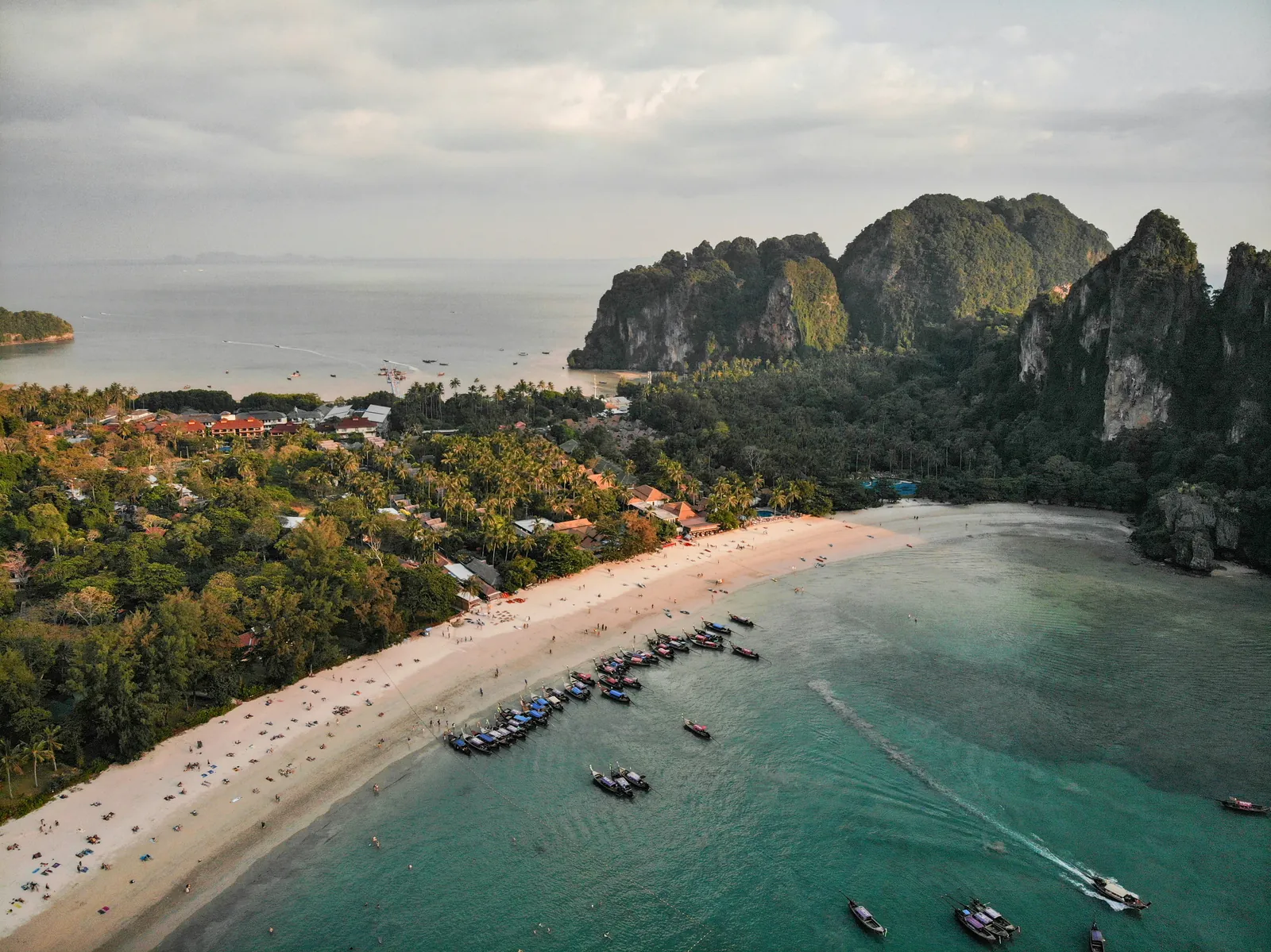
Thailand is 3 hours behind Brisbane all year. It is 3 hours behind Sydney and Melbourne in our winter and 4 hours behind in daylight saving, and 1 hour behind Perth. Seven in the evening in Chiang Mai is ten or eleven at night on the east coast, so morning calls home work better.
Bangkok has two international airports, Suvarnabhumi and Don Mueang, so check which one you’re flying from.
One order that works, from a first visit to living there. The right order for you depends on your health, your home and your money.
Yes, if you are 50 or over and meet the money test for a Non-O, Non-O-A, O-X or Long-Term Resident visa. Your Age Pension keeps paying in Thailand, but you must claim it before you leave Australia.
Our estimate for a month in Chiang Mai is about A$2,790 for a couple and A$1,950 for one person, rent included, before health insurance. The retirement visa also needs 800,000 baht (about A$35,650) in a Thai bank or 65,000 baht a month (about A$2,900) in income, or a mix.
Yes. The Age Pension can keep paying in Thailand, with the usual 6, 12 and 26-week rules. Away more than 12 months, it can go into an Australian or an overseas account. Thailand has no social security agreement with Australia, so you must claim it while you live in Australia.
Australians 50 and over can apply for the Non-O, the one-year Non-O-A or the 10-year O-X, and Australia is one of 14 countries eligible for the O-X. Each has a money test; the Non-O and O-X count money held in a Thai bank, and the Non-O-A and O-X need health insurance.
Thailand taxes residents, people there more than 180 days in a calendar year, on foreign income they bring in. That covers income earned from 1 January 2024 in a year you were resident; income earned before 2024 is excluded. The Australia-Thailand tax treaty decides which country taxes pensions. A registered tax agent here and a tax adviser in Thailand can say how it applies to you.
Not land, in general. Foreigners can own a condo unit, as long as foreign owners hold no more than 49% of the building’s unit area, and the money comes from overseas. A house usually means leasing the land for up to 30 years. Using Thai nominee shareholders to hold land is illegal.
Smartraveller advises a high degree of caution in Thailand overall. It says do not travel within 10 kilometres of the Cambodian border in seven provinces, and reconsider your need to travel to Yala, Pattani and Narathiwat. Chiang Mai, Bangkok, Hua Hin, Pattaya and Phuket are outside those areas.
Low day-to-day costs, retirement visas from 50 and private hospitals in the big cities count for it. Against it: the 30-day visa-free stay, haze in the north, hospital deposits, no land ownership for foreigners and tax on foreign income brought in once you are resident.
Cooler evenings, temples, mountains nearby and a slower pace.

A beach town on the Gulf of Thailand, about 200 kilometres south of Bangkok.
General information only, not financial, tax, legal, migration or insurance advice. Rules change: check the official source before you act, and talk to a licensed professional about your own situation.
Tell us what you have in mind, and we will help you plan it on a free Zoom call: when to go, how long for, and who with.
No pressure and no card details. You decide what comes next.