
Retiring in Spain from Australia: costs, the non-lucrative visa, pension and health cover (2026)
Mild coastal winters and medical facilities of a similar standard to Australia's. Spain also has a social security agreement with Australia.

Checked 21 October 2026, re-checked monthlyBy the Retirees Abroad teamGeneral information only, how we check
The short answer
Our estimate for a month in Alicante is about A$4,860 for a couple or A$3,570 for one person, rent included (October 2026). Australians can stay 90 days in any 180 across Schengen. The non-lucrative visa needs 28,800 euros a year for one person in 2026 (about A$48,350). Spain has a social security agreement with Australia, but Medicare does not cover you.
Spain at a glance
- A comfortable month, couple
- About A$4,860
- A comfortable month, one person
- About A$3,570
- Visa for a visit
- 90 days in any 180; non-lucrative visa for longer
- Weather
- Mild coastal winters; hot summers
- Costs based on
- Alicante (Costa Blanca)
- Medicare agreement
- No
- Social security agreement
- Yes
- Tax treaty with Australia
- Yes (1992)
- Long-stay visa
- Non-lucrative, 28,800 euros a year for one person (about A$48,350, 2026)
- Flight from Sydney
- No non-stop flight; one stop at least
- Time difference
- 10 hours behind Sydney in our summer, 8 in our winter
Costs are mid-range estimates in Australian dollars, rent included, for a comfortable month. For comparison, a comfortable month in Australia is about A$6,580 for a couple who own their home (ASFA, June quarter 2026).
Who Spain suits, and what to weigh up

Spain suits you if you want mild coastal winters with the rest of Europe close by. Smartraveller says the standard of medical facilities is similar to Australia’s, and Spain has a social security agreement with Australia, so you can generally claim your Age Pension from there.

The long-stay visa is the hard part. The non-lucrative visa needs means of 28,800 euros a year for one person in 2026 (about A$48,350 at the RBA’s 12-month average rate), plus 7,200 euros (about A$12,090) for each family member. That’s well above the Age Pension, so it tends to fit self-funded retirees. It also expects you to live there: to renew it, you must have spent more than 183 days of the calendar year in Spain. Without it, you’re limited to 90 days in any 180 across Schengen.
Medicare doesn’t cover you in Spain, and the visa needs private health insurance from an insurer authorised in Spain. Driving takes planning too. Once you live there, an Australian licence lasts only 6 months, and Spain’s traffic authority won’t swap it for a Spanish one.
What a month costs
Our estimate for a month in Alicante is about A$4,860 for a couple and A$3,570 for one person, rent included.
| A month in Alicante | Couple | One person |
|---|---|---|
| Rent, one-bedroom flat in the centre | A$1,510 | A$1,510 |
| Living costs (food, transport, bills) | A$2,230 | A$1,240 |
| Eating out, local trips and extras (30%) | A$1,120 | A$820 |
| Total | A$4,860 | A$3,570 |
How a month in Spain compares
For a couple
- Spain, our estimate
- A$4,860
- Comfortable in Australia
- A$6,580
- Age Pension, the most paid in Australia
- A$4,040
About A$1,720 a month less than a comfortable month in Australia.
For one person
- Spain, our estimate
- A$3,570
- Comfortable in Australia
- A$4,680
- Age Pension, the most paid in Australia
- A$2,680
About A$1,110 a month less than a comfortable month in Australia.
Not built the same way: Australia's figure (ASFA Retirement Standard, comfortable, June quarter 2026) assumes you own your home and includes health insurance; our estimate for Spain includes rent and leaves health insurance out. Age Pension: the most paid in Australia from 20 September 2026; living overseas for good, the base rate is about A$3,710 a month for a couple and A$2,460 for one person.

Our estimate: Numbeo’s living costs for one person (without rent) plus a one-bedroom city-centre rent, plus 30% for eating out, local trips and extras. For a couple, living costs times 1.8. Converted at the Reserve Bank of Australia’s average exchange rate for the 12 months to September 2026 (A$1 = 0.5957 euros). Health insurance is not included. We use Numbeo’s Alicante page, last updated 19 October 2026. Short furnished lets usually cost more than the long-term rent in this table.
The Costa del Sol costs more, mostly in rent. Numbeo puts a one-bedroom flat in central Málaga at about 1,316 euros a month, about A$2,210 at the RBA’s 12-month average rate (15 October 2026). Worked out the same way, a month in Málaga comes to about A$5,710 for a couple and A$4,450 for one person.
What costs more than you’d expect. Health cover sits outside our estimate, and the visa sets a high bar for it: a policy from an insurer authorised in Spain. The embassy in Canberra adds no waiting periods and no excess. The paperwork costs money before you leave. An AFP police check with fingerprints is A$114, each DFAT apostille is A$105, and official translations into Spanish come on top. A car can mean a new licence as well as the car (more under Day to day). Then there are flights home, with at least one stop each way.
Renting long term. Spain’s tenancy law gives a lease on your main home a minimum of 5 years, or 7 if the landlord is a company. A shorter lease rolls over a year at a time unless you, the tenant, give at least 30 days’ notice. The law sets the deposit at one month’s rent, and any extra guarantee at no more than two months’ rent. On our Alicante rent, that’s up to about A$4,520 handed over before you move in. Agency and contract fees can’t be passed on to the tenant.
Furnished lets of 32 days to 12 months are a separate type of lease. Since 8 October 2026, a decree-law has required them to state a real reason you’re away from your usual home. Congress threw out an earlier version at the start of October, and it must vote on this one within 30 days, so these rules may change again.
Before you sign, ask what the rent covers and who pays the community fees and bills; a lawyer in Spain who acts for you can check the lease. Spanish law requires anyone living in Spain to register on the padrón, the register of the town where they live most of the year.
Against the Age Pension. After 12 weeks away, the most the pension pays is the base rate: about A$2,460 a month for one person and A$3,710 for a couple, before tax (rates from 20 September 2026). That leaves a couple about A$1,150 a month short of our Alicante estimate. One person is about A$1,110 short. The visa’s means test for a couple, 36,000 euros a year (about A$60,430), is also above the most the Age Pension pays a couple in Australia.
Visas for Australians

Visiting. Smartraveller says Australians can stay up to 90 days in any 180-day period across the whole Schengen area. The Entry/Exit System (EES) takes your fingerprints and photo the first time you enter. It is free and needs nothing before you arrive, and Smartraveller warns of fake websites that ask you to register or pay first. ETIAS has no confirmed start date, and applications aren’t open yet. Spain is not one of the countries with an extra bilateral waiver for Australians.
Staying longer. The non-lucrative residence visa is for people who will live in Spain without working. Spain’s consulates in Australia list these among the requirements:
- means of 400% of Spain’s IPREM indicator for the main applicant, plus 100% for each family member. IPREM is 600 euros a month (about A$1,010) in 2026 (SEPE), which makes 28,800 euros a year for one person (about A$48,350) and 7,200 euros (about A$12,090) for each family member
- health insurance with an insurer authorised in Spain, covering the risks Spain’s public health system covers
- a police check covering every country you’ve lived in for the last 5 years, and a medical certificate under the 2005 International Health Regulations
- a passport valid for at least a year, with two blank pages, issued in the last 10 years.
The means can be savings to cover the first year or a regular income. There is no age limit.
Where you apply. The Consulate-General in Sydney covers New South Wales, Queensland and the Northern Territory, and its page describes posting the application in. Melbourne’s covers Victoria, Western Australia, South Australia and Tasmania, in person and by appointment only; it suggests asking for one at least three months before you travel. The embassy in Canberra covers the ACT and Queanbeyan. The fee for Australians is set by reciprocity, and the consulates give the amount on request.
After you arrive. The visa is valid for 90 days, and once in Spain you apply for a foreigner identity card (TIE) within a month. Spain’s immigration regulation, in force since May 2025, makes the first permit last 1 year and each renewal 2 years. To renew, you show the money and the insurance again, and that you lived in Spain for more than 183 days in the calendar year. After 5 years of continuous legal residence you can apply for long-term residence. Absences of up to 6 months at a time, and 10 months in total, don’t break the 5 years.
What the visa doesn’t allow. It doesn’t allow work or professional activity. The Local reported in June 2025, quoting a Spanish immigration lawyer, that this rules out remote work for clients outside Spain too. The Melbourne consulate asks you to sign a commitment to keep your health insurance for the whole stay.
A partner. With no age limit, a younger partner is no obstacle. A husband or wife, a registered partner, or a partner you can show you’ve lived with for at least a year can come as a family member. That adds 7,200 euros to the means, making 36,000 euros a year for a couple (about A$60,430). Each of you needs your own forms, insurance, police check and medical certificate, plus a marriage certificate or proof of the partnership.
Documents to get in Australia before you go. The Melbourne and Canberra pages ask for an AFP national police check that includes your fingerprints. The AFP charges A$57 for a check, or A$114 with fingerprints. A fingerprint check is applied for by post, with prints taken at your local police station, and takes 15 to 30 business days. DFAT puts an apostille on Australian public documents, such as a police check or a marriage certificate. It costs A$105 a document from 1 January 2026, and processing times vary. Spain has been in the apostille convention since 1978. Documents also need an official translation into Spanish, and the Sydney consulate points to NAATI’s list of accredited translators. The three offices word their apostille rules a little differently, so ask the one for your state.
Ask Spain’s consulate for your state, or a licensed immigration lawyer in Spain, what proof of means and which insurance policies they accept. Read up on visa agent and property scams before you pay anyone. Our guide to retirement visas by age compares other countries.
Your Age Pension and Medicare in Spain
Services Australia says your Age Pension can keep paying while you are overseas. After 6 weeks away the Energy Supplement stops and your Pensioner Concession Card is cancelled. The Pension Supplement stops completely at 12 weeks (since 20 September 2026). If you lived in Australia less than 35 years between age 16 and pension age, your rate can be reduced after 26 weeks. Our guide to the 6, 12 and 26-week rules explains each step.
Spain is a social security agreement country. That generally means you can claim the Age Pension from Spain, instead of having to be in Australia on the day you claim. If you move for good, you get the base rate only from the day you leave: A$29,520.40 a year single, A$44,506.80 for a couple.
Medicare never pays for treatment overseas, and Smartraveller says plainly that Medicare does not cover you in Spain. It is not one of Australia’s 11 reciprocal health care countries. If you are an Australian citizen and move overseas, you can still use Medicare for treatment in Australia, on visits home, for up to 5 years after you leave. Visits home do not restart that clock. After that, you re-enrol when you move back to live. Permanent residents’ enrolment ends 12 months after they leave. Our guide to Medicare overseas has the detail.
Health care and insurance

The standard of medical facilities is similar to Australia’s, Smartraveller says, but most doctors do not speak English. The Australian Embassy in Madrid keeps a list of English-speaking doctors and medical facilities. With no agreement for free care, a visitor pays for everything, a hospital stay or an evacuation included. The emergency number is 112, and Smartraveller says English-speaking staff are available.
Public cover after a year. Spain has a pay-in scheme for residents who have no other public cover, called the convenio especial. A 2013 royal decree sets it at 60 euros a month (about A$100) under 65, and 157 euros (about A$260) at 65 and over. Regions can charge more if they add services. You can join only after a year’s continuous residence in Spain, while registered on a town’s padrón. Whether it satisfies the insurance condition when you renew your visa is a question for the immigration office.
What’s close by, and when it means travel. Spain’s Ministry of Health catalogue lists public and private hospitals in each of the areas in the table below. Small inland villages can be a long drive from a hospital. Getting home to Australia after a serious illness is a long-haul flight, and Smartraveller’s page on retiring overseas says a medical repatriation can cost hundreds of thousands of dollars.
Your medicines. Spain’s medicines agency (AEMPS) limits travellers to 3 months’ supply of a medicine containing a narcotic or psychotropic substance. Above set amounts you need its permit, applied for at least 10 days before you travel; cannabis-based medicines are limited to 15 days. For other medicines it suggests carrying the prescription. Smartraveller adds a doctor’s letter listing each medicine, the dose and that it is for your own use. Our guide to taking PBS medicines overseas covers the Australian side.
Which cover. For a visit, Smartraveller says you need travel insurance. The usual type for a winter away is travel insurance for a single long trip; ask whether it covers your full stay at your age and any conditions you already have. Our guide to travel insurance for long stays covers trip caps. Living there on the visa means a private health policy from an insurer authorised in Spain, with the visa’s conditions. Insurers set their own age limits for new members; our guide to international health insurance by age lists what to ask. If you’d like help working out where to start, book a free planning session on Zoom.
Smartraveller also warns that heatwaves are becoming more common in southern and central Spain in summer, and that forest fires happen, mostly from May to September.
Where Australians live

There is no official count of where Australians settle in Spain. These are four areas to compare.
| Area | What it’s like | Getting around | Hospital | Airport |
|---|---|---|---|---|
| Alicante and the Costa Blanca | Port city below Santa Bárbara castle, with beach towns along the coast; our cost base | Seafront promenade by the port; steep up to the castle | Public and private hospitals in the city | Alicante-Elche, about 20 minutes’ drive |
| Málaga and the Costa del Sol | City and a string of resort towns to the south-west; higher rents | Metro in the city; commuter trains along the coast | Public and private hospitals in Málaga | 8 km out; under 15 minutes by commuter train |
| Valencia | Large city on the coast north of Alicante | Flat; metro, trams and buses | Public and private hospitals in the city | 8 km out; about 20 minutes by metro |
| The Canary Islands | Spanish islands in the Atlantic, off north-west Africa | Varies by island; hilly in places | Public and private hospitals on Gran Canaria and Tenerife | On each of the main islands |
Driving times are rough. Spain’s tourism board gives the Málaga and Valencia airport distances and travel times.
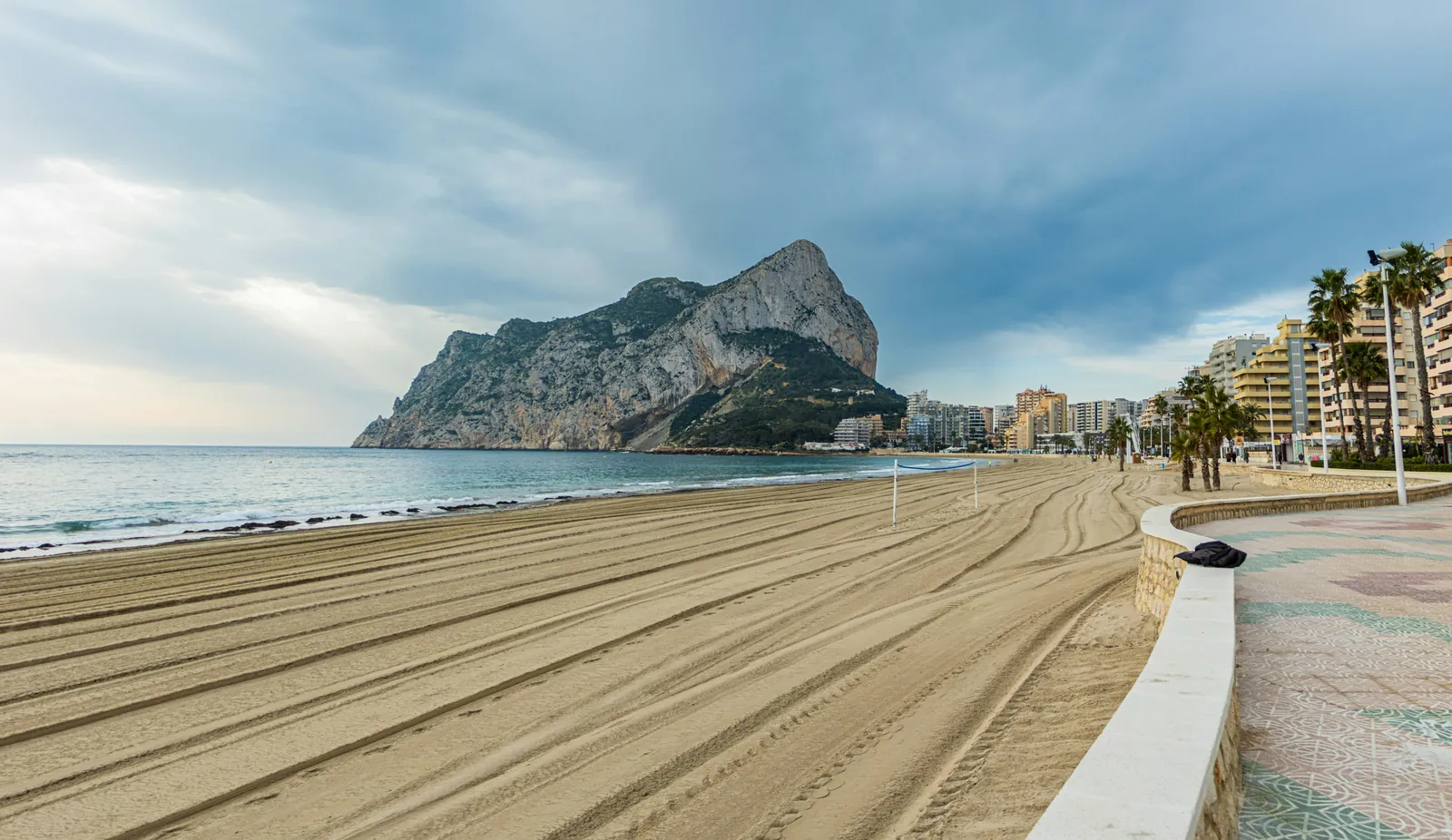
Alicante sits at the foot of Santa Bárbara castle, with the Explanada de España promenade facing the port. Beach towns such as San Juan, Santa Pola, Torrevieja, Altea and Dénia are along the same coast. Costs on this page are based on Alicante.
The Costa del Sol starts at Málaga. Commuter trains run from the airport to the city centre in under 15 minutes, and along the coast to Torremolinos, Benalmádena and Fuengirola, about 35 km away. High-speed trains reach Madrid in under three hours. Rents here are higher in Numbeo’s figures.
Valencia is a large city with a metro, trams and buses, and high-speed trains to Madrid. The Local reported in March 2026 that the Valencia region and Andalusia now flood often.
The Canary Islands lie off the coast of north-west Africa, so reaching the rest of Spain or Europe means a flight.
If you are weighing Spain against its neighbour, see our Portugal page and our page on the Algarve.
Renting or buying a home
Foreigners rent in Spain under the same lease law as Spaniards, and can buy too. Foreign buying has become political: the government tied the end of the golden visa in April 2025 to access to housing.
The golden visa is gone. Until 3 April 2025, buying property worth more than 500,000 euros (about A$839,000) could lead to a residence visa. The Government of Spain ended that route on that date, so buying a home no longer gives you a right to live there. You still need the non-lucrative visa or another permit.
A tax on non-EU buyers was proposed. In 2025 the governing party put a bill to Congress for a tax of up to 100% of the price on buyers who aren’t EU residents. Reuters reported in March 2026 that it had stalled and hadn’t been debated. We found no sign it has passed; a notary or lawyer in Spain can confirm where it stands.
What a purchase involves. You need a foreigner identity number (NIE), which Spain’s police issue in Spain or through a Spanish consulate abroad. The sale is signed before a notary, and the new owner is recorded at the land registry. A land registry summary, the nota simple, shows who owns the property and any mortgages or charges on it. Taxes on a purchase depend on the region and on whether the home is new. The notary or a lawyer can give the figures for a particular property.
Before you commit. Spain’s lease law gives a tenant on a main home 5 years, so a rental can be a long trial run. If you buy and let the place, Spain can tax the rent. The people to ask are a property lawyer in Spain who acts for you, not the seller, and the notary. Our guide to keeping, renting or selling the family home covers the Australian side.
Tax: there and at home
Spain’s tax agency says you’re tax resident in a calendar year if you spend more than 183 days in Spain, or if your main base of economic interests is there. Short trips away still count as days in Spain unless you prove you’re tax resident in another country. It also presumes you’re resident if your husband or wife and dependent children under 18 live in Spain.
Spanish residents pay income tax (IRPF) on their income. The state’s scale on general income runs from 9.5% to 24.5%, and each region adds its own scale on top, so the total depends on where you live. Residents also file a yearly return listing assets held outside Spain above set values (Modelo 720).
Australia and Spain have had a tax treaty since 1992. Its pensions article says a pension or annuity paid to a resident of one country is taxable only in that country, apart from some government service pensions. Rent from property can be taxed in the country where the property is. How that works for your Age Pension, super or a house in Australia depends on the details.
At home, the ATO’s residency tests decide whether you are still an Australian resident for tax; our guide to tax residency when you retire overseas walks through them. If you become a foreign resident, you lose the tax-free threshold, so Australian income such as rent is taxed at 30% from the first dollar (2025-26), as the foreign resident tax rates show. Sell your Australian home while you are a foreign resident and, for sales after 30 June 2020, you generally lose the main residence exemption from capital gains tax, apart from narrow life events.
Talk to a registered tax agent in Australia, and a tax adviser in Spain, before your first 183 days there.
Money and banking
Services Australia can pay your Age Pension into an Australian bank account, or into an account in Spain, in euros, once you lodge its international bank account form (AUS178).
Each Spanish bank sets its own paperwork. Ask what it needs from someone on your visa: your passport, NIE, TIE or a padrón certificate. Spain’s central bank says banks can’t refuse a basic payment account to someone who has no other account in Spain, apart from security and anti-money laundering grounds. The fee for one is capped at 3 euros a month (about A$5).
To move money there’s your Australian bank, a currency transfer service or a multi-currency card. Compare the rate and fees on the amount you’d send, such as a year’s means for the visa. Smartraveller says to use ATMs in banks, shops and shopping centres because of card fraud. Travelling to or from a country outside the EU, you declare 10,000 euros (about A$16,790) or more, in cash or other forms.
Your pension is paid in Australian dollars, so it buys more when the euro falls and less when it rises. Our costs use the RBA’s 12-month average, which smooths those swings out.
Day to day
Language. Spanish is the official language nationwide, and the Constitution lets regions add their own. The Local notes that in the Valencia region, which takes in Alicante, that’s Valencian. Even a little Spanish helps with landlords, the town hall and the doctor.

Getting around without driving. Málaga and Valencia have metros and commuter trains, and high-speed trains link both to Madrid. In smaller towns, buses can be infrequent.
Driving. Smartraveller says that to drive on a visit, you need your Australian licence and an International Driving Permit, or you may be fined and the car impounded. Cars must carry a V-16 flashing emergency light and a reflective jacket, and city centres have low emission zones. Once you’re a resident, Spain’s traffic authority (DGT) says a licence from outside the EU is valid for only 6 months. Australia isn’t on its list of countries whose licences can be exchanged, so after that you need a new Spanish licence.
Safety beyond health. Smartraveller’s advice for Spain is to exercise normal safety precautions, though Spain’s terrorism alert level is high. It warns of bag snatching, pickpocketing and theft from cars in big cities and tourist areas, and of thieves on the highways who fake a flat tyre. Drug penalties include heavy fines and prison. Smartraveller says to carry ID, such as a copy of your passport on paper or your phone; police can hold you until they confirm who you are. Smartraveller says Spain doesn’t recognise dual nationality, and advises travelling on your Australian passport. Smartraveller also says inheritance scams are run from Spain: an email from a “lawyer” about money left by a relative you’ve never heard of.
The weather, month by month. Alicante is dry, with about 311 mm of rain a year and 2,851 hours of sunshine (AEMET normals, 1981 to 2010):
| Month in Alicante | Average high | Average low | Rain |
|---|---|---|---|
| January | 17°C | 6°C | 23 mm |
| February | 18°C | 7°C | 22 mm |
| March | 20°C | 9°C | 23 mm |
| April | 21°C | 11°C | 29 mm |
| May | 24°C | 14°C | 28 mm |
| June | 28°C | 18°C | 12 mm |
| July | 30°C | 21°C | 4 mm |
| August | 31°C | 21°C | 7 mm |
| September | 29°C | 19°C | 56 mm |
| October | 25°C | 15°C | 47 mm |
| November | 21°C | 10°C | 36 mm |
| December | 18°C | 7°C | 25 mm |
At Málaga airport it’s much the same, with a January average high of 17°C, but wetter in late autumn: 100 mm of rain in November. The Local reported in March 2026 that inland summer temperatures regularly pass 40°C. Smartraveller says floods and heavy rain have killed people.
Holidays that close things. Spain’s 2027 holiday list, published on 13 October 2026, includes Good Friday on 26 March, 12 October, 1 November, 6 and 8 December and Christmas Day. Each region adds its own days, such as 9 October in the Valencia region.
Making friends. A Spanish class or a walking group gives you the same faces each week. If you’re going alone, see retiring overseas single; as a couple, see retiring overseas as a couple.
Getting there and coming home
There is no non-stop flight between Australia and Spain. Expect at least one stop, usually in the Middle East or Asia, and a full day of travel or more. Coming home for a family event is a big trip. Smartraveller notes that conflict in the Middle East can close airspace and cancel flights at short notice, even when it isn’t your destination.
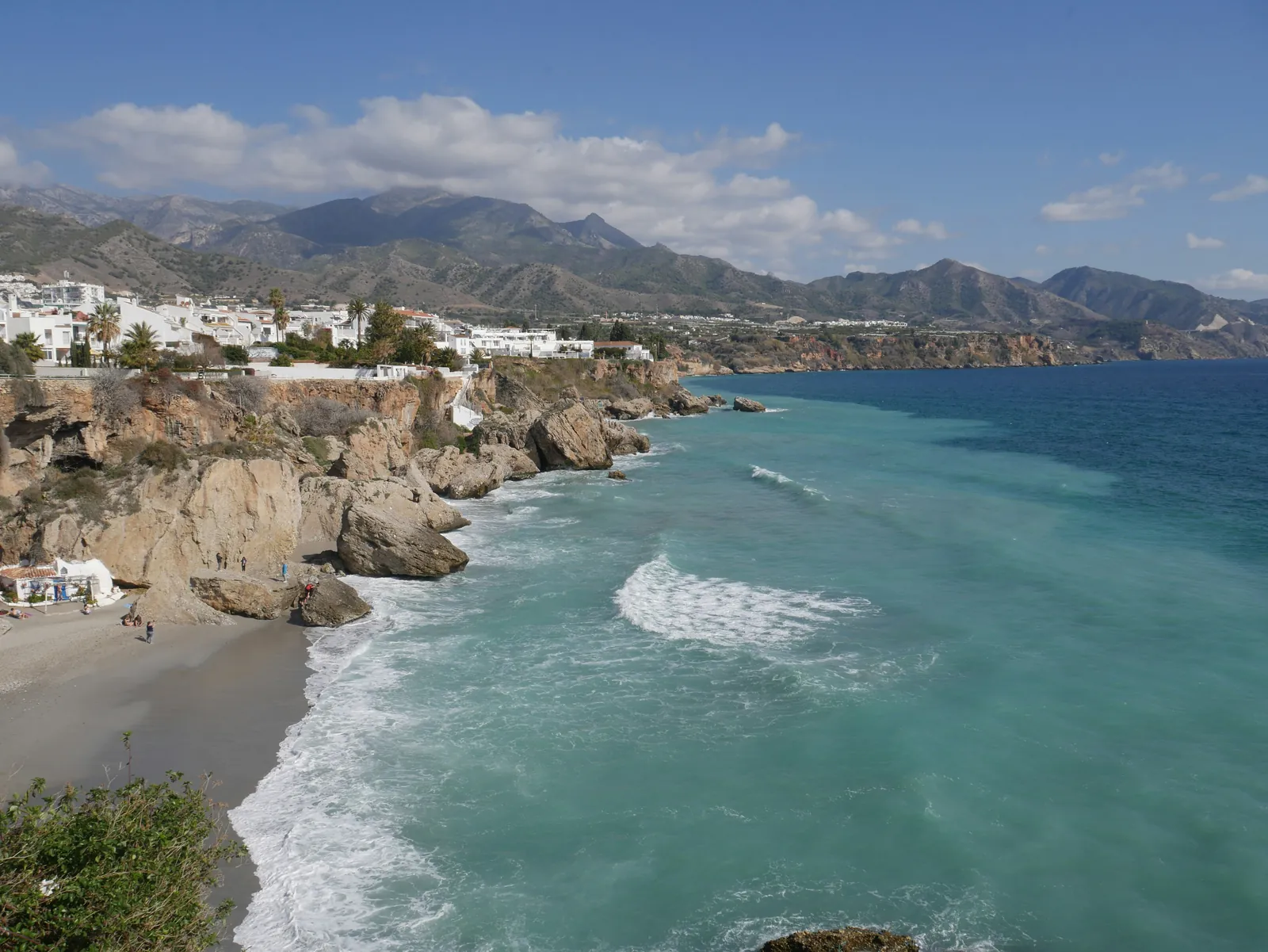
Mainland Spain is 10 hours behind Sydney and Melbourne in our summer, and 8 hours behind in our winter. For a few weeks around April and October, when both countries are on daylight saving, it’s 9. Perth is 7 hours ahead in our summer and 6 in our winter. Your morning is evening in Australia.
Your first steps
One order that works, from a first look to living there:
- Ask for help first. Book a free planning session on Zoom, or contact our team. Once we understand your situation, we can point you in the right direction.
- Spend a winter in Spain within the 90 days, in a town you could rent in long term. Our guide to trying it before you move sets out the options.
- Put your own numbers against the visa’s means test and the pension: what you’ll get after 12 weeks away, and a year in Spain with insurance. See living overseas on the Age Pension.
- Talk it through with your family, including who would fly over if you got sick. See talking to family.
- Work out what happens to the house, and how it counts for the pension while you’re away. See does the house count while you are away.
- See your GP, check each medicine against the AEMPS rules, and get a doctor’s letter. With an ongoing condition, read retiring overseas with a health condition.
- Get quotes for a policy that meets the visa’s conditions: an insurer authorised in Spain, no waiting periods, no excess.
- Order the AFP check with fingerprints, then the apostilles and translations, and book the consulate for your state. Our visa guides compare the rules in other countries.
- Tell Services Australia you’re going and check what happens to your payments. See taking your Age Pension overseas.
- Within a month of arriving, apply for your TIE, then register on the padrón where you live. Our guide to the long stay covers living somewhere on a lease.
- Talk to a tax agent here and a tax adviser in Spain before your first 183 days are up.
- Keep a plan for coming home: where you’d live, and how the pension and Medicare restart. See coming home.
Questions people ask
Can an Australian retire in Spain?
Yes, on a non-lucrative visa, if you meet the means test of 28,800 euros a year for one person in 2026 (about A$48,350) and hold health insurance from an insurer authorised in Spain. Each family member adds 7,200 euros (about A$12,090). Without the visa, you can stay 90 days in any 180.
How much do you need to retire in Spain per month?
Our estimate for Alicante is about A$4,860 a month for a couple and A$3,570 for one person, rent included, before health insurance. The visa’s means test works out at 2,400 euros a month for one person (about A$4,030), or 3,000 euros (about A$5,040) for a couple.
Can I live in Spain on the Australian pension?
The pension keeps paying in Spain, into an Australian account or a euro account there, and you can generally claim it from Spain. On its own, though, it is below the visa’s means test and below our estimate for a month in Alicante.
Is there an age requirement for the Spain retirement visa?
No. The non-lucrative visa that retirees use has no minimum age; it turns on money, insurance and a clean police check. A younger husband, wife or partner can come with you as a family member.
How long can you stay in Spain with a non-lucrative visa?
The first permit lasts 1 year and renewals 2 years each, as long as you still meet the money and insurance tests. Each renewal needs more than 183 days in Spain in the calendar year. After 5 years you can apply for long-term residence.
Can Australians buy property in Spain?
Yes. You need a foreigner identity number (NIE), and the sale is signed before a notary and recorded at the land registry. Since April 2025, buying no longer leads to a golden visa. A proposed tax of up to 100% on non-EU buyers had stalled in Congress, Reuters reported in March 2026.
Does Medicare cover me in Spain?
No. Spain has no reciprocal health care agreement with Australia. You need travel insurance for a visit or private health insurance to live there. Medicare still covers citizens back in Australia for up to 5 years after they move.
Is it better to retire in Spain or Portugal?
Income is the big difference. Our Portugal page puts Portugal’s D7 visa income test at 920 euros a month for one person in 2026 (about A$1,540), against Spain’s 2,400 euros (about A$4,030). Our Algarve estimate is about A$4,570 a month for a couple, a little below Alicante’s.
Is Spain a good fit?
Good for
- A European winter away of up to 90 days
- Self-funded retirees who meet the income test
- Medical facilities similar to Australia's
Think about
- The non-lucrative visa income test is above the Age Pension
- Renewing the visa needs more than 183 days a year in Spain
- No Medicare agreement, so you pay for private cover
- An Australian licence can't be swapped for a Spanish one
- No non-stop flight home
Places to compare
- PortugalMild winters, and a long-stay visa whose income test is set at the Portuguese minimum wage. Portugal also has a social security agreement with Australia.
- The AlgarveOur summer is the Algarve's winter, and a mild one, with a coastal train line linking towns from Lagos to the Spanish border.
- FranceA long-stay visitor visa with no age limit and a published income test, and medical facilities Smartraveller says are similar to Australia's.
- ItalyItaly has a social security agreement and a Medicare agreement with Australia, and on our figures Puglia costs less than Tuscany.




Guides for this place
- Claim before you leaveCan you claim the Age Pension while overseas? You must be living in and physically in Australia on the day you claim. The agreement countries, checked 2026.
- The 6, 12 and 26-week rulesWhat happens to your Age Pension at 6, 12 and 26 weeks overseas, updated for the Pension Supplement change of 20 September 2026. Checked October 2026.
- Medicare overseasDoes Medicare cover me overseas? No. The 11 reciprocal agreement countries, none in Asia, and the 5-year rule for Medicare on visits home. Checked 2026.
- Health insurance by ageInternational health insurance for over 70s living overseas: why age matters, the types of cover, and the questions to ask a broker. Checked October 2026.
- Medicines overseasTaking PBS medicines overseas: how to do it legally, how much to take, why nobody can post them to you, and the fine of up to $16,500. Checked October 2026.
- Retirement visas by ageRetirement visa age requirements by country for Australians: the youngest age and the money rules in Thailand, Malaysia, the Philippines, Portugal and Spain.






Sources
- Smartraveller: Spain, checked 21 October 2026 (page updated 11 September 2026)
- Smartraveller: Visas and entry requirements, Europe and the Schengen area, checked 20 October 2026 (page updated 18 August 2026)
- Smartraveller: Going overseas to retire, checked 21 October 2026 (page updated 18 August 2026)
- Consulate-General of Spain in Sydney: Non-lucrative residence visa, checked 21 October 2026
- Consulate General of Spain in Melbourne: Non-working residence visa, checked 21 October 2026 (page dated 15 December 2025)
- Embassy of Spain in Canberra: Non-lucrative residence visa, checked 21 October 2026
- BOE: Real Decreto 1155/2024, Reglamento de la Ley Orgánica 4/2000 (articles 61 to 64, 183 and 205), checked 21 October 2026 (in force from 20 May 2025)
- SEPE (Spain's public employment service): annual amounts, including IPREM, checked 21 October 2026
- The Local: Spain clarifies two key rules of the non-lucrative visa (reported: remote work), checked 21 October 2026 (article dated 10 June 2025)
- AFP: National Police Checks (fees, fingerprint checks and processing times), checked 21 October 2026
- Smartraveller: Notarial services (apostille fee from 1 January 2026), checked 21 October 2026 (page updated 30 September 2026)
- Smartraveller: How to get your documents legalised, checked 21 October 2026 (page updated 30 September 2026)
- HCCH: Apostille Convention status table (Spain in force 25 September 1978), checked 21 October 2026
- Services Australia: Travel outside Australia rules for Age Pension, checked 19 October 2026
- Services Australia: Payment schedule and rates for people outside Australia, checked 20 October 2026 (page dated 24 September 2026)
- Services Australia: International social security agreements, Europe, checked 21 October 2026 (page updated 27 July 2026)
- Services Australia: Enrolling in Medicare if you're an Australian citizen, checked 20 October 2026 (page dated 30 June 2025)
- Services Australia: Enrolling in Medicare if you're an Australian permanent resident, checked 20 October 2026 (page dated 11 July 2025)
- Services Australia: International bank account form (AUS178), Spain paid in euros, checked 21 October 2026 (page updated 18 September 2026)
- BOE: Real Decreto 576/2013, convenio especial de prestación de asistencia sanitaria (articles 3 and 6), checked 21 October 2026
- Ministry of Health of Spain: National Hospital Catalogue, checked 21 October 2026
- AEMPS (Spanish Agency of Medicines): questions and answers for travellers to Spain with narcotic or psychotropic medicines, checked 21 October 2026 (page dated 28 August 2026)
- Numbeo: cost of living in Alicante, checked 20 October 2026 (last updated 19 October 2026)
- Numbeo: cost of living in Malaga, checked 20 October 2026 (last updated 15 October 2026)
- Reserve Bank of Australia: Historical exchange rates, F11.1 (daily, 2023 to current); 12-month average, 1 October 2025 to 30 September 2026, checked 20 October 2026
- BOE: Ley 29/1994 de Arrendamientos Urbanos, consolidated text (articles 9, 9 bis, 20 and 36), checked 21 October 2026 (last update published 7 October 2026, in force 8 October 2026)
- BOE: Spanish Constitution, articles 3 (official languages) and 86 (decree-laws go to Congress within 30 days), checked 21 October 2026
- BOE: Ley 7/1985 Reguladora de las Bases del Régimen Local, article 15 (the padrón), checked 21 October 2026
- La Moncloa (Government of Spain): the end of golden visas takes effect on 3 April, checked 21 October 2026 (release dated 2 April 2025)
- Reuters (via MarketScreener): Spain's 100% non-EU property tax stalls in congress, checked 21 October 2026 (article dated 27 March 2026)
- Colegio de Registradores (Aragón): Publicidad formal, the nota simple, checked 21 October 2026
- Agencia Tributaria: Persona física residente en España (tax residence test), checked 21 October 2026 (page updated 21 July 2026)
- Agencia Tributaria: Manual práctico IRPF 2025, gravamen estatal (state scale), checked 21 October 2026
- Agencia Tributaria: Modelo 720, declaración informativa sobre bienes y derechos situados en el extranjero, checked 21 October 2026 (page updated 20 October 2026)
- Treasury: Australia's income tax treaties (Spain, signed 24 March 1992, in force 10 December 1992), checked 21 October 2026 (page updated 24 March 2026)
- ATO: Synthesised text of the Australia and Spain tax agreement (articles 6 and 18), checked 21 October 2026
- ATO: Tax rates for foreign residents, checked 21 October 2026 (page updated 1 June 2026)
- ATO: Main residence exemption for foreign residents, checked 21 October 2026 (page updated 22 June 2026)
- Banco de España, Portal del Cliente Bancario: ¿Tenemos derecho a que nos abran una cuenta? (basic payment account), checked 21 October 2026 (article dated 8 August 2023)
- DGT (Spain's traffic authority): exchanging foreign driving licences, checked 21 October 2026
- AEMET (Spain's weather agency): climate normals, Alicante (station 8025), 1981 to 2010, checked 21 October 2026
- AEMET: climate normals, Málaga Airport (station 6155A), 1981 to 2010, checked 21 October 2026
- BOE: Resolución de 8 de octubre de 2026, fiestas laborales para el año 2027, checked 21 October 2026 (published 13 October 2026)
- Spain.info (Turespaña): Málaga, how to get there and get around, checked 21 October 2026
- Spain.info (Turespaña): Valencia, how to get there and get around, checked 21 October 2026
- Spain.info (Turespaña): Alicante, checked 21 October 2026
- The Local: What to consider when deciding where to retire to in Spain in 2026 (reported: regional languages, floods, inland heat), checked 21 October 2026 (article dated 13 March 2026)
- BITRE: International Airline Activity, June 2026 (no non-stop flights to Portugal or Spain), checked 20 October 2026
General information only, not financial, tax, legal, migration or insurance advice. Rules change: check the official source before you act, and talk to a licensed professional about your own situation.
Thinking about Spain?
Tell us what you have in mind, and we will help you plan it on a free Zoom call: when to go, how long for, and who with.
No pressure and no card details. You decide what comes next.