
Retiring in Cambodia from Australia: costs, the retirement visa, pension and health cover (2026)
Low costs, US dollars as everyday money, and a retirement extension from 55 that renews for up to 12 months at a time.
Checked 21 October 2026, re-checked monthlyBy the Retirees Abroad teamGeneral information only, how we check
The short answer
Our estimate for a month in Siem Reap is about A$2,490 for a couple or A$1,660 for one person, rent included (October 2026). Australians need a visa for any stay: 30 days as a tourist, or an ordinary visa extended as a retirement (ER) visa from age 55. Your Age Pension keeps paying, but Medicare never pays for treatment in Cambodia.
Cambodia at a glance
- A comfortable month, couple
- About A$2,490
- A comfortable month, one person
- About A$1,660
- Visa for a visit
- 30-day tourist visa; ER retirement extension from 55
- Weather
- Wet season May to October
- Costs based on
- Siem Reap
- Medicare agreement
- No
- Social security agreement
- No
- Tax treaty with Australia
- No
- Long-stay visa
- ER retirement extension, 55 and over, 1 to 12 months, renewable
- Flight from Sydney
- No non-stop flight; one stop at least
- Time difference
- 3 hours behind Sydney (4 in daylight saving)
Costs are mid-range estimates in Australian dollars, rent included, for a comfortable month. For comparison, a comfortable month in Australia is about A$6,580 for a couple who own their home (ASFA, June quarter 2026).
Who Cambodia suits, and what to weigh up

Cambodia suits you if you are 55 or over, want low day-to-day costs and don’t mind renewing a visa from inside the country. US dollars are legal tender alongside the riel, and the Cambodian embassy in Berlin says a retirement extension can run for 12 months at a time and be renewed again and again.
Health care is the main thing to weigh up. Smartraveller says anything serious means evacuation to another country, which can be very expensive. It also says some people find Cambodia comfortably affordable, then face real money trouble in a health or other emergency, with little social support to fall back on.
Foreigners can buy a flat above the ground floor, but never land. Permanent residency is hard to plan around: GOV.UK says it is granted case by case, at the King’s discretion, and can depend on your language ability, among other things.
What a month costs
Our estimate for a month in Siem Reap is about A$2,490 for a couple and A$1,660 for one person, rent included.
| A month in Siem Reap | Couple | One person |
|---|---|---|
| Rent, one-bedroom flat in the centre | A$480 | A$480 |
| Living costs (food, transport, bills) | A$1,430 | A$790 |
| Eating out, local trips and extras (30%) | A$580 | A$390 |
| Total | A$2,490 | A$1,660 |
How a month in Cambodia compares
For a couple
- Cambodia, our estimate
- A$2,490
- Comfortable in Australia
- A$6,580
- Age Pension, the most paid in Australia
- A$4,040
About A$4,090 a month less than a comfortable month in Australia.
For one person
- Cambodia, our estimate
- A$1,660
- Comfortable in Australia
- A$4,680
- Age Pension, the most paid in Australia
- A$2,680
About A$3,020 a month less than a comfortable month in Australia.
Not built the same way: Australia's figure (ASFA Retirement Standard, comfortable, June quarter 2026) assumes you own your home and includes health insurance; our estimate for Cambodia includes rent and leaves health insurance out. Age Pension: the most paid in Australia from 20 September 2026; living overseas for good, the base rate is about A$3,710 a month for a couple and A$2,460 for one person.
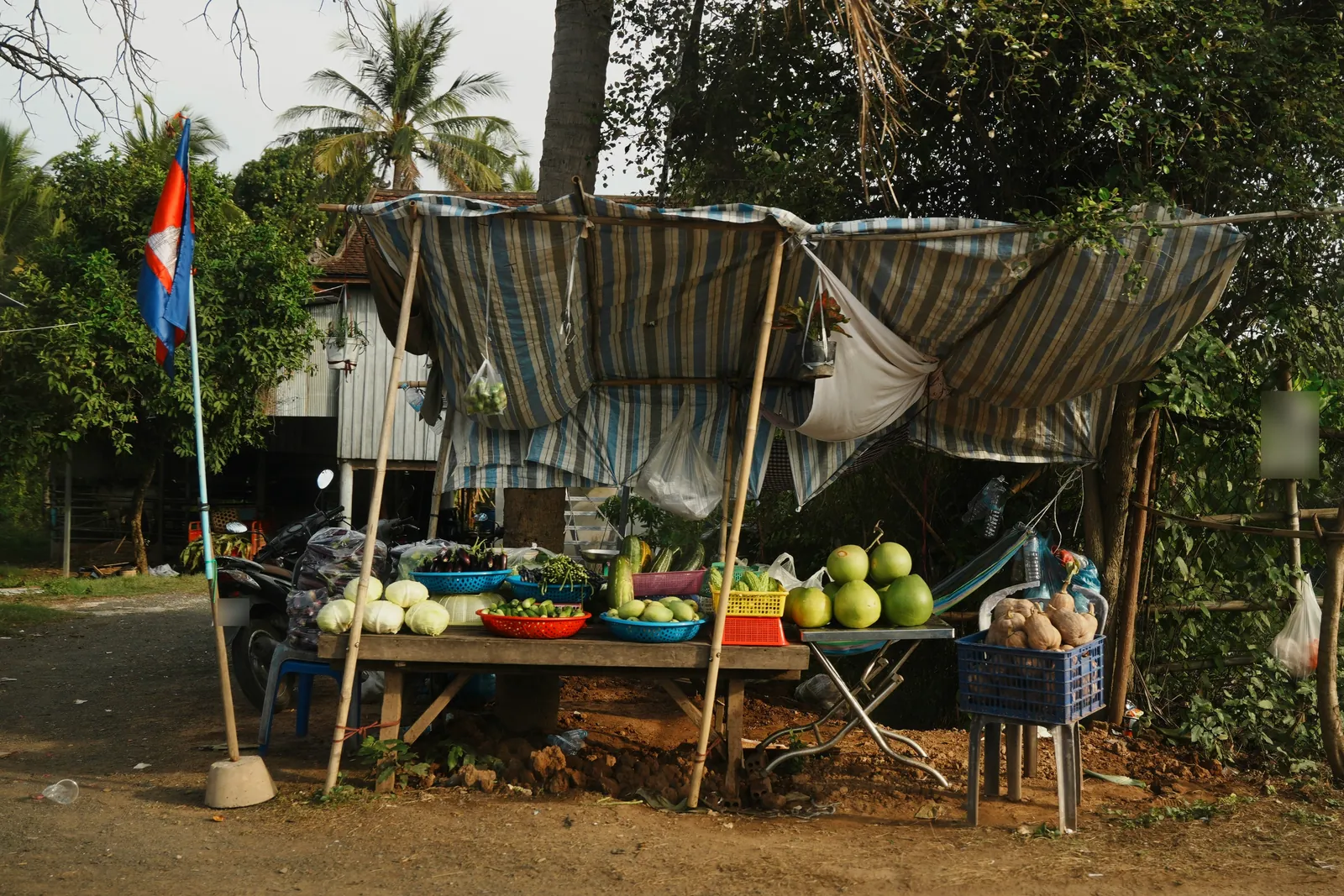
Our estimate: Numbeo’s living costs for one person (without rent) plus a one-bedroom city-centre rent, plus 30% for eating out, local trips and extras. For a couple, living costs times 1.8. Converted at the Reserve Bank of Australia’s average exchange rate for the 12 months to September 2026 (A$1 = 0.6919 US dollars). Health insurance is not included. US dollars are legal tender in Cambodia, so we use Numbeo’s US dollar figures, converted at the RBA’s average US dollar rate. Numbeo’s Siem Reap page, last updated 26 September 2026, puts living costs for one person at about US$550 a month (about A$790) and a central one-bedroom flat at US$334 (about A$480). Short furnished lets usually cost more than the long-term rent in this table.
Phnom Penh costs more, mostly in rent. Numbeo’s Phnom Penh page, last updated 20 October 2026, puts living costs for one person at about US$636 a month (about A$920), and a one-bedroom flat in the centre at US$655 (about A$950). Worked out the same way, a month in Phnom Penh comes to about A$3,380 for a couple and A$2,430 for one person.
Against the Age Pension. After 12 weeks away, the most the pension pays is the base rate: about A$2,460 a month for one person and A$3,710 for a couple, before tax (rates from 20 September 2026). That is about A$1,220 a month more than our Siem Reap estimate for a couple, and about A$800 more for one person, before health insurance.
What costs more than you’d expect. Health cover is the big one, and our estimate leaves it out. Smartraveller says international health insurance can be costly, and hard to get at all with a pre-existing condition. A July 2026 report by the ASEAN+3 Macroeconomic Research Office puts Cambodia’s electricity prices among the highest in South-East Asia, especially for businesses. Siem Reap’s average high tops 30°C in every month, so the air conditioning rarely rests. A car means a Cambodian licence as well as the running costs.
Renting long term. Expat Arrivals, a guide for people moving abroad, reports that 12-month leases are common. It puts the deposit at one to three months’ rent, and the notice to end a lease early at one to three months. It also reports that the power account usually stays in the landlord’s name and that some landlords inflate foreigners’ bills, so ask to see the supplier’s bill. Your landlord must also register you as a foreign resident. Before you sign, get the rent, what it covers, the deposit terms and who pays for repairs in writing. A furnished short let for the first month or two lets you see the street in the wet season before you commit to a year.
Visas for Australians

You need a visa for any stay in Cambodia. To stay long term, you come in on an ordinary visa and then get a retirement extension inside the country.
Visiting. Smartraveller says you can apply for an e-visa online or get a tourist visa on arrival. Both last 30 days, and a tourist visa can be renewed once only. If you fly in, fill in the free Cambodia e-Arrival Card in the 7 days before you land. Overstaying costs US$10 a day (about A$14) with no upper limit, and a long overstay can end in detention.
The official e-visa site, evisa.gov.kh, is run by Cambodia’s Ministry of Foreign Affairs. It charges US$30 (about A$43) for a tourist visa and US$35 (about A$51) for an ordinary visa, processed in 3 business days, and e-visas work at the Phnom Penh, Siem Reap and Sihanoukville airports. Since 3 October 2026, the Berlin embassy says, visas are issued digitally, not as passport stickers. Smartraveller warns about visa scams and strangers who offer to help with visas.
Staying longer. The Royal Embassy of Cambodia in Berlin sets out two steps. First you get an ordinary (E-class) visa from an embassy or through the e-visa website, which lets you stay 30 days. Then, in Cambodia, you apply to the immigration office for an extension of stay marked ER, for retirement. The first visa decides what comes next. The embassy lists the tourist (T) visa as extendable once only, and ER as an extension of the ordinary visa, so a tourist visa does not lead to an ER extension.
ER extensions run for 1, 3, 6 or 12 months and can be renewed with no limit. The 1 and 3 month ones are single entry, so leaving Cambodia ends them; with 6 or 12 months you can come and go. To qualify you need to be 55 or over (the embassy says there may be exceptions) and retired, with a pension statement or entitlement letter to show it. You also need bank or pension statements showing enough money to live on. Health insurance isn’t required, though the embassy recommends it. The extension is for people who aren’t working; Smartraveller says any work needs a work permit. Our guide to retirement visas by age compares other countries.
The embassy’s page does not list a fee, and we could not find one published by Cambodia’s immigration department either. Cambodia’s embassy or immigration office, or a licensed visa agent in Cambodia, can tell you what it costs now and which pension papers they accept.
A partner under 55. The embassy’s table lists a dependant route for the business (EB) extension, but none for ER. If one of you is under 55, ask Cambodia’s embassy or immigration office, or a licensed visa agent there, which extension the younger partner can hold.
Documents to get in Australia before you go. The embassy’s ER list doesn’t mention a police check or a medical certificate. Ask which papers they want, and whether any must be legalised, while you are still in Australia. An Australian Federal Police national police check costs A$57, and the AFP says most online checks arrive within a few days; one with fingerprints costs A$114 and takes 15 to 30 business days. DFAT legalises Australian documents with an apostille or authentication certificate, at an Australian Passport Office by appointment or by mail, and Smartraveller says processing times vary.
Every foreigner must also be registered in Cambodia’s Foreigners Present in Cambodia System. Hotels and landlords do this for you, and Smartraveller says to make sure they have. If you own your home, you register yourself through the immigration department’s FPCS app.
Your Age Pension and Medicare in Cambodia
Services Australia says you may be able to get the Age Pension for the whole time you are outside Australia, even if you move to another country. After 6 weeks away the Energy Supplement stops and your Pensioner Concession Card is cancelled. The Pension Supplement stops at 12 weeks. If you lived in Australia less than 35 years between age 16 and pension age, your rate drops after 26 weeks to a share of the usual rate. For example, 10 years of residence gets you 10/35ths. The 6, 12 and 26-week rules explain each step.
Cambodia has no social security agreement with Australia. On the day you claim, you must be living in Australia and physically here, so you need to claim the Age Pension before you leave. If you move for good, you get the base rate only from the day you leave: A$29,520.40 a year single, A$44,506.80 for a couple.
Department of Social Services figures released under freedom of information show 56 people getting the Age Pension in Cambodia at the end of 2025. They were paid an average of about A$996 a fortnight each.
Medicare never pays for treatment in Cambodia, and Smartraveller says there is no agreement between the two countries for free health care. If you are an Australian citizen and move overseas, you can still use Medicare for treatment in Australia, on a visit home for example, for up to 5 years after you leave. Visits home do not restart that clock. After 5 years, you re-enrol when you move back. Permanent residents are different: their enrolment ends 12 months after they leave.
Health care and insurance
Expect to pay for private care, and to leave the country for anything serious. Smartraveller says public hospitals are generally poor and offer limited services. Outside Phnom Penh and Siem Reap, it says, there are almost no medical facilities that can deal with an emergency. There are private clinics in Phnom Penh, Siem Reap, Kampot and Sihanoukville. Hospitals and doctors generally want cash before they treat you, even in an emergency, though some will take proof of insurance. A stay can run to thousands of dollars, and the hospital might keep your passport until you pay.
What is where. The Australian Embassy in Phnom Penh keeps a list of medical services, and it shows how quickly care thins out. Phnom Penh has several private hospitals, a fee-based public hospital that runs the 119 ambulance, dentists, counsellors and physiotherapists. Siem Reap has a private international hospital with its own ambulance, a polyclinic and dentists. Kampot has one hospital, about 6 kilometres west of town. Battambang has a referral hospital with a limited ambulance and a private emergency hospital; Sihanoukville has two clinics with limited ambulances. The list has nothing in Kep.
When care means travelling. In an emergency, call 119 in Phnom Penh; elsewhere, Smartraveller says you call a hospital directly. From Kampot, Kep, Sihanoukville or Battambang, anything a clinic can’t handle usually means the road to Phnom Penh or Siem Reap. Serious illness or injury means evacuation. For its own staff in Cambodia, the United Nations names Bangkok as the main place of medical evacuation, with Singapore as the alternative. Smartraveller says a medical repatriation can cost hundreds of thousands of dollars.
Smartraveller also says local pharmacies may sell fake medication. Bring enough of your own from Australia, with a copy of the prescription and a letter from your doctor. GOV.UK adds that some common medicines aren’t sold in Cambodia, and that psychotropic or narcotic medicines need a permit to bring in, so ask the embassy about anything you take daily. Our guide to taking medicines overseas has the Australian side. Mental health services are extremely limited and expensive. Dengue, chikungunya and Japanese encephalitis are all present, and rabies is found across the country. City air pollution can make heart and lung conditions worse.
For a visit, Smartraveller says your travel insurance must cover all medical costs, including evacuation. To live there, the usual type is international health insurance, made for people based overseas. Ask the oldest age you can join, whether cover continues as you get older, and whether it pays for evacuation. The age limits for international health insurance are worth checking before you plan around Cambodia. If you’d like help working out where to start, book a free planning session on Zoom.
Where Australians live
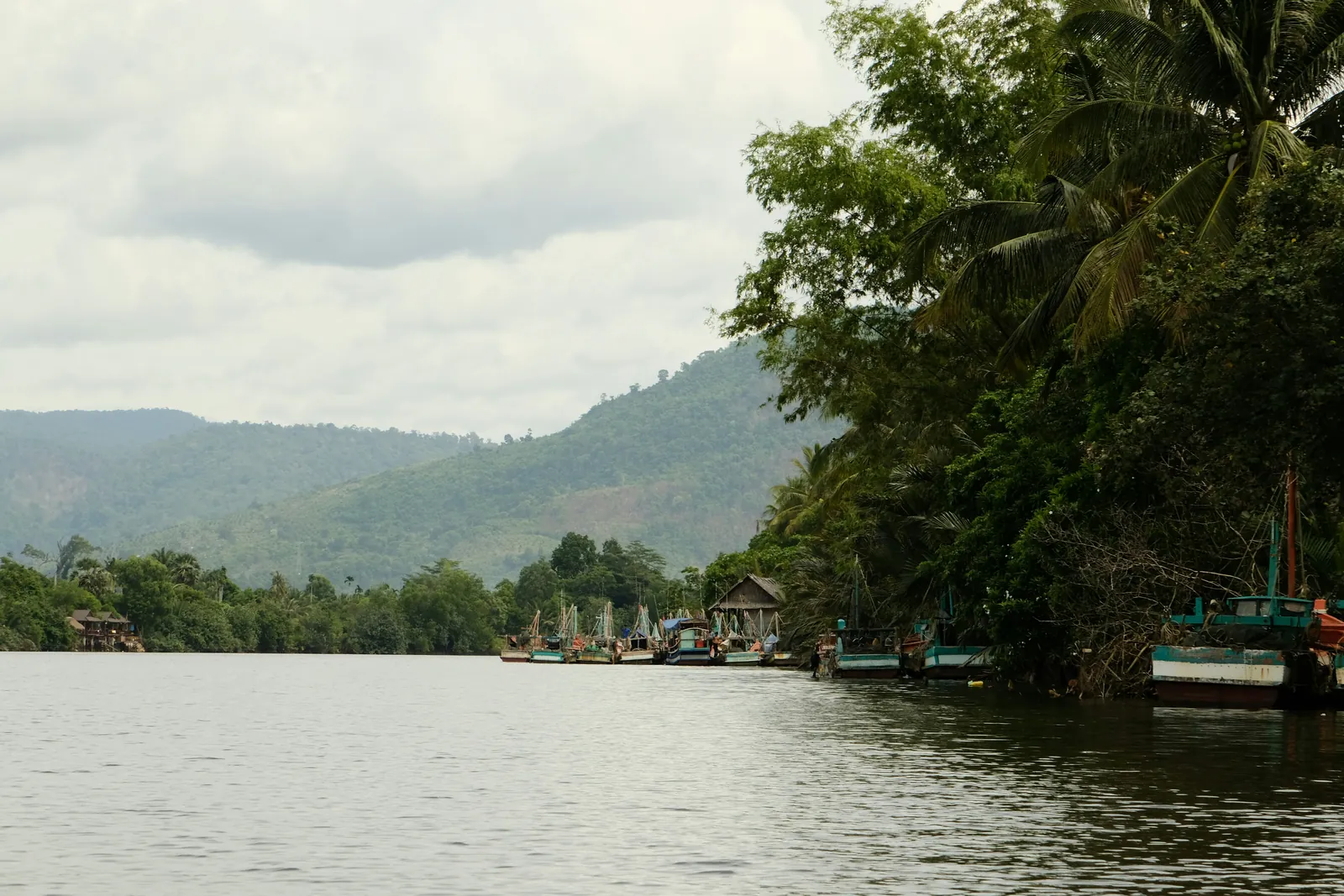
There are no official figures on where Australians settle in Cambodia. Here are six to compare, with rough driving times from Phnom Penh.
| Area | What it’s like | Getting around | Hospital | Airport |
|---|---|---|---|---|
| Phnom Penh | The capital, on the Mekong; higher rents | Flat; heavy traffic; ride-hailing apps and tuk-tuks | Several private hospitals; public hospital runs the 119 ambulance | Techo International |
| Siem Reap | The town beside the Angkor temples; our cost base | Flat; tuk-tuks and ride-hailing apps; about 6 hours by road | Private international hospital with an ambulance | Siem Reap Angkor International |
| Kampot | Small river town in the south | Flat, small centre; ride-hailing limited; about 3 hours by road | One hospital, 6 km out of town | None |
| Kep | Small seaside town near Kampot | Spread out along the coast; tuk-tuk or car; about 3 hours by road | None listed by the embassy; nearest is Kampot’s | None |
| Sihanoukville | Port and beach city | Spread out; ride-hailing apps; about 2 hours by expressway | Two clinics with limited ambulances | Sihanoukville International |
| Battambang | River town in the north-west | Flat; ride-hailing limited; about 5 hours by road | Referral hospital and a private emergency hospital | No international airport |
Phnom Penh has the Australian Embassy, the immigration department’s Visa Office and the widest choice of private care. Rent is higher: Numbeo puts a central flat at nearly double Siem Reap’s.
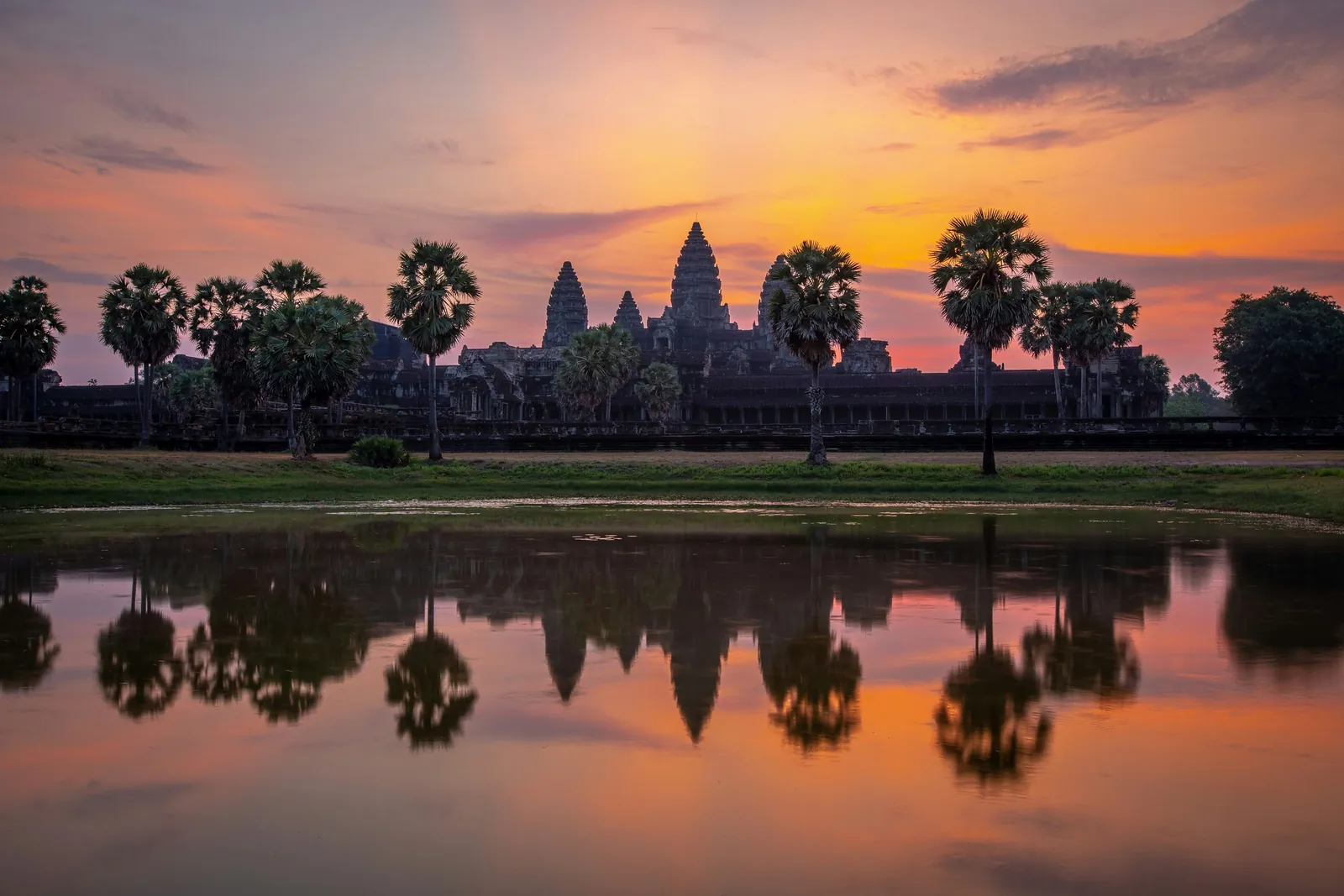
Siem Reap, beside the Angkor temples, is the base for our costs.
Kampot is a smaller town in the south with private clinics and ATMs. Humphrey, a retired carpenter, lived in Phnom Penh for about ten years and now, at 74, plans to move to Kampot. His story covers his first decade in Cambodia.
Kep is a small seaside town about 25 kilometres from Kampot, and thin on services: the embassy lists no medical care there, and Smartraveller’s list of towns with ATMs leaves it out.
Sihanoukville is on the coast. Since the expressway opened in 2022, the drive to Phnom Penh takes about two hours, down from five, Cambodianess reported. Smartraveller warns that boats to the islands off Sihanoukville have sunk.
Battambang is a river town in the north-west, with ATMs and two hospitals.
Smartraveller says do not travel within 50 kilometres of the Thai border in seven provinces: Banteay Meanchey, Oddar Meanchey, Preah Vihear, Battambang, Pailin, Pursat and Koh Kong. Of the six places above, only Battambang is in one of those provinces. The advice covers the 50-kilometre strip, so check the current advice and a map before any trip west of the town.
Renting or buying a home
Foreigners can rent, and can own a flat, but not land: the US State Department’s 2025 investment report says Cambodia’s Constitution bars it.
A 2010 law lets foreigners own a unit in a co-owned building (strata title) from the first floor up. The ground floor and anything below it can’t be foreign-owned. A sub-decree caps the share of units foreigners can own in each building, and foreigners can’t buy in buildings within 30 kilometres of a land border, apart from special economic zones and some city areas.
For a house with land, the legal route for a foreigner is a lease: the State Department says the 2001 Land Law allows long and short leases to foreigners. A 2019 trust law also lets investors hold land through a regulated trust, though the State Department says that market is still developing.
Some buyers put land in a Cambodian friend’s or partner’s name. In law, that person owns it. Smartraveller’s retirement advice warns that you may not have the same rights as a local partner when it comes to real estate, and to get independent local advice before any big financial commitment. The State Department says titles from before 1979 aren’t recognised, the titling system is cumbersome, expensive and open to corruption, and most property owners lack documents proving they own it.
The person to ask is a property lawyer in Cambodia, who can check the title and the building’s foreign quota. Smartraveller also suggests reviewing your will if you buy property overseas. The Australian Embassy can give you a list of English-speaking lawyers. Our guide to overseas property and visa scams covers the warning signs. For the Australian side, see whether to keep, rent or sell the family home.
Tax: there and at home
Cambodia’s tax rules are in its Law on Taxation of 16 May 2023, which the General Department of Taxation publishes in Khmer. English summaries describe the residency test as having your home or main place of living in Cambodia, or spending more than 182 days there in a year.
Australia has no tax treaty with Cambodia: it isn’t on Treasury’s list of income tax treaties (updated 24 March 2026) or the ATO’s. A treaty normally settles which country taxes which income, so here there are no treaty rules to fall back on.
At home, the ATO’s residency tests decide whether you are still an Australian resident for tax; our guide to tax residency when you retire overseas walks through them. If you become a foreign resident, you lose the tax-free threshold, so Australian income such as rent is taxed at 30% from the first dollar (2025-26), as the foreign resident tax rates show. Sell your Australian home while you are a foreign resident and, for sales after 30 June 2020, you generally lose the main residence exemption from capital gains tax, apart from narrow life events.
Talk to a registered tax agent in Australia, and to a tax adviser in Cambodia about how it treats your pension and super, before you go.
Money and banking
The riel is Cambodia’s official currency and US dollars are legal tender too. GOV.UK says prices are quoted in both, and the riel is increasingly preferred. Smartraveller says sellers may turn down dirty, torn or high-value US notes, and fake money is common. ATMs are found in Phnom Penh, Siem Reap, Battambang, Sihanoukville and Kampot, and are limited elsewhere. Card skimming happens throughout the country, so Smartraveller suggests ATMs inside banks, hotels and shopping centres.
Your pension. Services Australia pays every 2 weeks into your Australian account if you’ll be away less than 12 months. Away longer, it pays every 4 weeks into an Australian or overseas account. Paid overseas, the money comes in the local currency or US dollars, depending on the country, usually within 2 to 6 days. Bank fees are yours. Our guide to living overseas on the Age Pension has the numbers.
A local account. Cambodian banks set their own rules for foreigners, so the bank itself can tell you what it needs.
Moving money. The main options are a transfer from your Australian bank, a currency transfer service, or cash from an ATM on an Australian card. Each charges a fee and builds a margin into its exchange rate; ask for both.
Currency swings. Your pension is in Australian dollars and most prices are in US dollars, so the exchange rate sets what a month really costs. At the RBA’s 12-month average rate (A$1 = US$0.6919), US$1,000 is about A$1,450. If the Australian dollar fell 10%, the same US$1,000 would cost about A$1,610.
Day to day
Language. Khmer is the official language. GOV.UK says some private hospitals have English-speaking staff, and staff in public hospitals often speak little or none. Directions often go by landmarks, such as the nearest pagoda.
Getting around without driving. Tuk-tuks and motorbike taxis are often used for short trips, and many drivers don’t use meters, so agree the fare first or use a ride-hailing app. Smartraveller says ride-hailing drivers work in Phnom Penh, Siem Reap and Sihanoukville, with limited services in Kampot and Battambang. Pick a tuk-tuk with curtains or netting on the sides. At night, Smartraveller says, car travel is often safer than a motorbike or tuk-tuk. Trains are unreliable.
Driving. Visitors can drive with an Australian licence and an International Driving Permit. Long-term visa holders need a Cambodian licence, which the Ministry of Public Works and Transport issues to match your Australian one. Smartraveller says the ministry has offices in Phnom Penh and a service centre in Siem Reap. Motorbikes up to 125cc need no licence, but some insurers won’t cover you on one. Smartraveller calls the roads dangerous, especially at night: poor surfaces, speeding, drink driving and wandering livestock.
Safety. Land mines and other explosive remnants of war are still a danger in rural and remote areas, Smartraveller says, especially along the Thai border and in the north and north-west. It says to stay on marked paths and obey the warning signs. Thieves on motorbikes snatch bags, and Smartraveller says to hand over valuables rather than fight. Romance scammers have asked Australians to carry items out of Cambodia with drugs hidden inside.
Drug laws are strict: zero tolerance, even for cannabis, with penalties up to life in prison and no parole. Having drugs in your system is a crime too. Methanol in bad alcohol has killed people, Australians among them, so Smartraveller says to drink only branded, sealed drinks. Insulting the King, including online, is illegal, and at Angkor and other temples you need your knees and shoulders covered to get in.
Weather. Cambodia’s Ministry of Water Resources and Meteorology says the rainy season runs from May to October and the dry season from November to April, with April or May the hottest month. Smartraveller warns of storms and flooding from July to November. In Siem Reap, September is the wettest month:
| Month in Siem Reap | Average high | Average low | Rain |
|---|---|---|---|
| January | 31°C | 20°C | 4 mm |
| February | 32°C | 21°C | 4 mm |
| March | 35°C | 23°C | 41 mm |
| April | 35°C | 24°C | 48 mm |
| May | 35°C | 25°C | 143 mm |
| June | 33°C | 25°C | 195 mm |
| July | 33°C | 24°C | 170 mm |
| August | 32°C | 25°C | 170 mm |
| September | 32°C | 25°C | 305 mm |
| October | 31°C | 22°C | 227 mm |
| November | 32°C | 22°C | 62 mm |
| December | 31°C | 20°C | 7 mm |
Figures: the ministry’s Siem Reap records from 1982 to 2024, published by the World Meteorological Organization.
Public holidays. The three big festivals are three-day public holidays. In 2026, Cambodia Investment Review reported, Khmer New Year fell on 14 to 16 April and Pchum Ben on 10 to 12 October, and the Water Festival runs from 23 to 25 November.
Making friends. GOV.UK points to the many Facebook groups and online expat forums for first-hand advice about living in Cambodia.
Getting there and coming home
BITRE’s June 2026 airline figures show no non-stop flights between Australia and Cambodia, so expect to change planes at least once. Smartraveller says local airlines often cancel or reschedule flights at short notice. All land crossings between Cambodia and Thailand are closed, which rules out flying to Bangkok and going on by road.
Cambodia is 3 hours behind Sydney and Melbourne in our winter and 4 hours behind in daylight saving. It is 3 hours behind Brisbane all year and 1 hour behind Perth. Nine in the morning in Siem Reap is around midday on the east coast, an easy time to call home.
Your first steps
One order that works, from a first visit to living there. The right order for you depends on your health, your home and your money.
- Ask for help first. Book a free planning session on Zoom, or contact our team. Once we understand your situation, we can point you in the right direction.
- Talk it over with your partner and family early. Our guide to talking to your family has ways to start.
- Visit in the wet season and the dry. Smartraveller suggests a temporary move of 6 to 12 months first; see trying before you move.
- Check what happens to your pension at 6, 12 and 26 weeks. If you haven’t claimed it yet, the claim has to be made while you live in Australia.
- Find out what health cover you can get at your age. Start with travel insurance for long stays.
- Work out what happens to the house, and whether it counts for the pension while you are away.
- Ask Cambodia’s embassy which papers the ER extension needs, and get any police check or legalised documents done in Australia.
- The ER extension starts from an ordinary (E) visa; a tourist visa can’t lead to one. Ordinary visas come from an embassy or through evisa.gov.kh.
- Some people rent short before signing a lease. Smartraveller says to make sure your landlord has registered you in the foreigners’ system.
- Apply for the ER extension through the immigration office or a licensed visa agent in Cambodia.
- Tell Services Australia you are leaving, and set up how your pension will be paid.
- Find the nearest hospital that handles emergencies, and know how you’d pay for an evacuation.
- Know your way back: coming home covers your pension and Medicare.
Questions people ask
Does Cambodia have a retirement visa?
Yes. The ER extension is added to an ordinary (E-class) visa once you are in Cambodia, for people 55 and over who are retired and can show enough money to live on. It runs for 1 to 12 months and can be renewed with no limit. A tourist visa can’t be turned into one.
How much do you need to retire in Cambodia?
Our estimate for a month in Siem Reap is about A$2,490 for a couple and A$1,660 for one person, rent included, before health insurance. Phnom Penh comes to about A$3,380 for a couple, mostly because of rent.
How do you retire in Cambodia from Australia?
The usual order: claim the Age Pension before you leave if you are eligible, then come in on an ordinary (E) visa and apply for the ER retirement extension inside Cambodia from age 55. Cambodia’s embassy or a licensed visa agent there can confirm the papers and the current fee.
Is it better to retire in Cambodia or Thailand?
Thailand’s retirement visas start at 50 and Cambodia’s ER extension at 55. Our estimate for a couple is about A$2,490 a month in Siem Reap and A$2,790 in Chiang Mai. Thailand has a tax treaty with Australia and Cambodia has none. See our Thailand page to compare.
What are the pros and cons of retiring in Cambodia?
Low costs, US dollars in everyday use and an extension you can keep renewing count for it. Against it: almost no emergency care outside Phnom Penh and Siem Reap, evacuation for anything serious, no land for foreigners and no non-stop flights home.
Can I get my Age Pension in Cambodia?
Yes, it can keep paying, with the usual 6, 12 and 26-week rules. Cambodia has no social security agreement with Australia, so you must claim it while you live in Australia, before you go.
Does Medicare cover me in Cambodia?
No. Cambodia has no health care agreement with Australia. For a visit, Smartraveller says your travel insurance must cover evacuation; for living there, the usual cover is international health insurance. Medicare still covers citizens back in Australia for up to 5 years after they move.
Is it safe to retire in Cambodia?
Smartraveller advises a high degree of caution across Cambodia and says do not travel near the Thai border in seven provinces, because of armed conflict and landmines. It also reports bag snatching by thieves on motorbikes. Siem Reap, Phnom Penh and Kampot are outside the do-not-travel areas; read the current advice before you go.
Is Cambodia a good fit?
Good for
- People 55 and over, including Age Pensioners, who want low day-to-day costs
- A long stay on a visa you renew from inside the country
Think about
- Almost no emergency care outside Phnom Penh and Siem Reap
- Serious illness means evacuation to another country
- Hospitals usually want cash before they treat you
- Do not travel within 50 kilometres of the Thai border in seven provinces
- Foreigners can't own land, only a flat above the ground floor
Places to compare
- ThailandRetirement visas start at 50 and day-to-day costs are low. The big cities have private hospitals.
- VietnamA 90-day eVisa covers a winter away. Day-to-day costs are low and the beaches are long.
- Sri LankaLow costs, a free 30-day ETA that extends towards 9 months, and non-stop flights from Sydney and Melbourne.



Guides for this place
- Retirement visas by ageRetirement visa age requirements by country for Australians: the youngest age and the money rules in Thailand, Malaysia, the Philippines, Portugal and Spain.
- Claim before you leaveCan you claim the Age Pension while overseas? You must be living in and physically in Australia on the day you claim. The agreement countries, checked 2026.
- The 6, 12 and 26-week rulesWhat happens to your Age Pension at 6, 12 and 26 weeks overseas, updated for the Pension Supplement change of 20 September 2026. Checked October 2026.
- Medicare overseasDoes Medicare cover me overseas? No. The 11 reciprocal agreement countries, none in Asia, and the 5-year rule for Medicare on visits home. Checked 2026.
- Health insurance by ageInternational health insurance for over 70s living overseas: why age matters, the types of cover, and the questions to ask a broker. Checked October 2026.





Sources
- Smartraveller: Cambodia, checked 21 October 2026 (page updated 22 September 2026)
- Royal Embassy of Cambodia in Berlin: The Cambodia Retirement Visa (ER), overview and eligibility, checked 21 October 2026 (no date shown)
- Royal Embassy of Cambodia in Berlin: Cambodia e-Visa (tourist and ordinary visas online), checked 21 October 2026
- Royal Embassy of Cambodia in Berlin: Types of visas (tourist visa extendable once; ordinary E visa extendable, suitable for retirees), checked 21 October 2026 (no date shown)
- Royal Embassy of Cambodia in Berlin: How to get a Cambodian visa (visas issued digitally from 3 October 2026), checked 21 October 2026
- Cambodia e-Visa, Ministry of Foreign Affairs and International Cooperation: visa fees (T US$30, E US$35), processing time and ports of entry, checked 21 October 2026
- General Department of Immigration, Cambodia (FPCS registration app), checked 21 October 2026 (no English fee schedule published)
- GOV.UK: Living in Cambodia, checked 21 October 2026 (page updated 30 September 2026)
- Australian Embassy Cambodia: Medical service providers, checked 21 October 2026 (no date shown)
- United Nations (ESCAP): request for expression of interest, medical evacuation services for UN staff in Cambodia (Bangkok primary, Singapore alternate), EOIUNESCAP23867, checked 21 October 2026 (notice dated 22 September 2025)
- Smartraveller: Going overseas to retire, checked 21 October 2026 (page updated 18 August 2026)
- Smartraveller: How to get your documents legalised, checked 21 October 2026 (page updated 30 September 2026)
- Australian Federal Police: Apply for a National Police Certificate (fees and processing times), checked 21 October 2026
- Law on Providing Foreigners with Ownership Rights in Private Units of Co-owned Buildings, 24 May 2010 (unofficial translation by the Ministry of Land Management, Urban Planning and Construction), checked 21 October 2026
- US Department of State: 2025 Investment Climate Statement, Cambodia (real property), checked 21 October 2026
- General Department of Taxation, Cambodia: Law on Taxation, NS/RKM/0523/004, 16 May 2023 (in Khmer), checked 21 October 2026
- Treasury: Income tax treaties (no treaty with Cambodia), checked 21 October 2026 (page updated 24 March 2026)
- ATO: Countries and other jurisdictions that have a tax treaty with Australia, checked 21 October 2026 (page updated 26 May 2022)
- ATO: Your tax residency, checked 21 October 2026 (page updated 3 June 2026)
- ATO: Tax rates, foreign residents (2025-26), checked 21 October 2026 (page updated 1 June 2026)
- Services Australia: Travel outside Australia rules for Age Pension, checked 21 October 2026 (page updated 4 December 2025)
- Services Australia: When you leave Australia if you get Age Pension, checked 21 October 2026 (page updated 20 September 2026)
- Services Australia: Payments while outside Australia (overseas bank accounts), checked 21 October 2026 (page updated 5 March 2026)
- Services Australia: Residence rules for Age Pension, checked 21 October 2026 (page updated 27 July 2026)
- Services Australia: Payment schedule and rates for people outside Australia, checked 21 October 2026 (page updated 24 September 2026)
- Services Australia: International social security agreements, Asia, checked 21 October 2026 (page updated 25 August 2025)
- Services Australia: About reciprocal health care agreements, checked 21 October 2026 (page updated 15 September 2026)
- Services Australia: Enrolling in Medicare if you're an Australian citizen, checked 21 October 2026 (page updated 30 June 2025)
- Services Australia: Enrolling in Medicare if you're an Australian permanent resident, checked 21 October 2026 (page updated 11 July 2025)
- Department of Social Services: Age Pension recipients by country, December 2020 to December 2025 (FOI LEX 56898), checked 21 October 2026
- Numbeo: cost of living in Siem Reap (in US dollars), checked 21 October 2026 (last updated 26 September 2026)
- Numbeo: cost of living in Phnom Penh (in US dollars), checked 21 October 2026 (last updated 20 October 2026: one person without rent US$636.20, central one-bedroom US$655)
- Reserve Bank of Australia: Historical exchange rates, F11.1 (daily, 2023 to current); 12-month average, 1 October 2025 to 30 September 2026, checked 21 October 2026
- ASEAN+3 Macroeconomic Research Office: Annual Consultation Report, Cambodia 2026, Annex 3 (electricity tariffs), checked 21 October 2026 (report dated 27 July 2026)
- Expat Arrivals: Accommodation for expats in Cambodia (leases, deposits, electricity bills), checked 21 October 2026 (no date shown)
- World Meteorological Organization, World Weather Information Service: Siem Reap climate (data from Cambodia's Ministry of Water Resources and Meteorology, 1982 to 2024), checked 21 October 2026
- Ministry of Water Resources and Meteorology, Cambodia: The analysis of climate condition in Cambodia (rainy season May to October), presented to the Japan Meteorological Agency, February 2013, checked 21 October 2026
- Cambodia Investment Review: Cambodia public holidays 2026 under Sub-Decree No. 167, checked 21 October 2026 (article dated 1 January 2026)
- Cambodianess: Over 80,000 vehicles travel on Cambodia's first expressway in its first week (Phnom Penh to Sihanoukville in about two hours), checked 21 October 2026 (article dated 10 October 2022)
- BITRE: International Airline Activity, June 2026 (no non-stop flights to Cambodia), checked 21 October 2026
General information only, not financial, tax, legal, migration or insurance advice. Rules change: check the official source before you act, and talk to a licensed professional about your own situation.
Thinking about Cambodia?
Tell us what you have in mind, and we will help you plan it on a free Zoom call: when to go, how long for, and who with.
No pressure and no card details. You decide what comes next.