
Retiring in the Philippines from Australia: costs, the SRRV, pension and health cover (2026)
English is an official language. Day-to-day costs are lower, and the retirement visa starts at age 50.
Checked 21 October 2026, re-checked monthlyBy the Retirees Abroad teamGeneral information only, how we check
The short answer
Our estimate for a month in Cebu is about A$2,930 for a couple or A$2,070 for one person, rent included (October 2026). Australians get 30 days visa-free. The SRRV retirement visa starts at 50, with a US$15,000 deposit (about A$21,680) if you have a qualifying pension. Your Age Pension keeps paying, but Medicare does not cover you there.
Philippines at a glance
- A comfortable month, couple
- About A$2,930
- A comfortable month, one person
- About A$2,070
- Visa for a visit
- 30 days visa-free; SRRV from 50
- Weather
- Typhoons usually late May to December
- Costs based on
- Cebu
- Medicare agreement
- No
- Social security agreement
- No
- Tax treaty with Australia
- Yes, since 1980
- Retirement visa
- SRRV, from age 50 (40 with a bigger deposit)
- Flight from Sydney
- About 9 hours non-stop to Manila
- Time difference
- Same as Perth; 2 hours behind Sydney (3 in daylight saving)
Costs are mid-range estimates in Australian dollars, rent included, for a comfortable month. For comparison, a comfortable month in Australia is about A$6,580 for a couple who own their home (ASFA, June quarter 2026).
Who the Philippines suits, and what to weigh up

The Philippines suits you if you’d like English in daily life and lower day-to-day costs. Filipino and English are both official languages under the 1987 Constitution. The retirement visa starts at 50 with a modest deposit, and a husband or wife can join it at any age. Australians with a Filipino partner or family have extra visa routes.

Department of Social Services figures released under freedom of information show 659 people getting the Age Pension in the Philippines at the end of 2025, paid an average of about A$895 a fortnight each.
Safety is the first thing to weigh up. Smartraveller advises a high degree of caution in the Philippines overall, and says do not travel to central and western Mindanao. Typhoons usually come between late May and December. Health care outside the big cities is limited, and hospitals generally want payment or a guarantee up front. Foreigners can’t own land, though you can own a condominium flat.
What a month costs
Our estimate for a month in Cebu is about A$2,930 for a couple and A$2,070 for one person, rent included. We started with Numbeo’s living costs for one person (without rent), added a one-bedroom city-centre rent, then added 30% for eating out, local trips and extras. For a couple we multiplied the living costs by 1.8. Everything is converted at the Reserve Bank of Australia’s average exchange rate for the 12 months to September 2026 (A$1 = 41.65 pesos). Health insurance is not included. Numbeo updated its Cebu figures on 15 October 2026.
| A month in Cebu | Couple | One person |
|---|---|---|
| Rent, one-bedroom flat in the centre | A$770 | A$770 |
| Living costs (food, transport, bills) | A$1,490 | A$830 |
| Eating out, local trips and extras (30%) | A$670 | A$470 |
| Total | A$2,930 | A$2,070 |
How a month in the Philippines compares
For a couple
- the Philippines, our estimate
- A$2,930
- Comfortable in Australia
- A$6,580
- Age Pension, the most paid in Australia
- A$4,040
About A$3,650 a month less than a comfortable month in Australia.
For one person
- the Philippines, our estimate
- A$2,070
- Comfortable in Australia
- A$4,680
- Age Pension, the most paid in Australia
- A$2,680
About A$2,610 a month less than a comfortable month in Australia.
Not built the same way: Australia's figure (ASFA Retirement Standard, comfortable, June quarter 2026) assumes you own your home and includes health insurance; our estimate for the Philippines includes rent and leaves health insurance out. Age Pension: the most paid in Australia from 20 September 2026; living overseas for good, the base rate is about A$3,710 a month for a couple and A$2,460 for one person.

Numbeo puts living costs for one person in Cebu at about 34,390 pesos a month (about A$830), and a central one-bedroom flat at about 31,870 pesos (about A$770). Short furnished lets usually cost more than the long-term rent in this table.
Against the Age Pension. In Australia, the most the Age Pension pays is about A$2,680 a month for one person and A$4,040 for a couple. After 12 weeks away it drops to the base rate: about A$2,460 a month for one person and A$3,710 for a couple, before tax (rates from 20 September 2026). On our estimate that leaves about A$780 a month for a couple and A$390 for one person, before health insurance and trips home. Our guide to living overseas on the Age Pension sets out the numbers.
What costs more than you’d expect. Health cover is the big one, and our estimate leaves it out. Smartraveller says visitors pay for all their medical care, evacuation included, and treatment can be expensive. The retirement visa costs US$360 a year (about A$520). Expat Focus, a guide for people moving abroad, reports that imported goods push a budget up. Smartraveller advises against taxis and public transport, which leaves ride-hailing apps, hotel cars or a car of your own. Then come the flights home for birthdays and check-ups.
Renting long term. Expat Focus reports (reviewed May 2026) that a one-year fixed lease is usual, with up to two months’ rent as a deposit plus rent in advance. On Numbeo’s central rent, that comes to about 95,620 pesos (about A$2,300) before you move in. Expat Focus also reports that the Rent Control Act’s limits on deposits cover only rents of 10,000 pesos a month (about A$240) or less in Metro Manila and other big cities. It says “furnished” has no legal definition, so a signed list of what’s included, and photos on moving day, give you a dated record. Disputes usually go first to the free barangay (local village) justice system, it adds.
Visas for Australians

Visiting. Smartraveller says you can enter without a visa for 30 days. Your passport must be valid for at least 6 months, and you need an onward or return ticket within 30 days. You register on the eTravel portal before you fly in, and again within 72 hours before you leave. Registration is free. In April 2026 the Bureau of Immigration warned of fake eTravel sites that charge a fee, GMA News reported; the official one is etravel.gov.ph.
Staying longer as a visitor. The Bureau of Immigration says your first extension adds 29 days. After that you can extend 1, 2 or 6 months at a time, up to 36 months in total for Australians. Once your stay passes 59 days you also need an Alien Certificate of Registration identity card (ACR I-Card). After 6 months or more, you need an Emigration Clearance Certificate before you fly out.
The retirement visa, by age. The Philippine Retirement Authority (PRA) runs the Special Resident Retiree’s Visa (SRRV). Its deposits for the SRRV Classic (checked 21 October 2026, in force since 1 September 2025):
| Your age | Deposit with a pension | Deposit without a pension |
|---|---|---|
| 50 and over | US$15,000 (about A$21,680) | US$30,000 (about A$43,360) |
| 40 to 49 | US$25,000 (about A$36,130) | US$50,000 (about A$72,260) |
“With a pension” means a lifetime pension of at least US$800 a month for one person (about A$1,160) or US$1,000 with dependants (about A$1,450). Whether your Age Pension counts is a question for PRA. There is also a US$1,500 processing fee (about A$2,170) and an annual fee of US$360 (about A$520). The deposit covers you and two dependants. A former Filipino citizen can apply for the SRRV Courtesy instead, with a US$1,500 deposit (about A$2,170) from age 50. The older US$10,000 (about A$14,450) and US$20,000 (about A$28,910) figures still quoted online are out of date.
You apply in the Philippines, after arriving as a visitor, and the deposit goes into a bank PRA accredits. PRA’s head office is in Makati, Metro Manila, with offices in Cebu, Baguio and Davao; its Clark office has been closed since 15 April 2026. PRA’s 2025 Citizen’s Charter puts processing at 10 working days once your papers are complete. Our guide to retirement visa age rules by country compares the SRRV with other countries’ visas. Currency figures are at the RBA’s 12-month average rate (A$1 = 41.65 pesos = US$0.6919).
What the visa allows. The SRRV has no end date while you pay the annual fee, and you can come and go. PRA lists exemptions from the immigration annual report and the ACR I-Card, and from tax on pensions. You can also bring household goods worth up to US$7,000 (about A$10,120) once, duty-free. Smartraveller says PRA visa holders may need a travel pass from PRA to leave the country. Foreigners who join political rallies can be deported. The visa doesn’t let you own land.
A partner under the age limit. The age limit applies to the person applying. PRA’s charter says a dependant spouse has no age requirement, and unmarried children under 21 can come too. Each dependant pays US$300 (about A$430) and needs proof of the relationship, such as an apostilled marriage certificate. If you’re partners but not married, ask PRA what applies. The guide for couples retiring overseas covers the other questions two people face.
If your partner is Filipino. The Bureau of Immigration offers an immigrant visa by marriage, called 13(a), which starts as a probationary visa. A foreign spouse travelling with their Filipino husband or wife can be admitted for a year without a visa, under the Balikbayan privilege. If you were born Filipino, the dual citizenship law (Republic Act 9225) lets you take back Philippine citizenship by oath.
Documents to get in Australia before you go. PRA wants a police clearance from your home country and a medical certificate on its own form, both issued within 6 months before you apply. The medical can be done here or in the Philippines. Papers from abroad need an apostille; the Philippines joined the apostille convention on 14 May 2019. An Australian Federal Police check costs A$57, and the AFP says most online checks arrive within a few days. DFAT adds an apostille for A$105 a document from 1 January 2026, by appointment or by mail, and says processing times vary.
For your own case, ask PRA, the Philippine embassy in Canberra, or a licensed visa agent in the Philippines. Read up on visa agent and property scams before you pay anyone.
Your Age Pension and Medicare in the Philippines
Your Age Pension keeps paying in the Philippines, though some extras stop over time. Services Australia says after 6 weeks away the Energy Supplement stops and your Pensioner Concession Card is cancelled. After 12 weeks the Pension Supplement stops completely (since 20 September 2026). After 26 weeks your rate can be reduced if you lived in Australia less than 35 years between age 16 and pension age. Our guide to the 6, 12 and 26-week rules explains each step.
The Philippines is not a social security agreement country, so you must claim the pension before you leave, while living in Australia. If you move for good, you get the base rate only from the day you leave: A$29,520.40 a year single, A$44,506.80 for a couple.
Medicare never pays for treatment in the Philippines, and Smartraveller says the two countries have no agreement for free health care. If you are an Australian citizen and move overseas, you can still use Medicare for treatment back in Australia for up to 5 years after you leave. Visits home do not restart that clock. After that, you re-enrol when you move back. For permanent residents, Medicare enrolment ends 12 months after leaving. None of Australia’s 11 reciprocal health care agreements is with a country in Asia. More in our guide to Medicare when you live overseas.
Health care and insurance
Good hospitals are mostly in the big cities. Smartraveller says major private hospitals, particularly in Metro Manila, are well equipped and internationally accredited. Services in regional areas can be limited, including in some tourist spots. Most hospitals need payment up front or a guarantee of payment, and some stop treatment if bills go unpaid.
What is where. The German Foreign Office’s September 2026 hospital list names private hospitals in Metro Manila, in Cebu City and Mandaue, and in Davao. Baguio has a large Department of Health medical centre, approved for 1,500 beds in 2022. Near Clark, the Department of Health hospital in San Fernando, Pampanga, was approved for 1,000 beds in 2019. Dumaguete has the provincial hospital, set at 300 beds by a 1992 law.
When care means travelling. From a smaller island, anything a clinic can’t handle means getting to Cebu or Manila by air or sea, and typhoons can stop flights and ferries. Serious illness can mean evacuation. Smartraveller’s page on retiring overseas says a medical repatriation can cost hundreds of thousands of dollars.
Your medicines. Smartraveller says not every medicine sold in Australia is available overseas, and some are illegal even on an Australian prescription. It suggests carrying enough for the whole stay, with a copy of the prescription and a doctor’s letter. Ask the Philippine embassy about anything you take daily. Our guide to taking PBS medicines overseas covers the Australian side.
Dengue, malaria and Japanese encephalitis are more common in the rainy season, May to December. Manila’s air pollution can be hard on heart and lung conditions.
PhilHealth. The national health insurer lets SRRV holders and ACR I-Card holders join. Its 2017 circular set the premium at 15,000 pesos a year (about A$360) for PRA retirees. Benefits start once you’ve paid for 3 of the 6 months before a hospital stay, and they don’t cover care abroad. PhilHealth can tell you today’s premium and what it pays.
Which cover. For a visit, Smartraveller says travel insurance must cover all medical costs, evacuation included. A long stay usually means travel insurance for one long trip, or annual multi-trip cover. Living there means international health insurance instead. Ask the oldest age you can join, whether cover continues as you age, and whether it pays for evacuation. Our guide to international health insurance by age lists what to ask. If you’d like help working out where to start, book a free planning session on Zoom.
Where Australians live

There are no official figures on where Australians settle. PRA told Arab News in June 2026 that its retirees mostly live in Metro Manila, Central Luzon and Central Visayas, the region around Cebu. Driving times are rough, and traffic stretches them.
| Area | What it’s like | Getting around | Hospital | Airport |
|---|---|---|---|---|
| Cebu | Big city region in the Visayas, with a PRA office; our cost base | Congested roads, hills behind the city; ride-hailing apps | Private hospitals in Cebu City and Mandaue | Mactan-Cebu International, about 45 minutes from the city |
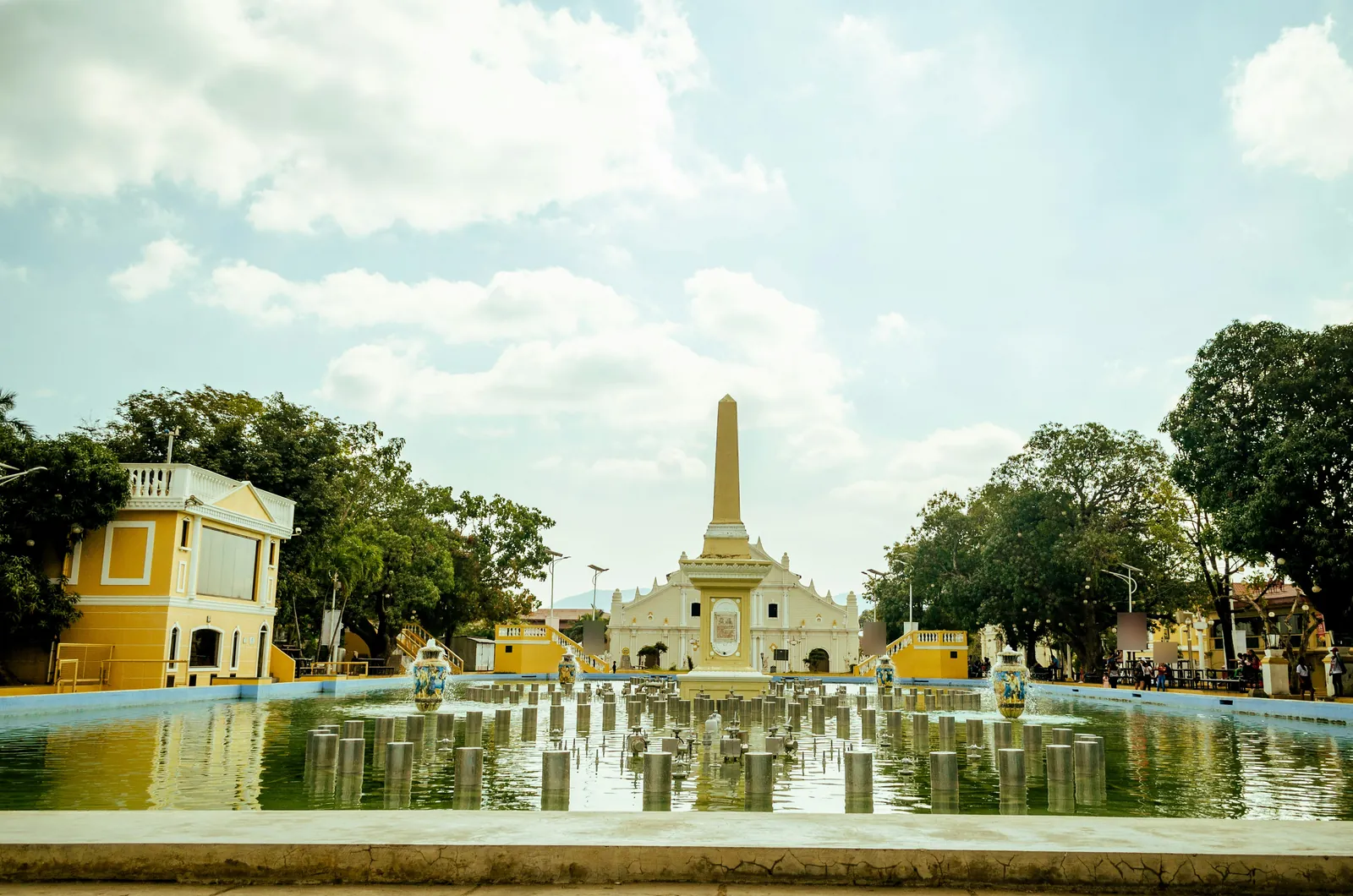
| Dumaguete | Small university city on Negros, with a seafront boulevard | Flat, compact centre | Provincial hospital | Domestic airport at Sibulan, next door |
| Metro Manila | The capital, with PRA’s head office and the Australian Embassy | Heavy traffic; ride-hailing apps | Internationally accredited private hospitals | Ninoy Aquino International |
| Baguio | Mountain city about 1,500 metres up, cooler and very wet in the monsoon | Steep and hilly | Large Department of Health medical centre | Clark, about 3 hours by road |
| Clark and Angeles | A former US air base and the city beside it, north of Manila | Spread out; a car or driver helps | Department of Health hospital in San Fernando, about 30 minutes away | Clark International |
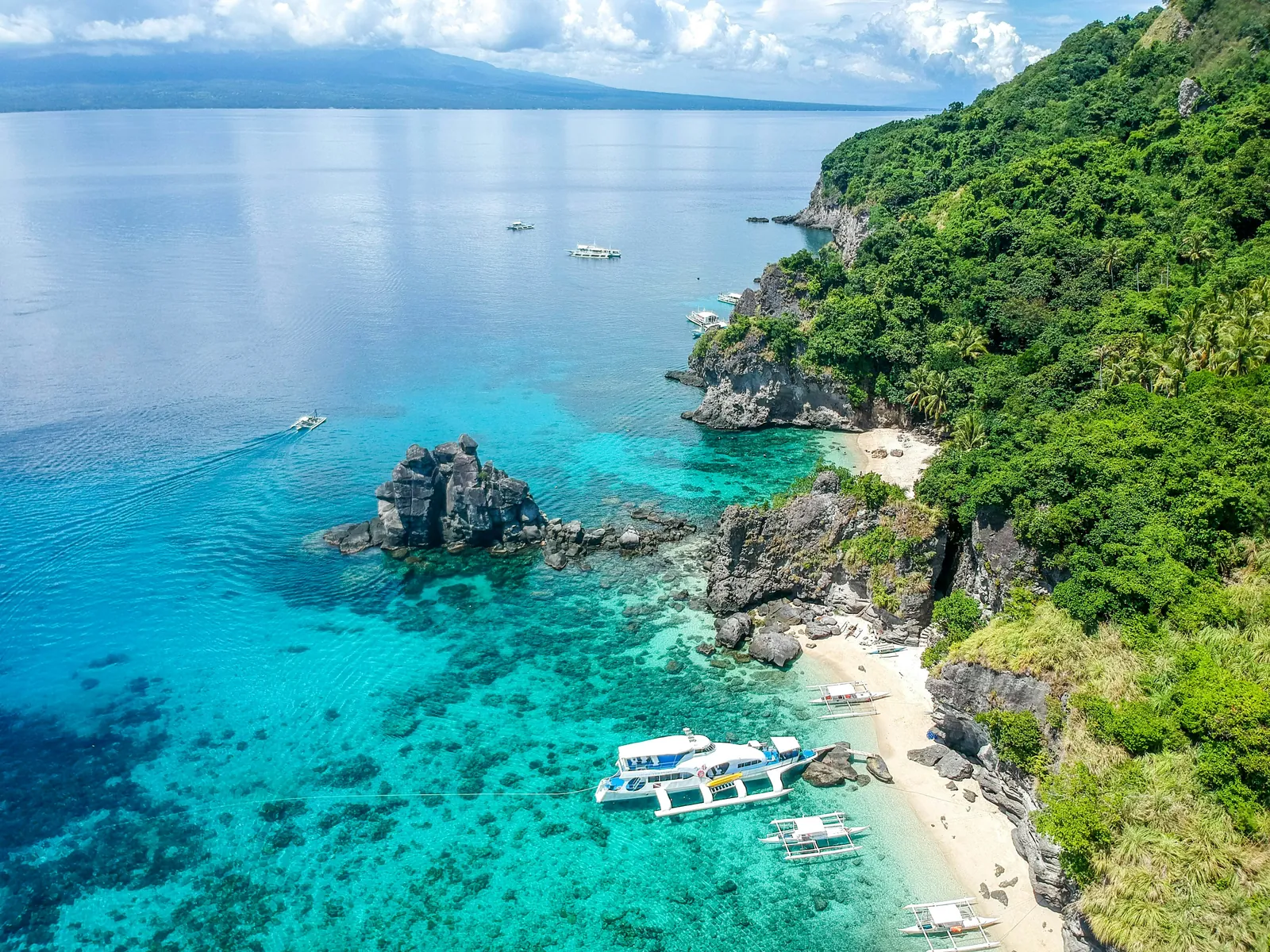
Cebu is the base for our costs. BITRE’s June 2026 figures show no non-stop flights between Australia and Cebu, so a trip home means changing planes.
Dumaguete is the capital of Negros Oriental. It gets about 1,323 mm of rain a year, against 1,685 mm at Cebu’s airport (PAGASA, 1991 to 2020). The Freeman reported in 2017 that its airport, at Sibulan next door, had flights to Manila and Cebu. Kanlaon volcano, also on Negros, has a 4-kilometre permanent danger zone around its summit, Smartraveller says.
Metro Manila has the internationally accredited private hospitals Smartraveller mentions, and the non-stop flights to Australia. Traffic is heavy, and air pollution can reach unhealthy levels.
Baguio sits about 1,500 metres above sea level. Its average temperature is 19.5°C, against 28.1°C at Cebu’s airport, but it gets about 3,824 mm of rain a year (PAGASA).
Clark and Angeles are in Central Luzon, north of Manila. With PRA’s Clark office closed, SRRV paperwork goes to Makati.
Davao City, where PRA also has an office, is in Mindanao. There Smartraveller’s advice is reconsider your need to travel or do not travel, depending on the area, so check its map before choosing anywhere in the south.
Renting or buying a home
Foreigners can rent, and can own a condominium flat, but not land. Article XII of the 1987 Constitution says private land can only pass to people and companies allowed to hold public land, apart from inheritance.
A condominium. Under the Condominium Act, a foreigner can own a unit where a condominium corporation holds the common areas. Foreign ownership of that corporation has to stay within the legal limit of 40%.
A long lease. Presidential Decree 471 limits a lease of private land to a foreigner to 25 years, renewable once for another 25 by agreement. A longer lease is void.
Former Filipinos. A natural-born Filipino who lost citizenship can buy private land: up to 5,000 square metres in a city or 3 hectares in the country, under a 1996 law.
Nominee deals. Some foreigners put land in a Filipino friend’s or partner’s name. In law, that person owns it, and that includes a Filipino husband or wife. The Anti-Dummy Law punishes a Filipino who lends their name to get around citizenship rules, and the foreigner who profits, with 5 to 15 years in jail. Smartraveller’s retirement advice warns that you may not have the same rights as a local partner in real estate.
Smartraveller also says property scams are common, and several Australians have died after property disputes turned violent. It suggests legal advice before any major financial decision.
Your visa deposit and property. PRA’s 2025 Citizen’s Charter lets an SRRV holder put the deposit towards a condominium bought for at least US$50,000 (about A$72,260). It also allows a lease of a house or flat for at least 25 years, worth at least US$50,000 (about A$72,260). The charter was written before the September 2025 changes, so ask PRA whether it still applies.
The person to ask is a property lawyer in the Philippines who acts for you, not the seller. They can check the title at the Registry of Deeds and the building’s foreign share. Our guide to keeping, renting or selling the family home covers the Australian side.
Tax: there and at home
The Philippine Tax Code calls a foreigner whose home is in the Philippines a resident alien. A non-resident foreigner who stays more than 180 days in a calendar year is treated as doing business there. Either way, section 23 says a foreigner is taxed only on income from sources within the Philippines. PRA also lists an SRRV exemption from tax on pensions and annuities.
Australia and the Philippines have had a tax treaty since 1980. Its pensions article says pensions, government pensions included, paid to a resident of one country are taxed only in that country. Rent from property can be taxed where the property is. How that works for the Age Pension, super or rent from a house in Australia depends on the details.
At home, the ATO’s residency tests decide whether you are still an Australian resident for tax; our guide to tax residency when you retire overseas walks through them. As a foreign resident you lose the tax-free threshold, so Australian income such as rent is taxed at 30% from the first dollar (2025-26). The foreign resident tax rates show the rest. Sell your Australian home while you’re a foreign resident and you generally lose the capital gains tax main residence exemption, apart from narrow life events.
Talk to a registered tax agent in Australia, and to a tax adviser in the Philippines, before you go.
Money and banking
Your pension. Services Australia pays every 2 weeks into your Australian account if you’ll be away less than 12 months. Away longer, it pays every 4 weeks into an Australian or overseas account. Paid overseas, the money comes in the local currency or US dollars, usually within 2 to 6 days. Bank fees are yours.
A local account. Each Philippine bank sets its own rules for foreigners. Ask what it needs from someone on your visa, such as a passport, an ACR I-Card or PRA ID, and proof of address. Your SRRV deposit sits in a PRA-accredited bank.
Moving money. The main options are a transfer from your Australian bank, a currency transfer service, or an ATM on an Australian card. Each charges a fee and builds a margin into its exchange rate, so ask for both on the amount you’d send.
Cash and cards. Smartraveller says ATMs are widely available, and cards work in hotels, restaurants and bigger shops in the cities. Card skimming happens, so it suggests ATMs in secure locations. You must declare more than 50,000 pesos (about A$1,200) in local cash, or more than US$10,000 (about A$14,450) in foreign currency, when you arrive or leave.
Currency swings. Your pension is paid in Australian dollars and you spend pesos. At the RBA’s 12-month average rate (A$1 = 41.65 pesos), 50,000 pesos is about A$1,200. If the Australian dollar fell 10%, the same 50,000 pesos would cost about A$1,330.
Day to day
Language. Filipino and English are the official languages, with regional languages such as Cebuano used alongside them. Even a little of the local language helps with neighbours, landlords and market stalls.
Getting around without driving. Smartraveller says to avoid buses, the metro and jeepneys, because armed robberies have happened on them, and not to use taxis. It suggests accredited ride-hailing apps or hotel cars, especially at airports. It also says to avoid ferries if you can, and to take your own lifejacket if you can’t.
Driving. You can drive on a current Australian licence for up to 90 days after you arrive; digital licences may not be accepted. After that you need a Philippine licence from the Land Transportation Office. Smartraveller says roads are congested and often in poor condition. It advises against driving off national highways and other sealed roads, especially at night.
Safety. Smartraveller says violent crime, including armed robbery, occurs regularly, and many crimes involve guns. Pickpocketing, bag snatching and drink spiking happen, and so do scams over cards, ATMs and online relationships. Drug penalties include life in prison for small amounts. If you’re accused of a crime, you may not be allowed to leave until the case ends, which can take years.
Typhoons can cut phones, internet and transport. The Philippines sits on the Ring of Fire, so earthquakes, eruptions and tsunamis happen too. Smartraveller suggests a waterproof place for your passport and knowing where you’d shelter.
The weather, month by month. At Cebu’s airport on Mactan, it’s warm all year. Rain is what changes (PAGASA normals, 1991 to 2020):
| Month at Mactan, Cebu | Average high | Average low | Rain |
|---|---|---|---|
| January | 30°C | 24°C | 135 mm |
| February | 30°C | 24°C | 89 mm |
| March | 31°C | 25°C | 61 mm |
| April | 32°C | 26°C | 56 mm |
| May | 33°C | 26°C | 94 mm |
| June | 32°C | 26°C | 181 mm |
| July | 32°C | 25°C | 211 mm |
| August | 32°C | 25°C | 158 mm |
| September | 32°C | 25°C | 190 mm |
| October | 31°C | 25°C | 208 mm |
| November | 31°C | 25°C | 131 mm |
| December | 30°C | 25°C | 172 mm |
Public holidays. The big ones cluster around Holy Week and the end of the year. In 2027, Maundy Thursday and Good Friday fall on 25 and 26 March, under Proclamation 1427 as GMA News reported it. All Saints’ Day, All Souls’ Day, Christmas Eve, Christmas Day, Rizal Day (30 December) and 31 December are days off too.
Household help. The Domestic Workers Act requires a written contract with a household helper before work starts. After a month, the employer pays the worker’s social security, PhilHealth and housing fund contributions, shared once the wage reaches 5,000 pesos a month (about A$120).
Making friends. A language class, a church or a walking group gives you the same faces each week. If you’re going alone, see retiring overseas single.
Getting there and coming home
BITRE’s June 2026 figures show non-stop flights to Manila from Sydney, Melbourne, Brisbane and Perth, and none to Cebu. Sydney to Manila takes about 9 hours. Routes change, so check when you book.
Leaving takes paperwork: eTravel within 72 hours before your flight, any unpaid visa fees settled, and a departure tax at Mactan-Cebu and Clark, Smartraveller says. Volcanic ash can ground flights at short notice, as the 2020 Taal eruption did at Manila.
The Philippines is on the same time as Perth. It is 2 hours behind Brisbane, and 2 hours behind Sydney and Melbourne in our winter, 3 in daylight saving.
Your first steps
One order that works, from a first visit to living there:
- Ask for help first. Book a free planning session on Zoom, or contact our team. Once we understand your situation, we can point you in the right direction.
- Visit in the typhoon season as well as the dry months, somewhere you could rent long term. Smartraveller suggests a temporary move of 6 to 12 months first; see trying it before you move.
- Put your own numbers against the pension: what you’d get after 12 weeks away, plus insurance, visa fees and flights. See taking your Age Pension overseas.
- Talk it through with your family, including who would fly over if you got sick. See talking to family.
- Work out what happens to the house, and whether it counts for the pension while you’re away.
- See your GP, check each medicine is legal and sold in the Philippines, and get a doctor’s letter. With an ongoing condition, read retiring overseas with a health condition.
- Get insurance quotes for the way you’ll live there, evacuation included. Our guide to travel insurance for long stays covers age limits.
- If the SRRV is your plan, ask PRA whether your pension counts and which papers it wants. The police check and apostilles need to be less than 6 months old when you apply.
- If you’re eligible and haven’t claimed the Age Pension, the claim has to be made while you live in Australia.
- Fly in visa-free with your eTravel QR code, then extend your stay or lodge the SRRV application.
- Rent short first, then sign a one-year lease once you know the street. See the long stay.
- Tell Services Australia you’re going and how your pension will be paid. If it’s for good, read moving overseas permanently.
- Keep a plan for coming home: where you’d live, and how the pension and Medicare restart. See coming home.
Questions people ask
Can an Australian retire in the Philippines?
Yes. From 50 you can apply for the SRRV with a US$15,000 deposit (about A$21,680) if you have a qualifying pension, or US$30,000 (about A$43,360) without one. A spouse can join at any age. Your Age Pension keeps paying while you live there.
Can an Australian pensioner live in the Philippines?
Yes. The pension keeps paying, and on our estimate the base rate covers a month in Cebu for one person (A$2,070) or a couple (A$2,930). How far it stretches depends on health insurance, rent and flights home. The claim must be made before you leave.
What are the requirements to retire in the Philippines?
For the SRRV Classic: age 50 or over (40 with a bigger deposit), the deposit in a PRA-accredited bank, and a police clearance and PRA medical certificate under 6 months old. Documents from Australia need an apostille. Fees are US$1,500 to apply (about A$2,170) and US$360 a year (about A$520).
How much is a retirement visa in the Philippines?
At 50 or over, the deposit is US$15,000 (about A$21,680) with a qualifying pension or US$30,000 (about A$43,360) without. On top come a US$1,500 processing fee (about A$2,170), US$300 for each dependant (about A$430) and US$360 a year (about A$520).
Is the Philippines retirement visa suspended?
Not when we checked on 21 October 2026. PRA’s site lists the SRRV Classic and Courtesy with deposits in force since 1 September 2025, and its 2026 advisories are about office changes, not a pause.
Can foreigners buy property in the Philippines?
A foreigner can own a condominium unit, within the building’s 40% foreign limit, but not land. A lease of private land to a foreigner can run 25 years, renewable once. Lending a Filipino name to hold land for a foreigner is a crime under the Anti-Dummy Law.
Is it better to retire in the Philippines or Thailand?
Both have retirement visas from 50 and tax treaties with Australia. Our estimate for a couple is about A$2,930 a month in Cebu and A$2,790 in Chiang Mai. English is an official language in the Philippines, and the SRRV has no end date while you pay the yearly fee. See our Thailand page to compare.
Is it safe to retire in the Philippines?
Smartraveller advises a high degree of caution overall, and says do not travel to central and western Mindanao. It names violent crime, scams, unsafe taxis and public transport, and typhoons. Cebu, Dumaguete and Manila are outside Mindanao; read the current advice before you go.
Is the Philippines a good fit?
Good for
- English as an official language
- A retirement visa from 50 with a modest deposit, and no age limit for a spouse
- People with family ties in the Philippines
Think about
- Typhoon season, usually late May to December
- Hospitals want payment or a guarantee up front
- Foreigners cannot own land
- Smartraveller advises against taxis and public transport
Places to compare
- ThailandRetirement visas start at 50 and day-to-day costs are low. The big cities have private hospitals.
- MalaysiaYou get 90 days on arrival, English is used in business, and the big cities have private hospitals of an international standard.
- JapanNinety days without a visa, medical care of a high standard and non-stop flights of about 10 hours. Japan also has a social security agreement and a tax treaty with Australia.



Guides for this place
- Living on the pension overseasLiving overseas on the Age Pension: what it pays a month from 20 September 2026, set against our cost estimates for Penang, Da Nang, Chiang Mai and more.
- The 6, 12 and 26-week rulesWhat happens to your Age Pension at 6, 12 and 26 weeks overseas, updated for the Pension Supplement change of 20 September 2026. Checked October 2026.
- Medicare overseasDoes Medicare cover me overseas? No. The 11 reciprocal agreement countries, none in Asia, and the 5-year rule for Medicare on visits home. Checked 2026.
- Health insurance by ageInternational health insurance for over 70s living overseas: why age matters, the types of cover, and the questions to ask a broker. Checked October 2026.
- Retirement visas by ageRetirement visa age requirements by country for Australians: the youngest age and the money rules in Thailand, Malaysia, the Philippines, Portugal and Spain.
- Scams to know aboutOverseas retirement scams that target Australians: property deals, fake visa sites and agents, romance and investment scams, and what to do if it happens.





Sources
- Smartraveller: Philippines, checked 21 October 2026 (page updated 24 September 2026, still current 21 October 2026)
- Philippine Retirement Authority: SRRV (options, deposits, fees, dependants, documents, benefits), checked 21 October 2026
- Philippine Retirement Authority: Citizen's Charter 2025, 1st edition (processing time, checklist, deposit conversion), checked 21 October 2026
- Philippine Retirement Authority: Advisories (Clark office closed from 15 April 2026), checked 21 October 2026
- Philippine Retirement Authority: Contact us (offices), checked 21 October 2026
- Philippine Bureau of Immigration: FAQs (visa waiver, extensions to 36 months, ACR I-Card, ECC, annual report, Balikbayan privilege), checked 21 October 2026
- Philippine Bureau of Immigration: Immigrant Visa by Marriage (13A), checked 21 October 2026 (fees as of 6 March 2014)
- GMA News: BI reminds passengers to use only the official eTravel website, checked 21 October 2026 (article dated 2 April 2026)
- Arab News Pakistan: Philippines grows as foreign retirement haven with affordable healthcare, living costs, checked 21 October 2026 (article dated 25 June 2026)
- Smartraveller: Going overseas to retire, checked 21 October 2026 (page updated 18 August 2026)
- Smartraveller: Travel insurance, checked 20 October 2026 (page dated 18 August 2026)
- Smartraveller: Notarial services (apostille fee from 1 January 2026), checked 21 October 2026 (page updated 30 September 2026)
- Smartraveller: How to get your documents legalised, checked 21 October 2026 (page updated 30 September 2026)
- Australian Federal Police: National police checks (fees and processing times), checked 21 October 2026
- HCCH: Apostille Convention status table (Philippines in force 14 May 2019), checked 21 October 2026
- Services Australia: Enrolling in Medicare if you're an Australian citizen, checked 20 October 2026 (page updated 30 June 2025)
- Services Australia: Enrolling in Medicare if you're an Australian permanent resident, checked 20 October 2026 (page updated 11 July 2025)
- Services Australia: About reciprocal health care agreements, checked 19 October 2026 (page dated 15 September 2026)
- Services Australia: Travel outside Australia rules for Age Pension, checked 19 October 2026
- Services Australia: How much Age Pension you can get, checked 20 October 2026 (page dated 20 September 2026)
- Services Australia: Payment schedule and rates for people outside Australia, checked 21 October 2026 (page updated 24 September 2026)
- Services Australia: Payments while outside Australia (overseas bank accounts), checked 21 October 2026 (page updated 5 March 2026)
- Services Australia: International social security agreements, Asia, checked 19 October 2026
- Department of Social Services: Age Pension recipients by country, December 2020 to December 2025 (FOI LEX 56898), checked 21 October 2026 (Philippines, 31 December 2025: 659 recipients, A$589,947.55 a fortnight in total)
- Numbeo: cost of living in Cebu, checked 20 October 2026 (page updated 15 October 2026)
- Reserve Bank of Australia: historical exchange rates (F11.1), 12-month average to September 2026, checked 20 October 2026
- Expat Focus: Retirement in the Philippines, checked 21 October 2026 (no date shown)
- Expat Focus: Lease agreements in Philippines, checked 21 October 2026 (reviewed May 2026)
- PhilHealth Circular 2017-0003: Enrollment of foreign nationals under the Informal Economy Program, checked 21 October 2026 (effective 1 July 2017)
- German Federal Foreign Office, Embassy Manila: list of hospitals and doctors in the Philippines, checked 21 October 2026 (list dated September 2026)
- Republic Act No. 11889 (Lawphil): bed capacity of the Department of Health medical centre in Baguio, checked 21 October 2026 (approved 29 June 2022)
- Republic Act No. 11359 (Lawphil): bed capacity of the Department of Health general hospital in San Fernando, Pampanga, checked 21 October 2026 (approved 31 July 2019)
- Republic Act No. 7274 (Lawphil): provincial hospital bed capacity, Dumaguete, checked 21 October 2026
- The Freeman (Philstar): Dumaguete airport extends operations, checked 21 October 2026 (article dated 7 January 2017)
- 1987 Constitution of the Philippines, Article XII sections 7 and 8, Article XIV section 7 (Lawphil), checked 21 October 2026
- Condominium Act, Republic Act No. 4726, section 5 (Lawphil), checked 21 October 2026
- Presidential Decree No. 471, maximum period of leases of private land to aliens (Lawphil), checked 21 October 2026 (decree dated 24 May 1974)
- Anti-Dummy Law, Commonwealth Act No. 108, section 1 (Lawphil), checked 21 October 2026
- Republic Act No. 8179, section 10: land for former natural-born Filipinos (Lawphil), checked 21 October 2026
- Citizenship Retention and Re-acquisition Act, Republic Act No. 9225 (Lawphil), checked 21 October 2026
- National Internal Revenue Code, Republic Act No. 8424, sections 22, 23 and 25 (Lawphil), checked 21 October 2026
- Treasury: Income tax treaties (Philippines signed 11 May 1979, in force 17 June 1980), checked 21 October 2026 (page updated 24 March 2026)
- Income Tax (International Agreements) Amendment Act 1980, schedule: Australia and Philippines agreement, articles 6 and 18, checked 21 October 2026
- ATO: Your tax residency, checked 21 October 2026 (page updated 3 June 2026)
- ATO: Tax rates for foreign residents, checked 21 October 2026 (page updated 1 June 2026)
- ATO: Main residence exemption for foreign residents, checked 21 October 2026 (page updated 22 June 2026)
- Domestic Workers Act (Batas Kasambahay), Republic Act No. 10361 (Lawphil), checked 21 October 2026
- PAGASA: climatological normals 1991 to 2020, Mactan International Airport, Cebu, checked 21 October 2026
- PAGASA: climatological normals 1991 to 2020, Baguio, checked 21 October 2026
- PAGASA: climatological normals 1991 to 2020, Dumaguete, checked 21 October 2026
- GMA News: Malacañang bares holidays for 2027 (Proclamation 1427), checked 21 October 2026
- BITRE: International Airline Activity, June 2026 (non-stop city pairs), checked 21 October 2026
General information only, not financial, tax, legal, migration or insurance advice. Rules change: check the official source before you act, and talk to a licensed professional about your own situation.
Thinking about the Philippines?
Tell us what you have in mind, and we will help you plan it on a free Zoom call: when to go, how long for, and who with.
No pressure and no card details. You decide what comes next.