
The AlgarvePortugal
Our summer is the Algarve's winter, and a mild one, with a coastal train line linking towns from Lagos to the Spanish border.
- A month, couple
- About A$4,570
- Weather
- Mild winters; hot, dry summers

Mild winters, and a long-stay visa whose income test is set at the Portuguese minimum wage. Portugal also has a social security agreement with Australia.

Checked 21 October 2026, re-checked monthlyBy the Retirees Abroad teamGeneral information only, how we check
The short answer
Our estimate for a month on the Algarve is about A$4,570 for a couple or A$3,420 for one person, rent included (October 2026). Australians can stay 90 days in any 180 across Schengen. The D7 visa asks for 920 euros a month for one person (about A$1,540). Your Age Pension keeps paying, but Medicare doesn't cover you there.
Costs are mid-range estimates in Australian dollars, rent included, for a comfortable month. For comparison, a comfortable month in Australia is about A$6,580 for a couple who own their home (ASFA, June quarter 2026).
Portugal suits you if you want to live in Europe on a pension-sized income. The D7 visa’s income test is the Portuguese minimum wage, 920 euros a month for one person in 2026 (about A$1,540). That is below what the Age Pension pays overseas. Portugal also has a social security agreement with Australia, so you can claim your pension from there.
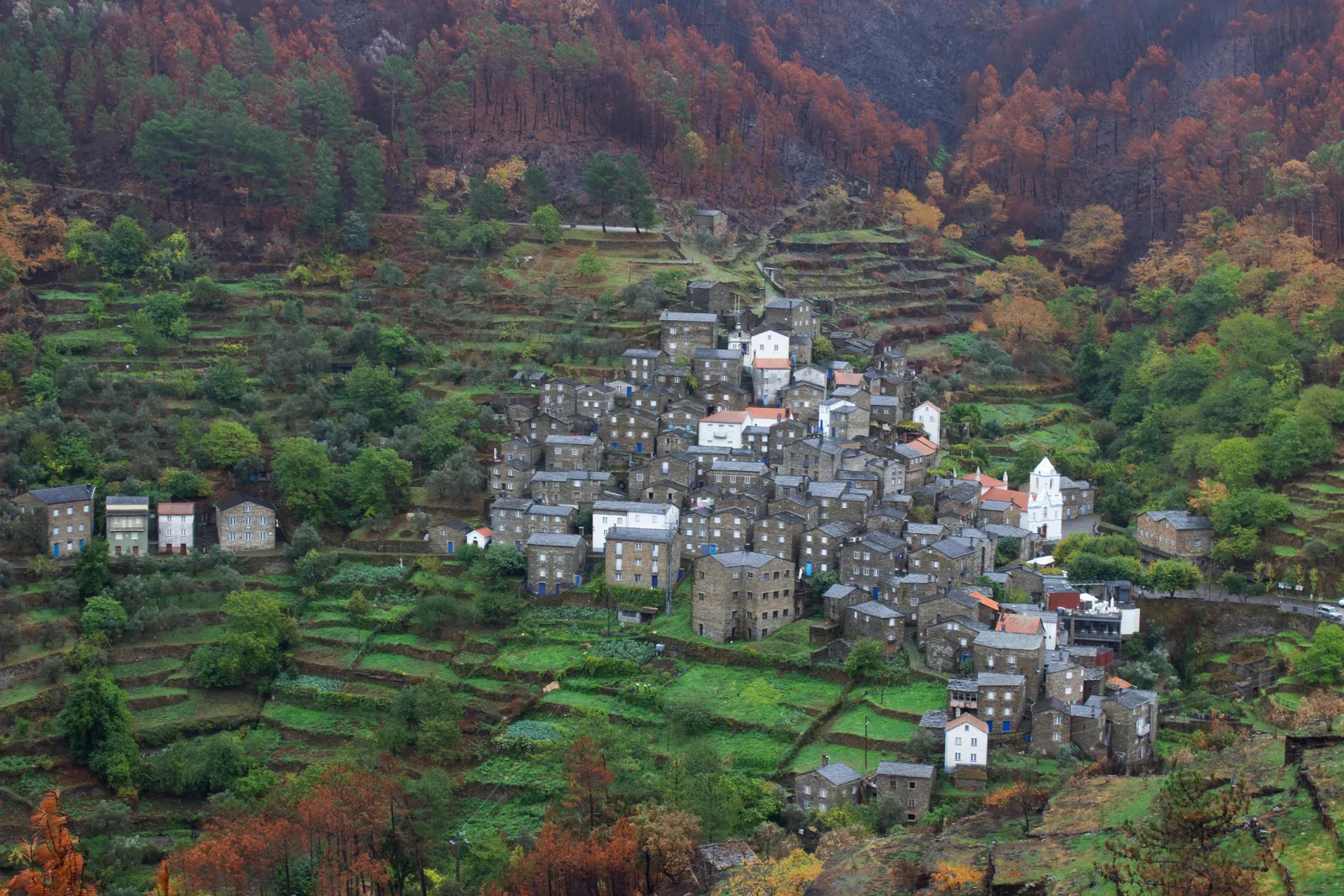
Our summer is Portugal’s winter, and on the Algarve it’s a mild one. January days in Faro average about 16°C.
Health cover and distance are the hard parts. Portugal isn’t one of Australia’s 11 reciprocal health care countries, so Medicare pays for nothing there, and there’s no non-stop flight home. The paperwork takes patience as well: Smartraveller says AIMA, the immigration agency, has a large backlog and long delays are common. For Australians, citizenship now takes 10 years of legal residence, up from 5, under a law in force since 19 May 2026.
Our estimate for a month on the Algarve, based on Faro, is about A$4,570 for a couple and A$3,420 for one person, rent included.
| A month on the Algarve (Faro) | Couple | One person |
|---|---|---|
| Rent, one-bedroom flat in the centre | A$1,530 | A$1,530 |
| Living costs (food, transport, bills) | A$1,980 | A$1,100 |
| Eating out, local trips and extras (30%) | A$1,060 | A$790 |
| Total | A$4,570 | A$3,420 |
For a couple
About A$2,010 a month less than a comfortable month in Australia.
For one person
About A$1,260 a month less than a comfortable month in Australia.
Not built the same way: Australia's figure (ASFA Retirement Standard, comfortable, June quarter 2026) assumes you own your home and includes health insurance; our estimate for Portugal includes rent and leaves health insurance out. Age Pension: the most paid in Australia from 20 September 2026; living overseas for good, the base rate is about A$3,710 a month for a couple and A$2,460 for one person.

Our estimate: Numbeo’s living costs for one person (without rent) plus a one-bedroom city-centre rent, plus 30% for eating out, local trips and extras. For a couple, living costs times 1.8. Converted at the Reserve Bank of Australia’s average exchange rate for the 12 months to September 2026 (A$1 = 0.5957 euros). Health insurance is not included. We use Numbeo’s Faro page, last updated 15 October 2026. Short furnished lets usually cost more than the long-term rent in this table.
Lisbon costs more, mostly in rent. Numbeo puts a one-bedroom flat in central Lisbon at 1,425 euros a month, about A$2,390 at the RBA’s 12-month average rate (15 October 2026). Worked out the same way, a month in Lisbon comes to about A$6,090 for a couple and A$4,770 for one person. Our guide to what retiring overseas really costs puts the Algarve beside nine other places.
Against the Age Pension. After 12 weeks away, the most the pension pays is the base rate: about A$2,460 a month for one person and A$3,710 for a couple, before tax (rates from 20 September 2026). That leaves a couple about A$860 a month short of our Algarve estimate. One person is about A$960 short.
What costs more than you’d expect. Health cover is the big one, and our estimate leaves it out; AIMA wants health insurance or proof of national health service cover before it issues a residence permit. Heating is easy to overlook. In 2025, 15.6% of people in Portugal said they couldn’t keep their home warm enough, against 8.8% across the EU, Eurostat figures show. Then come the visa fee of 110 euros (about A$180), AIMA’s permit charges and long flights home.
Renting long term. Portugal’s Civil Code (article 1076) limits what a landlord can take up front. Rent can be paid in advance for no more than two months, with written agreement, and a deposit can’t exceed two months’ rent. Diário da República, the official gazette, sets out both limits in its legal glossary.
The lease matters for the visa too: AIMA asks for a declaration from your landlord confirming your address. Before signing, it helps to have the rent, what it covers and who pays for repairs in writing, and to ask how the place is heated. Smartraveller says theft from accommodation happens, particularly in short-term rentals.

Visiting. Smartraveller says Australians can stay up to 90 days in any 180-day period across the whole Schengen area, not 90 days per country. The Entry/Exit System (EES) takes your fingerprints and photo the first time you enter, for free. ETIAS, a separate pre-travel approval, has no confirmed start date. Smartraveller warns of fraudulent websites charging for EES registration or selling ETIAS.
Portugal isn’t one of the Schengen countries with a bilateral deal that lets Australians stay longer. For over 3 months without moving, Portugal’s foreign ministry lists a temporary stay visa for retirees, but only in exceptional cases.
Staying longer: the D7. Portugal’s residency visa for retirement or passive income is usually called the D7. A government order, Portaria 1563/2007, sets the means test at the Portuguese minimum wage, which is 920 euros a month in 2026 (about A$1,540 at the RBA’s 12-month average rate). A second adult adds 50%, so a couple needs 1,380 euros a month (about A$2,320). You show enough for at least 12 months: 11,040 euros for one person (about A$18,530) or 16,560 euros for a couple (about A$27,800).
The Age Pension’s base rate overseas is above that test, though what counts as proof of income is the consulate’s call.
The ministry’s list for a residency visa includes:
The fee is 110 euros (about A$180), and the ministry’s deadline to decide is 60 days. A residency visa is valid for 4 months with two entries. In that time you apply to AIMA for a residence permit.
After you arrive. AIMA asks for your passport and visa, proof of means, a declaration of your address (from your landlord if you rent), proof of tax registration, and health insurance or national health service cover. The first permit lasts 2 years, then renews for 3 years at a time.
Time away counts too. Under Portugal’s foreigners law (Law 23/2007, article 85), a temporary permit can be cancelled after 6 months away in a row, or 8 in total, without good reason.
After 5 years of temporary residence you can apply for permanent residence. AIMA asks for proof of basic Portuguese, such as an A2 certificate, and for your tax and social security affairs to be up to date. Citizenship takes 10 years of legal residence for nationals of countries such as Australia, under Organic Law 1/2026 (from 19 May 2026). Portugal recognises dual nationality, Smartraveller says.
Smartraveller says Portuguese government websites in English, AIMA’s included, are often out of date, and points you to Portugal’s embassy or consulates instead. Our guide to retirement visas by age compares other countries.
A partner under the age limit. The D7 lists set no minimum age, so a younger partner can come on the same terms. A spouse, or a partner in a civil union recognised by law, can apply at the same time as an accompanying family member. That takes proof of the relationship and the extra 50% in means. Joining later is family reunification through AIMA. Law 61/2025, in force since 23 October 2025, generally requires 2 years of residence before that, with some exceptions. If you’re partners but not married, ask the consulate what proof of the relationship it accepts.
Documents to get in Australia before you go. An Australian Federal Police national police check costs A$57, and most digital certificates arrive within a few days. One with fingerprints costs A$114 and takes 15 to 30 business days. DFAT adds an apostille for A$105 a document (from 1 January 2026), and processing times vary. A partner needs your marriage certificate or other proof of the relationship. For a licence exchange later, the Australian Embassy in Lisbon says to get a licence history certificate from your state or territory licensing authority.
Visa rules change. Portugal’s embassy or a consulate, AIMA, or a lawyer in Portugal can confirm what applies to you. Ask what proof of pension they accept, what health cover they’ll take, and how long the permit step is taking.

Services Australia says your Age Pension can keep paying while you are overseas. After 6 weeks away the Energy Supplement stops and your Pensioner Concession Card is cancelled. The Pension Supplement stops completely at 12 weeks (since 20 September 2026). If you lived in Australia less than 35 years between age 16 and pension age, your rate can be reduced after 26 weeks. Our guide to the 6, 12 and 26-week rules explains each step.
Portugal is a social security agreement country, and the Department of Social Services’ guide says people living there can lodge an Age Pension claim from Portugal. So you can claim the Age Pension without being in Australia on the day. If you’re short of the usual 10 years’ residence, the agreement can count Portuguese insurance periods. If you live in Portugal, that needs at least 12 months of Australian residence during your working life, including at least 6 months in one unbroken period.
If you move for good, you get the base rate only from the day you leave: A$29,520.40 a year single, A$44,506.80 for a couple. Department of Social Services figures released under freedom of information show 1,218 people getting the Age Pension in Portugal at the end of 2025. They were paid an average of about A$541 a fortnight each.
From Portugal, the Australian Embassy in Lisbon lists a free number for Centrelink International Services: 800 861 122.
Medicare never pays for treatment overseas, and Smartraveller says there is no reciprocal health care agreement between Australia and Portugal. If you are an Australian citizen and move overseas, you can still use Medicare for treatment in Australia, on visits home, for up to 5 years after you leave. Visits home do not restart that clock. After 5 years, you re-enrol when you move back to live. Permanent residents are different: their enrolment ends 12 months after they leave. Our guide to Medicare overseas has the detail.

Smartraveller says the large private medical facilities in the big cities are comparable to Australia’s. Public facilities vary and are generally of a lower standard, even in the major cities, and the public system has ongoing staff shortages and strikes. Private care can need payment up front, and a private hospital may ask you to confirm your insurance or guarantee payment before admitting you.
Once you’re a resident. GOV.UK’s guidance for British residents says a registered resident can join the national health service (SNS) with the same rights to treatment as a Portuguese citizen. You ask for a health user number at your local health centre, with your residence certificate, passport and tax number. The waits and staff shortages apply to residents too.
What is where. Lisbon and Porto have public and private hospitals. On the Algarve, the region’s public hospitals are in Faro, Portimão and Lagos, run by its local health unit. On the Silver Coast, the regional unit runs public hospitals in Caldas da Rainha, Peniche and Torres Vedras, Rádio Renascença reported. On Madeira, the regional health service, SESARAM, runs the island’s public hospitals. Smartraveller says standards in rural areas are generally lower, so in a small town, specialist care can mean a drive to a larger city.
Evacuation. There’s no agreement for free care, so Smartraveller says a visitor pays for all medical care, including a hospital stay or an evacuation. Its page on retiring overseas says a medical repatriation can cost hundreds of thousands of dollars.
Your medicines. Smartraveller says you can carry prescription medicines for personal use into Portugal, with a copy of the prescription and a doctor’s letter giving each medicine and dose. For anything you’re unsure of, it suggests asking Infarmed, Portugal’s medicines authority. Medicines sent by post may need an import permit. Our guide to taking PBS medicines overseas covers the Australian side.
Which cover. For a winter away, Smartraveller says travel insurance needs to cover the whole trip, including medical evacuation. The usual type is travel insurance for a single long trip; ask whether it covers your full stay at your age and any conditions you already have. To live there, the usual type is international health insurance, made for people based overseas. Our guide to international health insurance by age covers the age limits. If you’d like help working out where to start, book a free planning session on Zoom.

There is no official count of where Australians settle in Portugal. These are five areas to compare, with rough driving times from Lisbon.
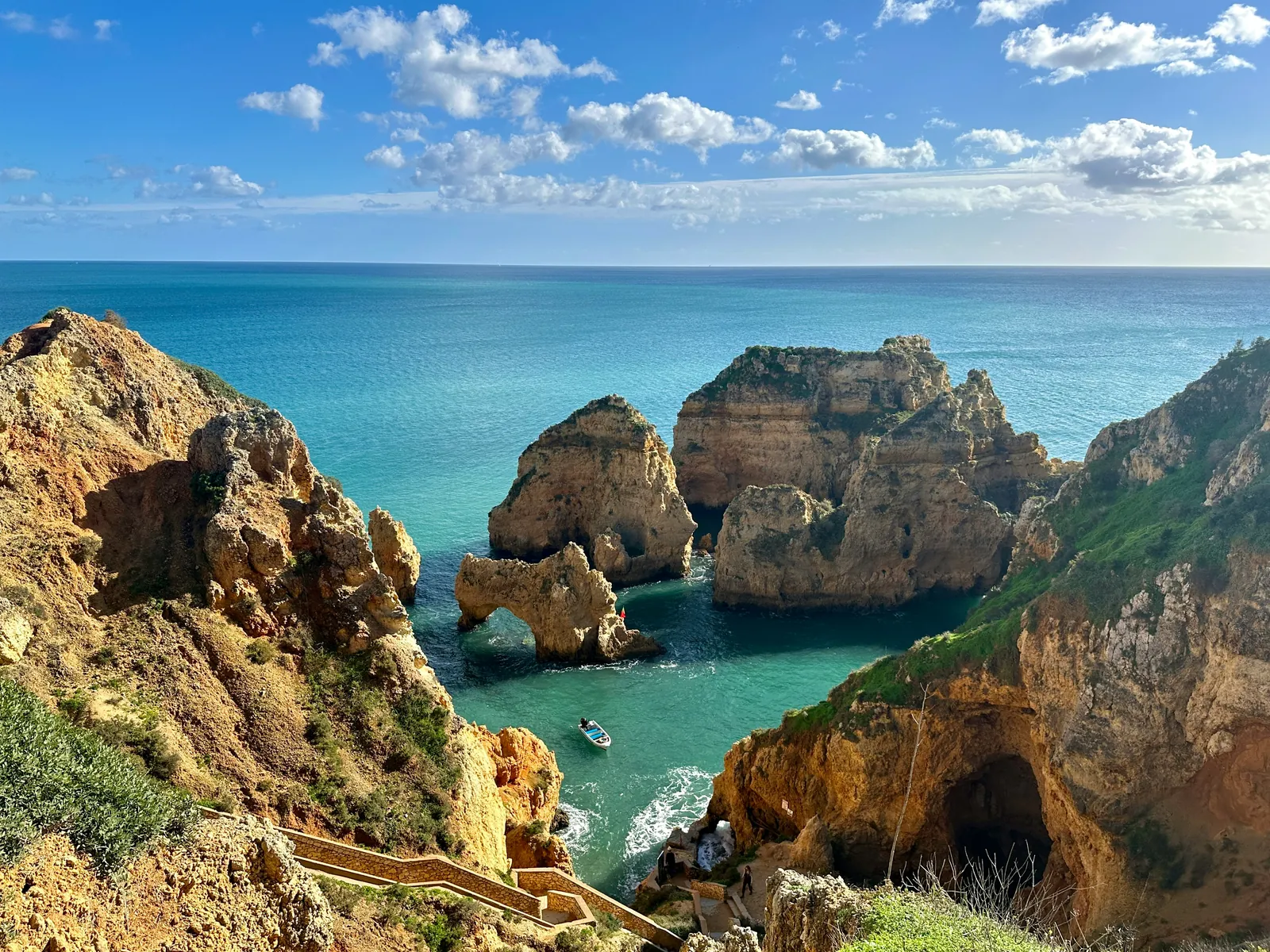
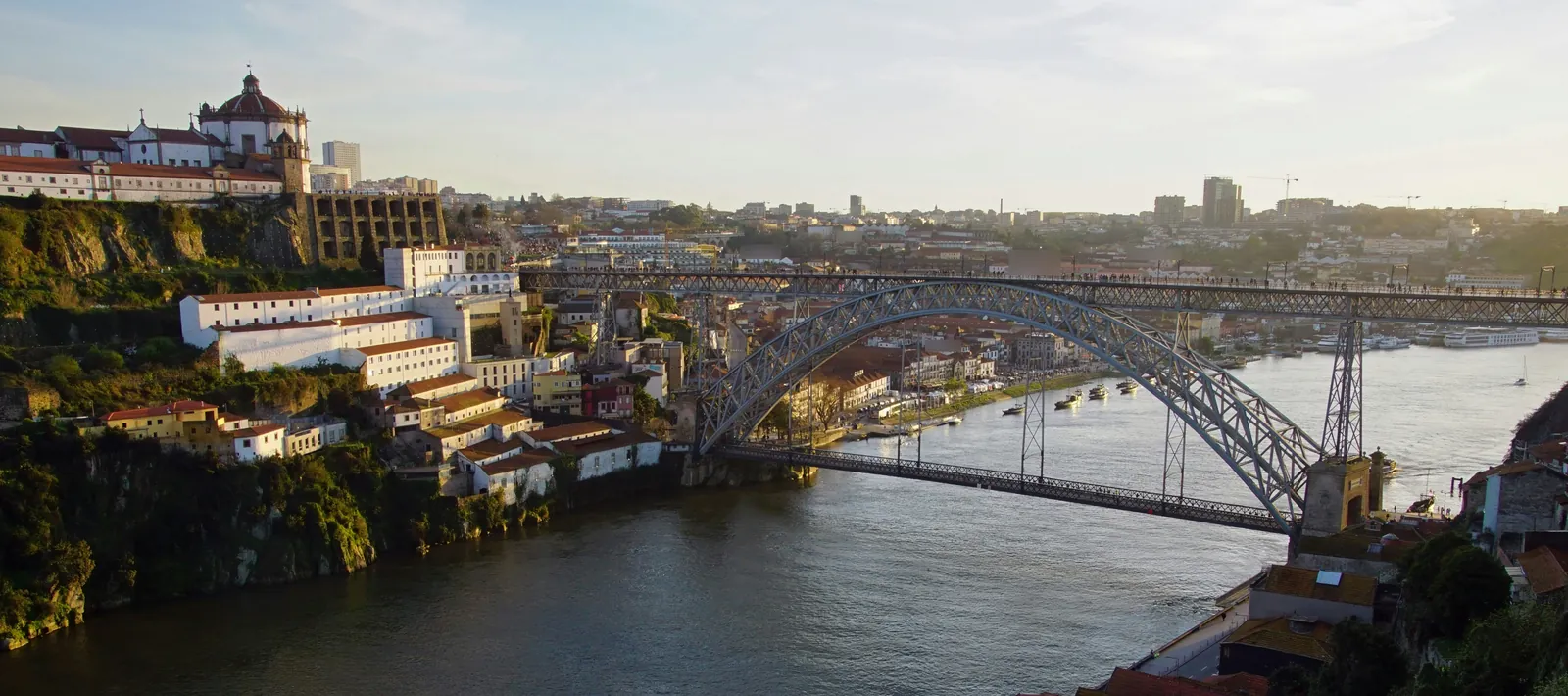
| Area | What it’s like | Getting around | Hospital | Airport |
|---|---|---|---|---|
| Lisbon and its coast | The capital, plus seaside towns such as Cascais; the highest rents in our figures | Hilly centre; metro, trams, buses, trains and ferries | Public and private hospitals | Lisbon |
| Porto and the north | Portugal’s second city; wetter and cooler | Steep old centre; metro, buses and trains; about 3 hours by road | Public and private hospitals | Porto |
| The Algarve | South coast towns such as Lagos, Tavira, Olhão and Faro; our cost base | Coastal towns, hillier inland; electric trains link Lagos, Faro and Tavira; about 3 hours by road | Public hospitals in Faro, Portimão and Lagos | Faro |
| The Silver Coast | Smaller towns on the coast between Lisbon and Porto | Spread out; a car helps; about 1 hour by road | Public hospitals in Caldas da Rainha, Peniche and Torres Vedras | Lisbon |
| Madeira | An Atlantic island, about 19°C on January days | Steep; buses and taxis | Regional public hospitals | Madeira, with flights to Lisbon |
Lisbon and its coast have the Australian Embassy, the main airport, and public and private hospitals. Rent is what pushes the budget up: Numbeo puts a central flat at 1,425 euros a month (about A$2,390), against 912 euros in Faro (about A$1,530).
Porto and the north are cooler and wetter: Porto’s January rain averages about 171 mm, to Lisbon’s 110.
The Algarve is our cost base. January days in Faro average about 16°C, a little warmer than Lisbon. Smartraveller notes a code of conduct in Albufeira with on-the-spot fines of 150 to 1,800 euros (about A$250 to A$3,020), and falling rocks on cliffs. Our Algarve page has more.
The Silver Coast is a string of smaller towns between Lisbon and Porto, close enough to Lisbon’s airport for trips home.
Madeira is an Atlantic island, with January days in Funchal averaging about 19°C. SESARAM, the regional health service, runs its public hospitals. Its airport has flights to Lisbon, so a trip home means at least one more stop.
Foreigners can buy property in Portugal. The US State Department’s 2025 investment report says foreign investors can own property directly, freehold or leasehold, and that property is registered online.
Buying no longer leads to a visa. Since Law 56/2023, AIMA says money invested for a golden visa can’t go into real estate, directly or indirectly. A D7 visa depends on your income, whether you rent or own.
GOV.UK’s guidance suggests an English-speaking lawyer registered with Portugal’s bar association, the Ordem dos Advogados; some notaries also run an independent purchase service, Casa Simples, Casa Segura. GOV.UK flags a 2005 water resources law that can affect coastal and riverside property, and fire prevention rules for rural land. The lawyer can also set out the taxes on buying and owning.
Smartraveller’s page on retiring overseas says to get independent local advice before any big financial commitment, especially if your partner is a local, as you may not have the same rights. It also suggests reviewing your will when you own property overseas. Our guide to overseas property and visa scams covers the warning signs. For the Australian side, see whether to keep, rent or sell the family home.
Portugal’s income tax code (article 16) makes you a tax resident if you spend more than 183 days there in any 12-month period that starts or ends in the tax year. You can also be resident with fewer days, if you have a home there that you seem to intend to keep as your usual residence. Any day that includes a night in Portugal counts as a day there.
Residents are taxed on a sliding scale. For 2026, the rate starts at 12.5% on the first 8,342 euros of taxable income (about A$14,000). It rises in steps to 48% above 86,634 euros (about A$145,000). The non-habitual resident scheme, which gave some new residents a special tax deal for 10 years, closed to new applicants on 1 January 2024. Portugal’s tax office says its replacement is aimed at scientific research and innovation.
Australia and Portugal signed a tax treaty on 30 November 2023, but it isn’t in force yet. It isn’t on Treasury’s list of treaties in force (updated 24 March 2026), and Treasury says it will apply once both countries exchange ratification papers. Treasury’s summary says that once it applies, regular non-government pension payments, such as a super pension, will be taxed only where you live. Until then there are no treaty rules to fall back on.
At home, the ATO’s residency tests decide whether you’re still an Australian resident for tax; our guide to tax residency when you retire overseas walks through them. If you become a foreign resident, you lose the tax-free threshold, so Australian income such as rent is taxed at 30% from the first dollar (2025-26), as the foreign resident tax rates show. Sell your Australian home while you’re a foreign resident and, for sales after 30 June 2020, you generally lose the main residence exemption from capital gains tax, apart from narrow life events.
Talk to a registered tax agent in Australia, and to a tax adviser in Portugal about how it treats your pension and super, before you go.
The euro is Portugal’s currency. Smartraveller says foreign cards may not be accepted in smaller shops and towns, suggests ATMs in banks and shopping centres, and warns of scams involving ATM cards and a local phone payment app. Travelling between Portugal and any country outside the EU, you declare more than 10,000 euros (about A$16,790), in any form.
Your pension. Services Australia pays every 2 weeks into your Australian account if you’ll be away less than 12 months. Away longer, it pays every 4 weeks into an Australian or overseas account. Paid into a Portuguese account, the money comes in euros, converted by the RBA at the rate on the day, and usually arrives in 2 to 6 days. Bank fees are yours. Our guide to living overseas on the Age Pension has the numbers.
A local account and a tax number. Each Portuguese bank sets its own rules for foreigners, so the bank can tell you what it needs from someone on your visa. A Portuguese tax number (NIF) comes up again and again: AIMA asks for your tax registration, and GOV.UK says you need it to register with the health service.
Moving money. The main options are a transfer from your Australian bank, a currency transfer service, or cash from an ATM on an Australian card. Each charges a fee and builds a margin into its exchange rate; ask for both on the amount you’d send, such as a year’s rent.
Currency swings. Your pension is in Australian dollars and your bills are in euros, so the exchange rate sets what a month really costs. At the RBA’s 12-month average rate (A$1 = 0.5957 euros), 1,000 euros is about A$1,680. If the Australian dollar fell 10%, the same 1,000 euros would cost about A$1,870.
Language. Portuguese is the official language. For permanent residence, AIMA accepts a certificate from Português Língua de Acolhimento, a course for newcomers run by public schools and training centres.

Getting around without driving. Smartraveller says public transport is usually safe and reliable, and rechargeable tickets work on most buses, ferries, trams, trains and the metro. Strikes are common and can stop them. Official taxis are usually black and green, ride-sharing is legal, and Smartraveller has reports of taxi drivers overcharging at Lisbon airport.
Driving. Visitors can drive on a valid Australian licence, and Smartraveller says the original card is needed, not a digital licence. Residents can keep driving on one if it was issued or last renewed within 15 years, IMT says. The Australian Embassy in Lisbon adds that residents aged 60 and over must exchange their Australian licence for a Portuguese one. Portugal has a high rate of road deaths, and Smartraveller says on-the-spot fines for drink-driving, speeding and using a phone are large.
Safety. Smartraveller’s advice for Portugal is to exercise normal safety precautions (updated 16 October 2026). It mentions bag snatching, pickpocketing on trams in tourist areas, theft from cars with foreign plates, and robberies near nightlife in Lisbon, Porto and the Algarve. You must carry photo ID, and GOV.UK says residents must carry their residence card. Possessing drugs is an administrative offence that can bring large fines; selling them can mean jail.
Bushfires are common in the warmer months, and causing one is an offence even by accident; the smoke is hard on anyone with breathing problems. Winter brings localised flooding in cities, and small earth tremors are often recorded around Lisbon. People drown at beaches and in rivers, and beaches aren’t patrolled in winter.
The weather, month by month. Average highs and lows, with Lisbon’s rain (WMO, from IPMA records for 1961 to 1990):
| Month | Lisbon | Rain in Lisbon | Porto | Faro | Funchal, Madeira |
|---|---|---|---|---|---|
| January | 15°C / 8°C | 110 mm | 14°C / 5°C | 16°C / 8°C | 19°C / 13°C |
| February | 16°C / 9°C | 111 mm | 14°C / 6°C | 17°C / 8°C | 19°C / 13°C |
| March | 18°C / 10°C | 69 mm | 16°C / 7°C | 18°C / 9°C | 20°C / 13°C |
| April | 19°C / 11°C | 64 mm | 18°C / 8°C | 20°C / 10°C | 20°C / 13°C |
| May | 22°C / 13°C | 39 mm | 20°C / 11°C | 22°C / 13°C | 21°C / 15°C |
| June | 25°C / 16°C | 21 mm | 23°C / 14°C | 25°C / 16°C | 22°C / 17°C |
| July | 27°C / 17°C | 5 mm | 25°C / 15°C | 29°C / 18°C | 24°C / 18°C |
| August | 28°C / 18°C | 6 mm | 25°C / 15°C | 29°C / 18°C | 26°C / 19°C |
| September | 26°C / 17°C | 26 mm | 24°C / 14°C | 27°C / 17°C | 26°C / 19°C |
| October | 22°C / 15°C | 80 mm | 21°C / 11°C | 23°C / 14°C | 24°C / 18°C |
| November | 18°C / 11°C | 114 mm | 17°C / 8°C | 19°C / 11°C | 22°C / 16°C |
| December | 15°C / 9°C | 108 mm | 14°C / 6°C | 17°C / 9°C | 20°C / 14°C |
Smartraveller says high temperatures regularly hit mainland Portugal in summer.
Public holidays. Portugal’s Labour Code sets 13 national holidays: 1 January, Good Friday, Easter Sunday, 25 April, 1 May, Corpus Christi, 10 June, 15 August, 5 October, 1 November, and 1, 8 and 25 December.
Household help. Pay is agreed between you and the worker. As a guide to local wages, Portugal’s minimum wage for 2026 is 920 euros a month (about A$1,540).
Making friends. A Portuguese class gives you the same faces each week. Smartraveller points newcomers to the local migrant support centres (CLAIM) listed on ePortugal, the government’s services portal. If you’re going alone, see retiring overseas single.
BITRE’s June 2026 airline figures show no non-stop flights between Australia and Portugal, so expect at least one stop, usually in the Middle East or Asia. Allow a full day of travel or more each way.
In our summer, mainland Portugal and Madeira are 11 hours behind Sydney and Melbourne. In our winter they’re 9 hours behind. For a few weeks around April and October, when both countries are on daylight saving, it’s 10. Perth is 8 hours ahead in our summer and 7 in our winter.
One order that works, from a first visit to living there:
Yes, on a D7 visa if you have a pension or other passive income of at least 920 euros a month for one person in 2026 (about A$1,540), plus 50% for a second adult. Without a visa you can stay 90 days in any 180 across Schengen.
Our estimate for a month on the Algarve is about A$4,570 for a couple and A$3,420 for one person, rent included. In Lisbon it is about A$6,090 for a couple, mostly because of rent. Health insurance is extra.
The income test is low, but the process is slow. You apply for the D7 at a consulate, then for a residence permit through AIMA, which Smartraveller says has a large backlog. Permanent residence takes 5 years and basic Portuguese.
90 days in any 180 days across the whole Schengen area, without a visa. Portugal has no extra bilateral deal for Australians. For longer, you need a visa such as the D7.
Yes. The US State Department says foreign investors can own property freehold. Buying doesn’t give you a visa, though: since 2023, golden visa money can’t go into real estate.
One was signed on 30 November 2023, but it isn’t in force yet, according to Treasury’s list (updated 24 March 2026). Until it is, there are no treaty rules for income taxed in both countries. A registered tax agent here and a tax adviser in Portugal can work out your position.
Portugal’s D7 asks for 11,040 euros a year for one person (about A$18,530); Spain’s non-lucrative visa asks for 28,800 euros (about A$48,350). Our estimate for a couple is about A$4,570 a month on the Algarve and A$4,860 in Alicante. Both have a social security agreement with Australia and neither has a Medicare agreement. See our Spain page to compare.
For it: a D7 income test below the Age Pension, mild winters in the south, a social security agreement and the rest of Europe close by. Against it: no Medicare agreement, slow immigration paperwork, cold homes in winter, a 10-year wait for citizenship and no non-stop flights home.
Our summer is the Algarve's winter, and a mild one, with a coastal train line linking towns from Lagos to the Spanish border.
General information only, not financial, tax, legal, migration or insurance advice. Rules change: check the official source before you act, and talk to a licensed professional about your own situation.
Tell us what you have in mind, and we will help you plan it on a free Zoom call: when to go, how long for, and who with.
No pressure and no card details. You decide what comes next.