
Retiring in Japan from Australia: costs, the Long Stay visa, pension and health cover (2026)
Ninety days without a visa, medical care of a high standard and non-stop flights of about 10 hours. Japan also has a social security agreement and a tax treaty with Australia.
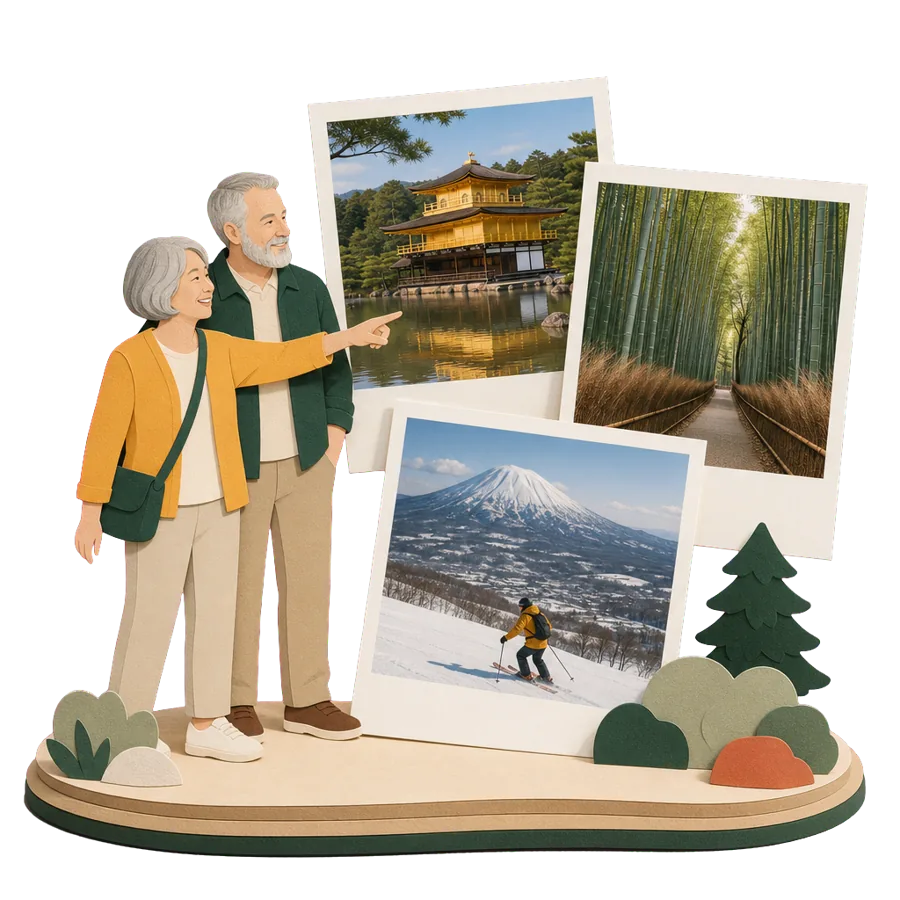
Checked 21 October 2026, re-checked monthlyBy the Retirees Abroad teamGeneral information only, how we check
The short answer
Our estimate for a month in Kyoto is about A$3,760 for a couple or A$2,560 for one person, rent included (October 2026). Australians can stay 90 days without a visa, and the Long Stay visa allows up to a year with more than ¥30 million in savings (about A$275,000). Your Age Pension keeps paying in Japan. Medicare never pays for treatment there.
Japan at a glance
- A comfortable month, couple
- About A$3,760
- A comfortable month, one person
- About A$2,560
- Visa for a visit
- 90 days visa-free; Long Stay visa up to 1 year
- Weather
- Heat waves July to September; typhoons May to November
- Costs based on
- Kyoto
- Medicare agreement
- No
- Social security agreement
- Yes
- Tax treaty with Australia
- Yes (2008)
- Long-stay visa
- Long Stay (sightseeing and recreation): 6 months, up to 1 year, savings over ¥30 million (about A$275,000)
- Flight from Sydney
- About 9.5 to 10 hours non-stop to Tokyo
- Time difference
- 1 hour behind Sydney (2 in daylight saving)
Costs are mid-range estimates in Australian dollars, rent included, for a comfortable month. For comparison, a comfortable month in Australia is about A$6,580 for a couple who own their home (ASFA, June quarter 2026).
Who Japan suits, and what to weigh up
Japan suits a season away more than a full move. Australians can stay 90 days without a visa, and non-stop flights from Sydney take about 10 hours. Smartraveller says medical facilities are of a high standard, though care can be expensive for visitors.
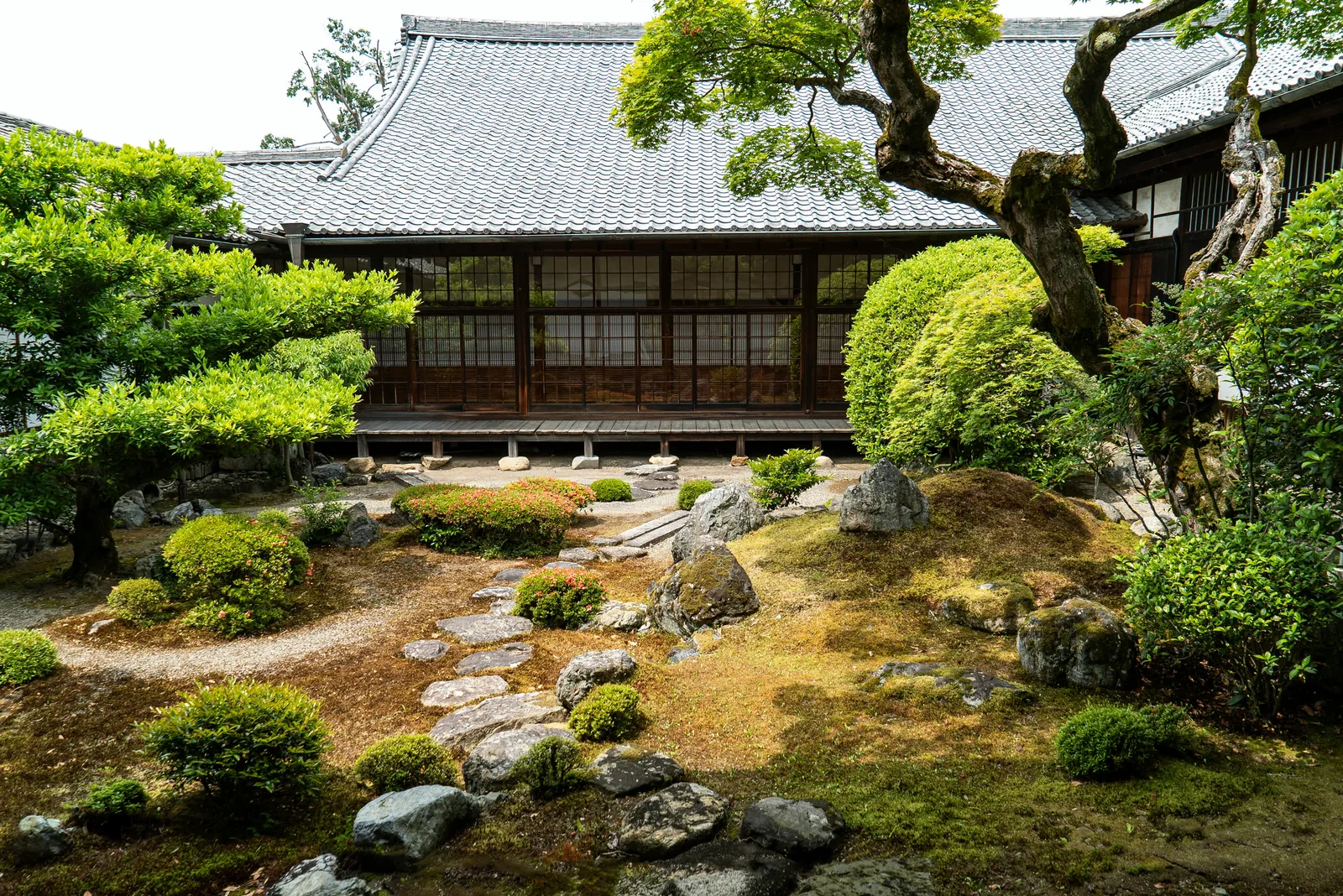
Japan has no retirement visa. The nearest thing, the Long Stay visa for sightseeing and recreation, lasts a year at most and asks for more than ¥30 million in savings (about A$275,000 at the RBA’s 12-month average rate). You can’t join Japan’s national health insurance on it, so all your care is private. Costs are also higher than in South-East Asia: our Kyoto estimate is a little above the Age Pension paid overseas.
An Australian married to a Japanese citizen has a clearer path: a spouse visa, with a much shorter wait for permanent residence.
Trains and buses are modern and reliable, Smartraveller says, and the crime rate is low. Earthquakes, typhoons and summer heat are the risks to plan around, along with strict rules on medicines.
What a month costs
Our estimate for a month in Kyoto is about A$3,760 for a couple and A$2,560 for one person, rent included.
| A month in Kyoto | Couple | One person |
|---|---|---|
| Rent, one-bedroom flat in the centre | A$820 | A$820 |
| Living costs (food, transport, bills) | A$2,070 | A$1,150 |
| Eating out, local trips and extras (30%) | A$870 | A$590 |
| Total | A$3,760 | A$2,560 |
How a month in Japan compares
For a couple
- Japan, our estimate
- A$3,760
- Comfortable in Australia
- A$6,580
- Age Pension, the most paid in Australia
- A$4,040
About A$2,820 a month less than a comfortable month in Australia.
For one person
- Japan, our estimate
- A$2,560
- Comfortable in Australia
- A$4,680
- Age Pension, the most paid in Australia
- A$2,680
About A$2,120 a month less than a comfortable month in Australia.
Not built the same way: Australia's figure (ASFA Retirement Standard, comfortable, June quarter 2026) assumes you own your home and includes health insurance; our estimate for Japan includes rent and leaves health insurance out. Age Pension: the most paid in Australia from 20 September 2026; living overseas for good, the base rate is about A$3,710 a month for a couple and A$2,460 for one person.
Our estimate: Numbeo’s living costs for one person (without rent) plus a one-bedroom city-centre rent, plus 30% for eating out, local trips and extras. For a couple, living costs times 1.8. Converted at the Reserve Bank of Australia’s average exchange rate for the 12 months to September 2026 (A$1 = 108.95 yen). Health insurance is not included. We use Numbeo’s Kyoto page, last updated 20 October 2026: about ¥125,490 a month (about A$1,150) in living costs for one person and ¥89,200 (about A$820) for the flat. Short furnished lets usually cost more than the long-term rent in this table.
Tokyo costs a lot more, mostly in rent. Numbeo’s Tokyo page, last updated 20 October 2026, puts a one-bedroom flat in central Tokyo at ¥202,375 a month, about A$1,860 at the RBA’s 12-month average rate. Worked out the same way, a month in Tokyo comes to about A$5,420 for a couple and A$4,080 for one person.
Against the Age Pension. After 12 weeks away, the most the pension pays is the base rate: about A$2,460 a month for one person and A$3,710 for a couple, before tax (rates from 20 September 2026). That leaves a couple about A$50 a month short of our Kyoto estimate. One person is about A$100 short, and health insurance is extra for both.
What costs more than you’d expect. Health cover comes first, because on a visit or the Long Stay visa you pay for every doctor and hospital privately. Moving in is expensive too: Japan’s land and transport ministry puts the money due when you sign a lease at 4 to 7 months’ rent, as a rule of thumb. Flights home add up, and since 1 July 2026 every departure carries an international tourist tax of ¥3,000 (about A$28), up from ¥1,000 (about A$9). A car means a Japanese licence after the first year and regular inspections required by law, the immigration agency’s guidebook says.
Renting long term. The ministry’s Apartment Search Guidebook, written for foreign tenants, says a contract normally runs 2 years. A regular agreement renews unless the landlord has good cause to refuse; a fixed-term lease simply ends. At signing you pay the security deposit (about 2 months’ rent as a guideline), and often key money of 1 or 2 months, which is never returned. On top come an agent’s fee of up to a month’s rent, insurance against fire and water damage, and rent paid a month ahead.
You also need a guarantor, or a rental guarantee company whose fee is often about half a month’s rent for 2 years. To leave early, you give written notice, usually 1 to 2 months ahead. Repairs for damage you cause come out of the deposit, so the guidebook suggests asking about those costs and any renewal fee before you sign. A furnished short let for the first weeks lets you see a neighbourhood before you commit.
Visas for Australians

You can visit for up to 90 days without a visa. For longer, the Long Stay visa is the one route for people who simply want to spend time in Japan, and it has a high savings test.
Visiting. Smartraveller and Japan’s Ministry of Foreign Affairs both confirm the 90-day stay for Australians visiting as tourists, on business or to see family. You can’t switch to another visa from inside Japan; you have to leave and come back in with the right visa. You’ll be photographed and fingerprinted when you arrive, and you can pre-register for immigration and customs on Visit Japan Web.
Japan’s Digital Agency has warned about a fake app copying Visit Japan Web; the real service is free and never asks for card details. Our guide to overseas retirement scams covers other warning signs.
Staying longer. The Ministry of Foreign Affairs lists a Long Stay visa for sightseeing and recreation, open to citizens of countries with a visa waiver, which includes Australia. It gives 6 months, and you can apply to the regional immigration bureau before that runs out for a total of up to 1 year. You must be 18 or over, and you and your spouse together need savings worth more than ¥30 million (about A$275,000). You also need private medical travel insurance covering death, injury and illness for your whole stay.
The ministry’s document list asks for bank records showing the balance and every deposit and withdrawal for the past 6 months, a schedule of your stay and proof of the insurance. A Certificate of Eligibility from Japan’s immigration authority replaces those three, and someone in Japan can apply for it on your behalf. The ministry adds that a certificate does not guarantee a visa.
What it doesn’t allow. The visa is a status for sightseeing and recreation. Smartraveller warns that penalties apply to working on a tourist visa, and any work needs the right visa first. Children can’t come with you. The ministry’s list of long-term visas has no retirement category; the others are for work, study, business or family.
Living there on it. A stay of more than 3 months comes with a residence card, which you must carry at all times. The immigration agency’s guidebook says you register your address at the local municipal office within 14 days of settling in. Permanent residence is a long way off. Japan’s immigration agency generally asks for 10 years of continuous residence, 5 of them on a work or residence-based status (guidelines revised 24 February 2026).
Your partner. The age limit of 18 applies to the main applicant; for an accompanying spouse, the rules turn on marriage. An accompanying spouse applies with a marriage certificate, must live at the same address as you and can’t arrive before you. If your spouse wants to stay separately, the savings test doubles to ¥60 million (about A$551,000). The ministry doesn’t mention de facto partners, so the embassy is the one to ask how it treats one. Our page for couples covers the Australian side.
Married to a Japanese citizen. Spouses of Japanese nationals have their own visa, which the ministry lists among the long-term visas. The immigration agency’s guidelines also shorten the wait for permanent residence: 3 years of real married life plus 1 year living in Japan. A spouse visa needs its own application, through the embassy or a licensed visa agent in Japan.
Documents to get in Australia before you go. The ministry’s Long Stay list doesn’t ask for a police check. It does ask for a marriage certificate for a spouse, and 6 months of bank records. Ask the embassy whether any document must be translated or carry an apostille. If another visa calls for a police check, the Australian Federal Police charges A$57, and the AFP says most online checks arrive within a few days. DFAT adds an apostille to Australian documents at an Australian Passport Office by appointment or by mail, and Smartraveller says processing times vary.
The Embassy of Japan in Australia or a consulate, or a licensed visa agent in Japan, can confirm the current rules. Ask what counts as savings, whether superannuation can be included, and whether a second Long Stay year is possible. Our guide to retirement visas by age compares countries that do have a retirement visa.
Your Age Pension and Medicare in Japan
Your Age Pension can keep paying in Japan, Services Australia says, under the same travel rules as anywhere else. After 6 weeks away the Energy Supplement stops and your Pensioner Concession Card is cancelled. The Pension Supplement stops at 12 weeks. If you lived in Australia less than 35 years between age 16 and pension age, your rate can drop after 26 weeks. The 6, 12 and 26-week rules explain each step.
Japan is one of three countries in Asia with a social security agreement with Australia. Services Australia says the agreement generally lets you lodge a claim for the Age Pension while living in Japan, through the Japan Pension Service. If you live outside Australia when you claim, you generally need at least 12 months of Australian residence between 16 and pension age, 6 months of it in one stretch. Years you were covered by Japan’s system can count towards the 10-year minimum. If you worked in Japan, the Japan Pension Service decides any Japanese pension. If you move for good, the Australian pension pays the base rate only from the day you leave: A$29,520.40 a year single, A$44,506.80 for a couple.
Department of Social Services figures released under freedom of information show 109 people getting the Age Pension in Japan at the end of 2025, up from 84 at the end of 2020. They were paid an average of about A$515 a fortnight each.
Medicare never pays for treatment in Japan, and Smartraveller says there is no agreement between the two countries for free health care. Japan’s national health insurance won’t fill the gap either. Chuo City in Tokyo and the immigration agency’s guidebook both say people on the Long Stay visa can’t enrol. If you are an Australian citizen and move overseas, you can still use Medicare for treatment in Australia for up to 5 years after you leave, and visits home do not restart that clock. After 5 years, you re-enrol when you move back. Permanent residents are different: their enrolment ends 12 months after they leave.
Health care and insurance
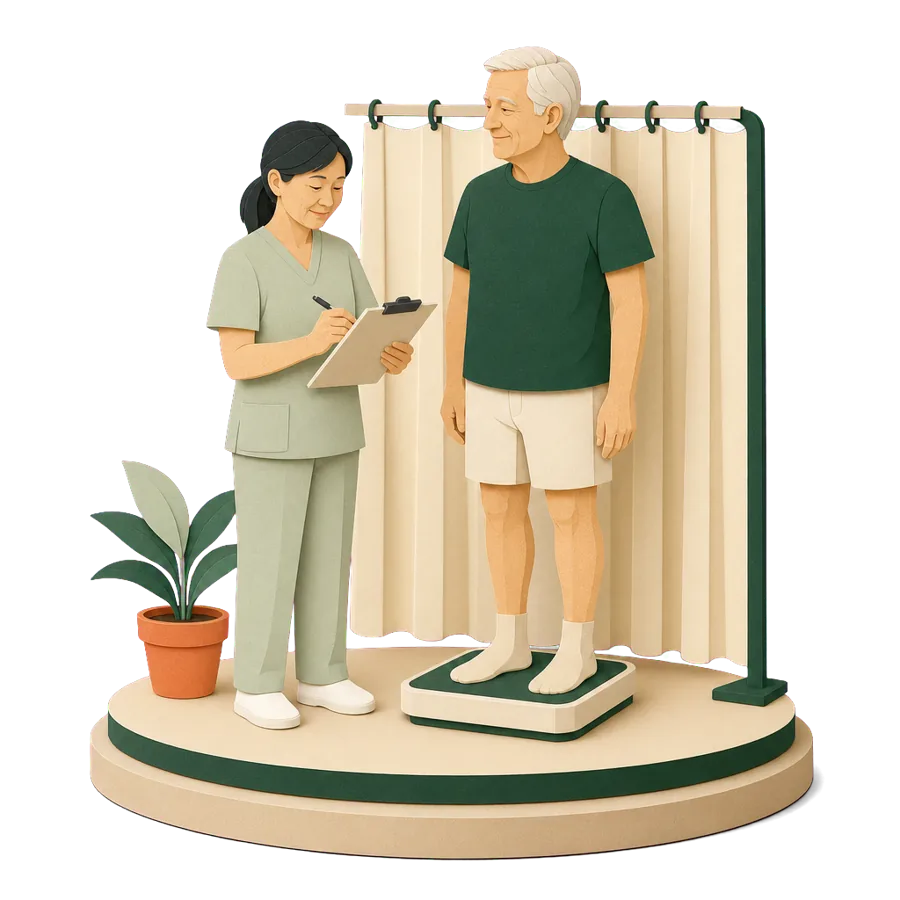
Smartraveller says medical facilities are of a high standard, with English-speaking staff in many major cities, though they can be hard to find outside Tokyo. Care can be expensive if you aren’t a resident, and you may need to pay up front, or guarantee the bill, before you’re treated. Hospitals may turn away an ambulance patient who can’t show proof of funds, some only take cash, and uninsured patients are usually charged much higher fees.
What is where. Kyoto, Osaka, Tokyo and Sapporo each have a national university hospital, according to the Japan Association of National Universities, along with large general hospitals and local clinics. Smartraveller says the Japan National Tourism Organization keeps a list of hospitals with English-speaking staff, by area. From Niseko, the nearest university hospital is in Sapporo. For an ambulance anywhere in Japan, call 119.
When care means travelling. With care of a high standard in the cities, evacuation is mostly a question of getting home. Smartraveller says tourists pay for all their care, including a hospital stay or an evacuation, and that this can be very expensive. Ask any insurer whether a medical flight home is covered, and up to what amount.
Medicines. Smartraveller says Japan bans some medicines that are legal here, including pseudoephedrine (in some cold and flu tablets) and dexamphetamine, as well as medicinal cannabis and CBD oil. Narcotics such as codeine, morphine and oxycodone need a Narcotic Certificate, or they may be confiscated at the border. The limit matters on a long stay. Japan’s Ministry of Health, Labour and Welfare says prescription medicines can come in without an Import Confirmation up to a month’s supply. More than that needs the Import Confirmation, received before you leave home. The ministry’s page sets out the limits for each type of medicine, and the separate permission for narcotics. Our guide to taking medicines overseas has the Australian side.
For a visit, the usual type of cover is travel insurance for a single long trip. The Long Stay visa asks for private medical travel insurance for the whole stay, which is the same type, so the age limits and trip caps on travel insurance matter here. Ask the oldest age a policy will take, the longest trip it covers, and whether it can pay a Japanese hospital directly. If you’d like help working out where to start, book a free planning session on Zoom.
Smartraveller says summer heat waves can be life-threatening. Japanese encephalitis can occur in rural areas, and Smartraveller suggests the vaccine before you go. The public broadcaster NHK has a free app with emergency alerts in English.
Where Australians live
There are no official figures on where Australians stay in Japan. These are five areas to compare.
| Area | What it’s like | Getting around | Hospital | Airport |
|---|---|---|---|---|
| Kyoto | The old capital; temples and gardens; our cost base | Flat centre; buses, trains, walkable | National university hospital | Kansai International, about 75 minutes by express train |
| Tokyo | The capital; rent more than double Kyoto’s | Mostly flat; trains and subways | National university hospitals; English-speaking staff easiest to find | Haneda and Narita |
| Osaka | Big city next to Kyoto, with Kyoto’s nearest airport | Flat; trains and subways | National university hospital | Kansai International |
| Sapporo | Hokkaido’s capital; cold, snowy winters | Flat grid; subway and trams | National university hospital | New Chitose, just under 40 minutes by train |
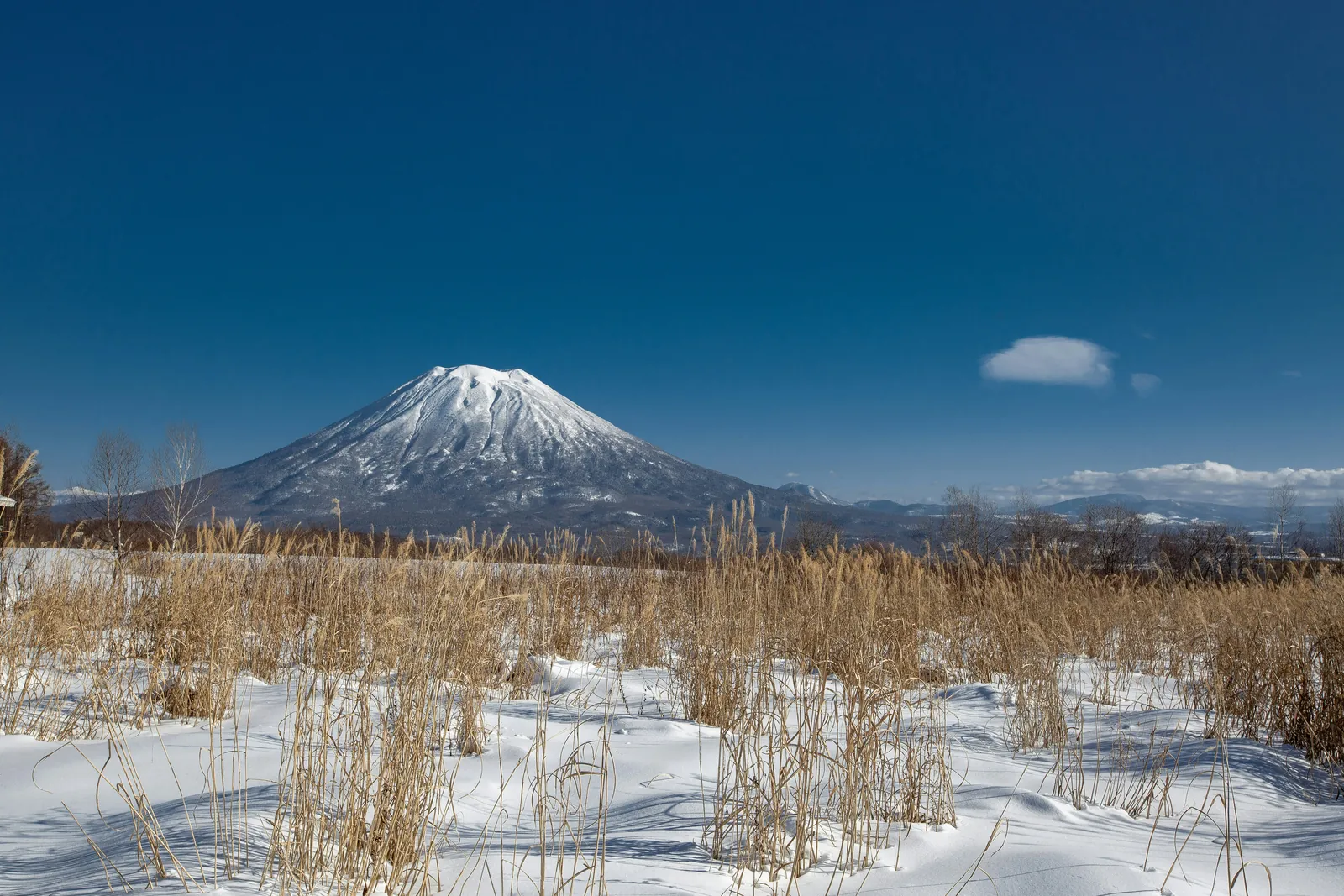
| Niseko | Ski area west of Sapporo; the ski season falls in our summer | Hilly and spread out; buses in ski season, a car helps | Nearest university hospital in Sapporo, about 2 hours by road | New Chitose, by ski-season express bus |
Kyoto has lower rents than Tokyo, and costs on this page are based here. The summer is the hard part: Kyoto’s average August high is 34°C, about 2 degrees hotter than Tokyo’s, Japan’s weather agency records show.
Tokyo has two international airports and the easiest access to English-speaking doctors. Smartraveller names Tokyo’s Kabuki-cho, Shibuya and Roppongi nightlife areas for crime in bars and nightclubs.
Osaka is the next city along from Kyoto, and non-stop flights from Sydney, Brisbane and Cairns land at its Kansai airport. Smartraveller lists Osaka’s Shinsaibashi, Namba and Dotonbori areas alongside Tokyo’s for bar crime.
Sapporo is the big city of Hokkaido, Japan’s northern island, and has real winters: January’s average high is about 0°C, Japan’s weather agency says.
Niseko is a ski area on Hokkaido, where the ski season falls in our summer. The Japan National Tourism Organization says New Chitose Airport is close to Sapporo and to the ski resorts of Niseko and Rusutsu, with express buses in the ski season. Smartraveller warns that back-country skiing is dangerous and that bears are found in parts of rural Japan.
A long stay can be a trial run before a bigger decision. Our guide to the long stay covers how it works with a home in Australia.
Renting or buying a home
Foreigners can rent, and can also buy land and buildings. The US State Department’s 2025 investment report says Japan allows land purchases by foreign nationals, and Japan has a reliable recording system for property. Japan’s Ministry of Finance also sets a reporting rule for non-residents who buy, covered below.
Since September 2022, a law has tightened oversight of land within about a kilometre of defence bases, US military sites, nuclear power plants and remote border islands. In those areas the government can investigate who owns land and how it is used. The State Department also says the paperwork to buy can be burdensome. Banks lend only up to the valuation, which is often below the sale price, so the deposit needed is larger.
Reporting a purchase. A non-resident who buys property in Japan must report it to the Minister of Finance, through the Bank of Japan, within 20 days, in Japanese. Until 31 March 2026, buying a home for your own use was exempt. From 1 April 2026 that exemption no longer covers buying the home outright, the Ministry of Finance says, and it never covered holiday homes. Under these rules a foreigner generally counts as a non-resident until they have been in Japan for 6 months or work at an office there. Failing to report can bring up to 6 months in prison or a fine of up to ¥500,000 (about A$4,590).
Inheritance. Since 1 April 2024, heirs must register an inherited property within 3 years of learning they own it, the State Department says. Smartraveller’s retirement advice suggests reviewing your will if you own property overseas, and getting independent local advice before any big financial commitment.
The person to ask is a property lawyer in Japan, who can check the title, the zoning and the reporting. Smartraveller says the Australian Embassy keeps a list of English-speaking lawyers around Japan. For the Australian side, see whether to keep, rent or sell the family home.
Tax: there and at home
Japan’s National Tax Agency counts you as resident for tax if you have a domicile in Japan, or a residence there for a year or more. A foreign resident who has lived in Japan for 5 years or less in the past 10 is a “non-permanent resident”. Non-permanent residents are taxed on income from Japan, plus foreign income paid in Japan or sent there from abroad. Whether a stay of up to a year on the Long Stay visa makes you resident depends on where your domicile is, which a tax adviser in Japan can tell you.
Australia and Japan have a tax treaty, signed in 2008 and in force since 3 December 2008, according to Treasury’s list (updated 24 March 2026). The ATO lists it too. Its pensions article says a pension paid regularly to a resident of one country can be taxed only in that country. Pensions for government service follow a separate rule, and the treaty has its own tests for deciding where you are resident.
At home, the ATO’s residency tests decide whether you are still an Australian resident for tax; our guide to tax residency when you retire overseas walks through them. If you become a foreign resident, you lose the tax-free threshold, so Australian income such as rent is taxed at 30% from the first dollar (2025-26), as the foreign resident tax rates show. Sell your Australian home while you are a foreign resident and, for sales after 30 June 2020, you generally lose the main residence exemption from capital gains tax, apart from narrow life events.
Talk to a registered tax agent in Australia, and to a tax adviser in Japan about how it treats your pension and super, before you go.
Money and banking
The yen is Japan’s currency. Smartraveller says cash is preferred in many places, though cards are more widely used in the big cities. Credit cards may not be widely accepted outside major cities and tourist areas, and some ATMs at banks and convenience stores don’t take foreign cards. You must declare amounts over ¥1 million (about A$9,180) when you arrive or leave, in any form, not only cash.
Your pension. Services Australia pays every 2 weeks into your Australian account if you’ll be away less than 12 months. Away longer, it pays every 4 weeks into an Australian or overseas account. Paid overseas, the money comes in the local currency or US dollars, depending on the country, usually within 2 to 6 days. Bank fees are yours. Our guide to living overseas on the Age Pension has the numbers.
A local account. Japan’s Financial Services Agency says to bring identification such as your residence card, your passport and a personal seal, though some banks take a signature. Banks check your address, period of stay and status of residence, and each sets its own list, so the bank itself can tell you what it needs from someone without a job in Japan.
Moving money. The main options are a transfer from your Australian bank, a currency transfer service, or cash from an ATM on an Australian card. Each charges a fee and builds a margin into its exchange rate; ask for both. The Financial Services Agency says banks and money transfer services not licensed in Japan are illegal, and it publishes the list of licensed ones.
Currency swings. Your pension is in Australian dollars and your bills are in yen, so the exchange rate sets what a month really costs. At the RBA’s 12-month average rate (A$1 = 108.95 yen), ¥100,000 is about A$920. If the Australian dollar fell 10%, the same ¥100,000 would cost about A$1,020.
Day to day
Language. Japanese is the language of daily life, and Smartraveller says English-speaking doctors are hard to find outside Tokyo. For the police, ask for “tsuyaku”, an interpreter. The Japan Visitor Hotline takes calls 24 hours a day on +81 50 3816 2787.
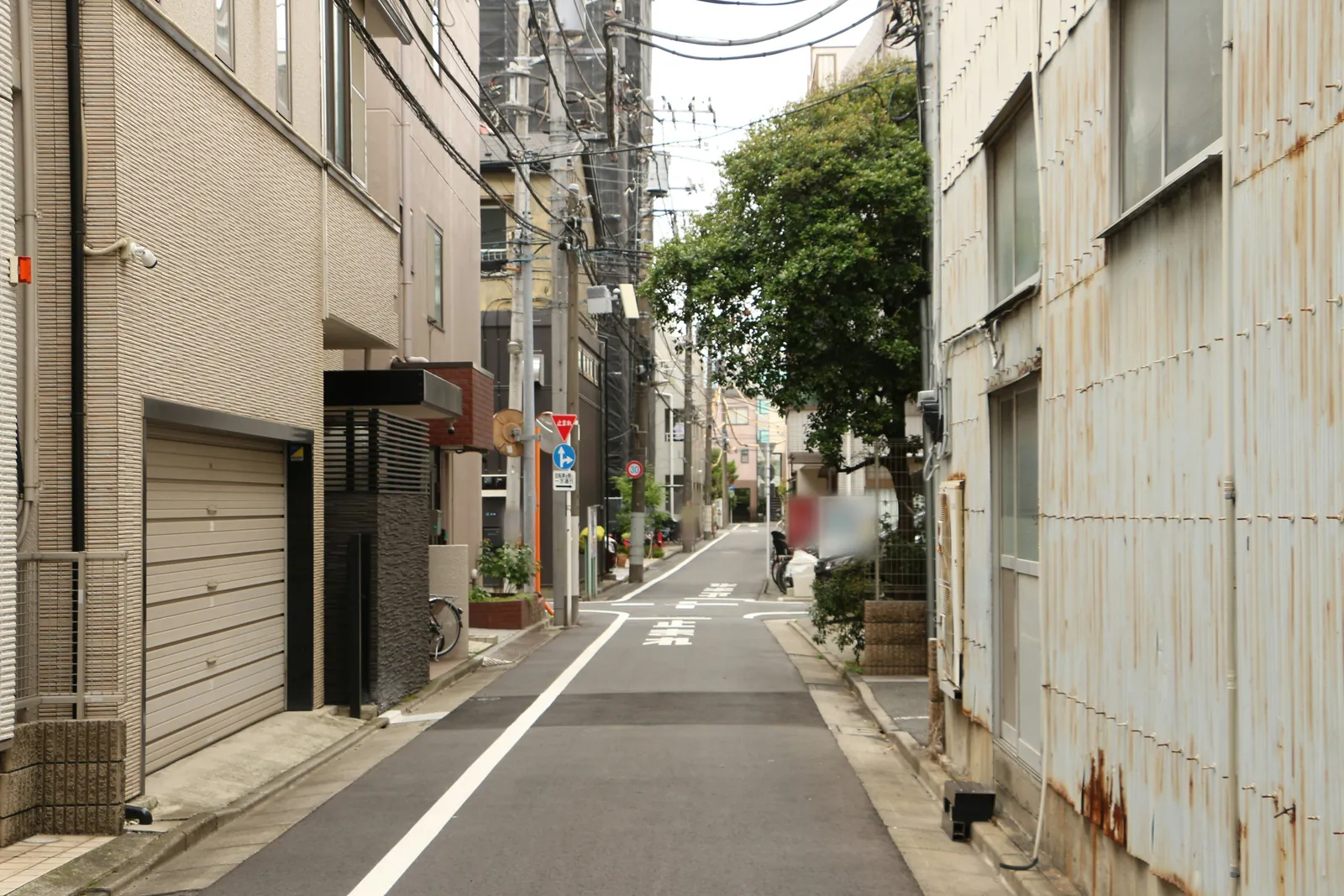
Getting around without driving. Smartraveller calls Japan’s rail and bus services modern and reliable, and says taxis are safe. In Kyoto, Tokyo, Osaka and Sapporo a car is optional; in Niseko and the countryside, it helps.
Driving. Smartraveller says you can drive for up to a year with an Australian licence and an International Driving Permit, which you get before leaving Australia. After 365 days you need a Japanese licence. To convert your licence, the immigration agency’s guidebook says, you must have lived in the country that issued it for at least 3 months after getting it. Driving with any alcohol in your blood is illegal, and so is letting a driver who has been drinking drive you. Heavy snow and ice make winter driving dangerous.
Safety. Japan has a low crime rate, Smartraveller says. The bigger risk is in bars and clubs: overcharging, drink spiking, card fraud and people forced to withdraw cash at ATMs. Police can stop and search you, and if you’re arrested, you can be held for up to 23 days without charge and you won’t be allowed a phone call.
Drug laws are strict. Smartraveller says trace amounts of illegal drugs in your blood or urine can lead to charges. Carry your passport, or your residence card once you live there, at all times. Restricted zones remain around the Fukushima Dai-ichi nuclear plant, and Smartraveller says to reconsider your need to travel there.
Weather. Kyoto has hot, wet summers and cold, dry winters. Smartraveller says severe heat waves can affect Japan between July and September, and typhoons come from May to November. Smartraveller also says there is a constant risk of earthquakes and tsunamis.
| Month in Kyoto | Average high | Average low | Rain |
|---|---|---|---|
| January | 9°C | 2°C | 53 mm |
| February | 10°C | 2°C | 65 mm |
| March | 14°C | 4°C | 106 mm |
| April | 20°C | 9°C | 117 mm |
| May | 25°C | 15°C | 151 mm |
| June | 28°C | 19°C | 200 mm |
| July | 32°C | 24°C | 224 mm |
| August | 34°C | 25°C | 154 mm |
| September | 29°C | 21°C | 179 mm |
| October | 23°C | 14°C | 143 mm |
| November | 17°C | 8°C | 74 mm |
| December | 12°C | 4°C | 57 mm |
Figures: the Japan Meteorological Agency’s Kyoto averages for 1991 to 2020. In Sapporo, the same records put January’s average low at about minus 6°C.
Public holidays. Japan’s Cabinet Office lists 18 holiday dates in 2026, two of them substitute days. They bunch together twice. In 2026 the spring holidays fell on 29 April and 3 to 6 May, and three ran together from 21 to 23 September. New Year’s Day is a holiday too.
Help at home. Paid help at home is arranged privately, and we found no official figure for what it costs in Japan.
Making friends. Smartraveller points to the Council of Local Authorities for International Relations for English information on living in Japan. The immigration agency’s guidebook describes local residents’ and neighbourhood associations, which run community events.
Getting there and coming home
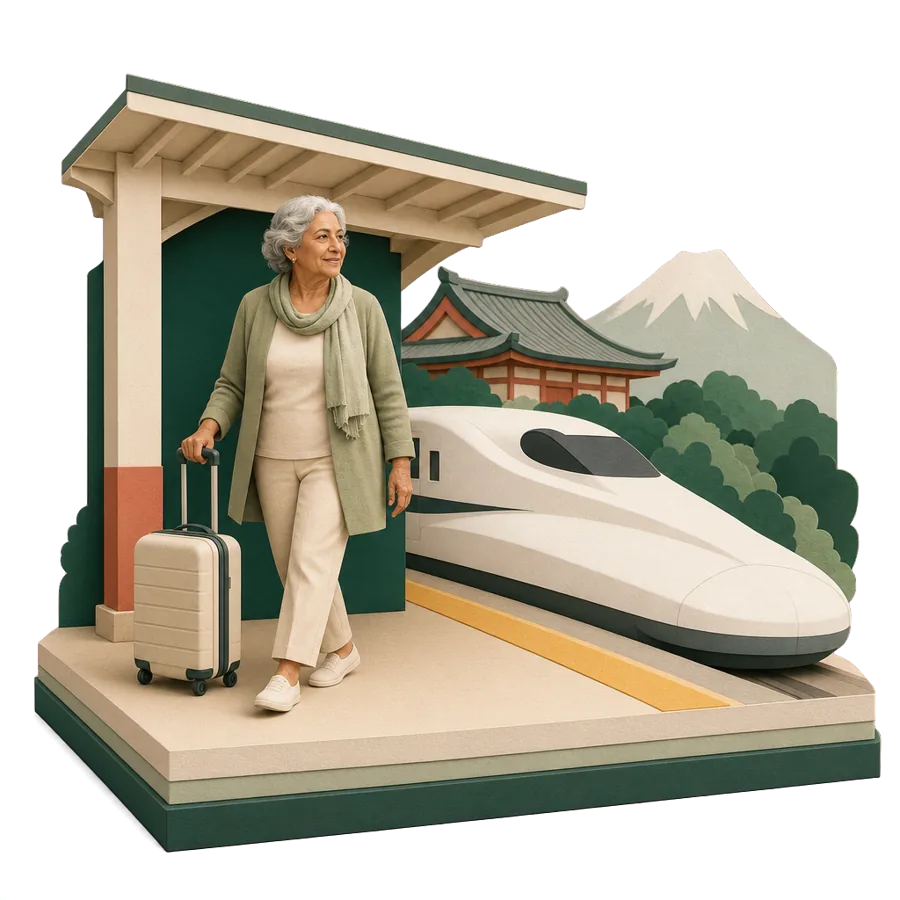
Non-stop flights from Sydney to Tokyo take about 9.5 to 10 hours on 2026 schedules. BITRE’s June 2026 airline figures also show non-stop services to Tokyo from Brisbane, Cairns, Melbourne and Perth, and to Osaka from Sydney, Brisbane and Cairns. Osaka is the closer airport for Kyoto. There were no non-stop flights to Sapporo, so a trip to Hokkaido means changing in Tokyo or Osaka. Getting home for a family event takes most of a day.
The international tourist tax of ¥3,000 (about A$28) per departure, in force since 1 July 2026, is usually built into the ticket price, the Japan National Tourism Organization says.
Japan is 1 hour behind Sydney and Melbourne in our winter and 2 hours behind in daylight saving. It is 1 hour behind Brisbane all year and 1 hour ahead of Perth, so calls home fit into a normal day.
Your first steps
One order that works, from a first visit to a longer stay. The right order for you depends on your health, your home and your money.
- Ask for help first. Book a free planning session on Zoom, or contact our team. Once we understand your situation, we can point you in the right direction.
- Visit for a season first, on the 90-day stay with no visa. See trying before you move.
- Talk it over with your partner and family early. Our guide to talking to your family has ways to start.
- Check what happens to your pension while you’re away. Start with taking your Age Pension overseas.
- Check every medicine you take against Japan’s rules, and whether a longer stay needs an import certificate.
- Find out what travel insurance you can get at your age for a trip of up to a year.
- Work out what happens to the house, and whether it counts for the pension while you are away.
- The Long Stay visa asks for 6 months of bank records, and the embassy can say what counts as savings.
- Applications go through the Embassy of Japan or a consulate, or someone in Japan can apply for a Certificate of Eligibility.
- Tell Services Australia you are leaving, and set up how your pension will be paid.
- After you land, the immigration agency’s guidebook gives 14 days to register your address at the municipal office, and the residence card is carried at all times.
- Find the nearest hospital with English-speaking staff, and know how you would pay the bill.
- Know your way back: coming home covers your pension and Medicare.
Questions people ask
Can I retire in Japan from Australia?
Not on a retirement visa, because Japan doesn’t have one. You can stay 90 days without a visa, or up to a year on the Long Stay visa if you and your spouse have savings of more than ¥30 million (about A$275,000). Your Age Pension keeps paying while you are there.
What are the Japan retirement visa requirements?
There is no retirement visa. The Long Stay visa asks that you are 18 or over and hold more than ¥30 million in savings with your spouse (about A$275,000), plus private medical travel insurance. It runs 6 months, extendable to a year.
How much do you need to retire in Japan?
Our estimate for a month in Kyoto is about A$3,760 for a couple and A$2,560 for one person, rent included. Tokyo is about A$5,420 for a couple. Health insurance is extra, and signing a lease can take 4 to 7 months’ rent up front.
Is it expensive to retire in Japan?
Compared with South-East Asia, yes. Our Kyoto estimate for a couple is about A$3,760 a month, against A$2,790 in Chiang Mai and A$2,490 in Siem Reap. It sits about A$50 above the Age Pension base rate for a couple. See our Thailand page to compare.
Can foreigners buy property in Japan?
Yes, the US State Department says, land included. Since 1 April 2026, a non-resident who buys a home must report it to the Ministry of Finance within 20 days, even for their own use.
Can I live in Japan as an Australian?
For up to 90 days at a time without a visa, or up to a year on the Long Stay visa. Living there longer needs another status, such as a spouse visa if you are married to a Japanese citizen. Japan’s immigration agency generally wants 10 years of residence for permanent residence.
Can I get the Age Pension in Japan?
Yes. It keeps paying, with the usual 6, 12 and 26-week rules. Because Japan has a social security agreement with Australia, you can generally claim it from there too.
Does Medicare cover me in Japan?
No. Japan has no health care agreement with Australia, and you can’t join Japan’s national health insurance on a visit or the Long Stay visa. Smartraveller says you need travel insurance for a visit, and the Long Stay visa asks for private medical travel insurance. Medicare still covers citizens back in Australia for up to 5 years after they move.
Is Japan a good fit?
Good for
- A season away of up to 90 days, with no visa to arrange
- Couples with large savings who want to stay up to a year
- Australians married to a Japanese citizen, who have their own visa route
Think about
- No retirement visa, and the Long Stay route needs over ¥30 million in savings (about A$275,000)
- You can't join national health insurance on a visit or the Long Stay visa
- Strict rules on bringing in medicines, and a one-month limit without a certificate
- Signing a lease can take 4 to 7 months' rent up front
- Earthquakes, typhoons and summer heat waves
Places to compare
- ThailandRetirement visas start at 50 and day-to-day costs are low. The big cities have private hospitals.
- MalaysiaYou get 90 days on arrival, English is used in business, and the big cities have private hospitals of an international standard.
- PhilippinesEnglish is an official language. Day-to-day costs are lower, and the retirement visa starts at age 50.
Guides for this place
- The long stayOne base for a season. Long enough to have a favourite cafe, short enough to keep your life at home.
- The 6, 12 and 26-week rulesWhat happens to your Age Pension at 6, 12 and 26 weeks overseas, updated for the Pension Supplement change of 20 September 2026. Checked October 2026.
- Medicare overseasDoes Medicare cover me overseas? No. The 11 reciprocal agreement countries, none in Asia, and the 5-year rule for Medicare on visits home. Checked 2026.
- Travel insurance for long staysTravel insurance over 70 and over 75 for a long stay: age limits by policy type, caps on trip length, pre-existing conditions and what to ask. Checked 2026.
- Medicines overseasTaking PBS medicines overseas: how to do it legally, how much to take, why nobody can post them to you, and the fine of up to $16,500. Checked October 2026.

Sources
- Smartraveller: Japan, checked 21 October 2026 (page updated 25 August 2026)
- Ministry of Foreign Affairs of Japan: Exemption of visa (short-term stay), checked 21 October 2026 (page dated 1 September 2025)
- Ministry of Foreign Affairs of Japan: Designated activities (Long Stay for sightseeing and recreation), checked 21 October 2026 (page dated 17 March 2023)
- Ministry of Foreign Affairs of Japan: Work or long-term stay visas, checked 21 October 2026
- Immigration Services Agency of Japan: Guidebook on Living and Working, 7th edition (English), checked 21 October 2026 (edition dated March 2025)
- Immigration Services Agency of Japan: Guidelines for permission for permanent residence (in Japanese), checked 21 October 2026 (revised 24 February 2026)
- Digital Agency, Japan: Alert regarding a suspicious app spoofing Visit Japan Web, checked 21 October 2026 (posted 9 November 2023)
- Chuo City, Tokyo: National Health Insurance (who cannot enrol), checked 21 October 2026 (page updated 18 January 2023)
- Ministry of Health, Labour and Welfare, Japan: Information for those who are bringing medicines for personal use into Japan, checked 21 October 2026
- Japan Association of National Universities: Basic data 2025, national university hospitals (in Japanese), checked 21 October 2026
- Smartraveller: Going overseas to retire, checked 21 October 2026 (page updated 18 August 2026)
- Smartraveller: How to get your documents legalised, checked 21 October 2026 (page updated 30 September 2026)
- Australian Federal Police: Apply for a National Police Certificate (fees and processing times), checked 21 October 2026
- Ministry of Land, Infrastructure, Transport and Tourism: Apartment Search Guidebook (English), checked 21 October 2026
- Ministry of Finance, Japan: Reporting requirement under the FEFTA for a non-resident acquiring real property located in Japan (leaflet and FAQ), checked 21 October 2026 (leaflet and FAQ dated June 2026)
- US Department of State: 2025 Investment Climate Statements, Japan (real property), checked 21 October 2026
- National Tax Agency, Japan: Income tax guide for foreigners (2025), residents and non-residents, checked 21 October 2026
- Treasury: Income tax treaties (Japan, 2008), checked 21 October 2026 (page updated 24 March 2026)
- Ministry of Finance, Japan: Synthesised text of the MLI and the Convention between Japan and Australia for the avoidance of double taxation (Article 17, pensions and annuities), checked 21 October 2026
- ATO: Countries and other jurisdictions that have a tax treaty with Australia, checked 21 October 2026 (page updated 26 May 2022)
- ATO: Your tax residency, checked 21 October 2026 (page updated 3 June 2026)
- ATO: Tax rates, foreign residents (2025-26), checked 21 October 2026 (page updated 1 June 2026)
- Financial Services Agency, Japan: How to open a bank account and send money (English pamphlet), checked 21 October 2026 (revised September 2024)
- Services Australia: International social security agreements, Asia, checked 21 October 2026 (page updated 25 August 2025)
- Services Australia: Social Security Agreement between Australia and Japan (factsheet INT033, accurate at July 2025), checked 21 October 2026
- Services Australia: Travel outside Australia rules for Age Pension, checked 21 October 2026 (page updated 4 December 2025)
- Services Australia: When you leave Australia if you get Age Pension, checked 21 October 2026 (page updated 20 September 2026)
- Services Australia: Payments while outside Australia (overseas bank accounts), checked 21 October 2026 (page updated 5 March 2026)
- Services Australia: Payment schedule and rates for people outside Australia, checked 21 October 2026 (page updated 24 September 2026)
- Services Australia: About reciprocal health care agreements, checked 21 October 2026 (page updated 15 September 2026)
- Services Australia: Enrolling in Medicare if you're an Australian citizen, checked 21 October 2026 (page updated 30 June 2025)
- Services Australia: Enrolling in Medicare if you're an Australian permanent resident, checked 21 October 2026 (page updated 11 July 2025)
- Department of Social Services: Age Pension recipients by country, December 2020 to December 2025 (FOI LEX 56898), checked 21 October 2026
- Numbeo: cost of living in Kyoto (in yen), checked 21 October 2026 (last updated 20 October 2026)
- Numbeo: cost of living in Tokyo (in yen), checked 21 October 2026 (last updated 20 October 2026)
- Reserve Bank of Australia: Historical exchange rates, F11.1 (daily, 2023 to current); 12-month average, 1 October 2025 to 30 September 2026, checked 21 October 2026
- Japan Meteorological Agency: Climate normals for Kyoto, 1991 to 2020 (in Japanese), checked 21 October 2026
- Japan Meteorological Agency: Climate normals for Tokyo, 1991 to 2020 (in Japanese), checked 21 October 2026
- Japan Meteorological Agency: Climate normals for Sapporo, 1991 to 2020 (in Japanese), checked 21 October 2026
- Cabinet Office, Japan: National holidays (2026 and 2027, in Japanese), checked 21 October 2026
- Japan National Tourism Organization: Japan's international tourist tax is increasing, checked 21 October 2026 (page dated 11 May 2026)
- BITRE: International Airline Activity, June 2026 (Tokyo and Osaka services from Australia), checked 21 October 2026
- Flightmapper: all non-stop flights, Sydney to Tokyo Haneda (2026 schedules: 9 hours 40 minutes to 10 hours), checked 21 October 2026
- Japan National Tourism Organization: New Chitose Airport, checked 21 October 2026
General information only, not financial, tax, legal, migration or insurance advice. Rules change: check the official source before you act, and talk to a licensed professional about your own situation.
Thinking about Japan?
Tell us what you have in mind, and we will help you plan it on a free Zoom call: when to go, how long for, and who with.
No pressure and no card details. You decide what comes next.