
Spain
Mild coastal winters and medical facilities of a similar standard to Australia's. Spain also has a social security agreement with Australia.
- A month, couple
- About A$4,860
- Weather
- Mild coastal winters; hot summers

A Spanish coast with mild winters, public and private hospitals in Málaga, and a train along the coast to the airport and Fuengirola.

Checked 26 October 2026, re-checked monthlyBy the Retirees Abroad teamGeneral information only, how we check
The short answer
A month in Málaga, on the Costa del Sol, costs about A$5,700 for a couple or A$4,440 for one person, rent included, on our October 2026 estimate from Numbeo's Málaga figures. Australians can stay 90 days in any 180 across Schengen. Spain has a social security agreement with Australia, but Medicare does not cover you there.
Costs are mid-range estimates in Australian dollars, rent included, for a comfortable month. For comparison, a comfortable month in Australia is about A$6,580 for a couple who own their home (ASFA, June quarter 2026).

The Costa del Sol has mild winters, a real city and a train to get about. Málaga is the coast’s city, and where its big public hospitals are. A commuter train runs from the airport into the city in under 15 minutes, Spain’s tourism board says, and the other way along the coast to Torremolinos, Benalmádena and Fuengirola.
Our summer is the coast’s winter: about 17°C by day in January at Málaga airport, on AEMET’s figures, with about six days of rain in the month. Spain has a social security agreement with Australia, and Smartraveller says the standard of medical facilities is similar to Australia’s.
Málaga’s rents push the total up. On our estimate a month there costs a couple about A$5,700, well above the Age Pension’s base rate, and the long-stay visa asks for more income than the pension pays. July and August are hot, and Smartraveller says heatwaves in southern Spain are becoming more common.
A month in Málaga costs about A$5,700 for a couple and A$4,440 for one person, rent included. That’s our estimate from Numbeo’s own Málaga figures, last updated on 24 October 2026. Numbeo was closed to us on 26 October 2026, so we used the figures in our research file, read from an archived copy of Numbeo’s page; we’ll check the live page again after 1 November 2026.
We took Numbeo’s living costs for one person (without rent), added a one-bedroom city-centre rent, then added 30% for eating out, local trips and extras. For a couple we multiplied the living costs by 1.8. Everything is converted at the Reserve Bank of Australia’s average exchange rate for the 12 months to September 2026 (A$1 = 0.5957 euros). Health insurance is not included.
| A month in Málaga | Couple | One person |
|---|---|---|
| Rent, one-bedroom flat in the centre | about A$2,210 | about A$2,210 |
| Living costs (food, transport, bills) | about A$2,170 | about A$1,210 |
| Eating out, local trips and extras (30%) | about A$1,310 | about A$1,020 |
| Total | about A$5,700 | about A$4,440 |
For a couple
About A$880 a month less than a comfortable month in Australia.
For one person
About A$240 a month less than a comfortable month in Australia.
Not built the same way: Australia's figure (ASFA Retirement Standard, comfortable, June quarter 2026) assumes you own your home and includes health insurance; our estimate for the Costa del Sol includes rent and leaves health insurance out. Age Pension: the most paid in Australia from 20 September 2026; living overseas for good, the base rate is about A$3,710 a month for a couple and A$2,460 for one person.
Each row and the total are worked out in euros and rounded to A$10 separately, so the couple’s rows add up to A$10 less than the total.

Numbeo puts living costs for one person in Málaga at about 719 euros a month (about A$1,210), and a central one-bedroom flat at about 1,316 euros (about A$2,210). Rent is why the coast costs more than Alicante, the base of our Spain page, where a month for a couple comes to about A$4,860. Our research file found no Numbeo monthly figure for Fuengirola, Torremolinos or Nerja. Short furnished lets usually cost more than long-term rent.
Against the Age Pension. After 12 weeks away, the most the Age Pension pays is the base rate. That’s about A$2,460 a month for one person and A$3,710 for a couple, before tax (from 20 September 2026). On our estimate the base rate falls short of a month in Málaga by about A$1,990 for a couple and about A$1,980 for one person, before health insurance.
What costs more than you’d expect. Health cover, which our estimate leaves out and the long-stay visa requires. Then flights home, with at least one stop each way. Our guide to what retiring overseas really costs sets other places side by side.
Renting long term. Spain’s tenancy law, deposits and the rules on furnished lets are on our Spain page under renting or buying a home. A lawyer in Spain who acts for you can read a lease before you sign.

Visiting. The Costa del Sol is in Spain, which is part of the Schengen area. Smartraveller says Australians can stay up to 90 days in any 180-day period across the whole area, so days in France or Portugal on the same trip count too. The Entry/Exit System (EES) takes your fingerprints and photo when you arrive, at no cost. Smartraveller adds that you can’t enter Spain on an emergency passport if you’re coming from outside Schengen.
Staying longer. The non-lucrative residence visa is for people who will live in Spain without working, and it has no minimum age. Spain’s consulates in Australia ask for means of 28,800 euros a year for one person in 2026 (about A$48,350), plus 7,200 euros (about A$12,090) for each family member, and private health insurance from an insurer authorised in Spain. Under Spain’s 2024 immigration regulation, the first permit lasts 1 year and renewals 2 years, and to renew you must have spent more than 183 days of the calendar year in Spain.
That means test is well above the Age Pension, so the visa tends to suit self-funded retirees. The documents, the TIE card and the padrón are on our Spain page under visas for Australians. Spain’s embassy or a consulate, or a lawyer in Spain, can confirm the rules for your case.
The Costa del Sol follows Spain’s visitor rules. Our table of visitor stays for Australians sets them beside 26 other countries.
Services Australia says your Age Pension can keep paying while you are overseas. After 6 weeks away the Energy Supplement stops and your Pensioner Concession Card is cancelled. At 12 weeks the Pension Supplement stops completely (since 20 September 2026). After 26 weeks, the rate can be reduced for people who lived in Australia less than 35 years between age 16 and pension age. A full 90-day Schengen stay runs just past 12 weeks.
Spain is a social security agreement country, which generally means you can claim the Age Pension from Spain instead of having to be in Australia on the day. Medicare never pays for treatment in Spain, which isn’t one of the 11 countries with a reciprocal health care agreement. An Australian citizen who moves overseas can still use Medicare back in Australia for up to 5 years after leaving. See Medicare when you live overseas.
Australians can stay up to 90 days in any 180 without a visa, counted across the whole Schengen area, and a longer stay means the non-lucrative visa, applied for at the Spanish consulate for your state before you go. At home, the Age Pension rules change at 6, 12 and 26 weeks away wherever you are.
Red, with this mark: something stops, is cut, runs out or needs you to act.Plain: no change.
| What changes | 2 weeks | 4 weeks | 6 weeks | 8 weeks | 12 weeks | 26 weeks (6 months) | 52 weeks (12 months) |
|---|---|---|---|---|---|---|---|
| Visa | 90 days in any 180 (Schengen) | 90 days in any 180 (Schengen) | 90 days in any 180 (Schengen) | 90 days in any 180 (Schengen) | Inside 90 days, but count Schengen days | Changes: Past 90 days: a non-lucrative visa | Changes: Non-lucrative visa: over 183 days a year |
| Travel insurance | A policy for the whole trip | A policy for the whole trip | Changes: Over 80: past one insurer's 35-day cap | Changes: Check the trip cap on annual policies | Changes: Check trip caps and age limits | Changes: 65 and over: past one insurer's 90-day cap | Changes: A year may need cover for living overseas |
| Medicare | Changes: Doesn't pay for care overseas | Changes: Doesn't pay for care overseas | Changes: Doesn't pay for care overseas | Changes: Doesn't pay for care overseas | Changes: Doesn't pay for care overseas | Changes: Doesn't pay for care overseas | Changes: Doesn't pay for care overseas |
| Age Pension payments | Keeps paying | Keeps paying | Changes: Keeps paying. Tell Services Australia | Changes: Keeps paying. Tell Services Australia | Changes: Keeps paying. Tell Services Australia | Changes: Can be cut if you lived here under 35 years | Changes: Can be cut if you lived here under 35 years |
| Pensioner Concession Card and supplements | No change | No change | Changes: Energy Supplement stops; card cancelled | Changes: Energy Supplement stopped; card cancelled | Changes: Pension Supplement stops too | Changes: All three stopped until you're home | Changes: All three stopped until you're home |
| Superannuation | No change from a trip | No change from a trip | No change from a trip | No change from a trip | No change from a trip | No change from a trip | No change from a trip |
| Tax residency | Usually no change | Usually no change | Usually no change | Usually no change | Usually no change | Changes: Near the 183 days many countries count | Changes: Ask a tax agent: your home and ties count |
| Your home (assets test and renting it out) | Exempt from the assets test | Exempt from the assets test | Exempt from the assets test | Exempt from the assets test | Exempt from the assets test | Exempt from the assets test | Changes: Counts as an asset after 12 months away |
| Rent Assistance | Keeps paying while you pay rent here | Keeps paying while you pay rent here | Keeps paying while you pay rent here | Keeps paying while you pay rent here | Keeps paying while you pay rent here | Changes: Stops after 26 weeks | Changes: Stopped |
Moving overseas for good is different: from the day you leave, the Energy and Pension Supplements and Rent Assistance stop, the card is cancelled and the pension is paid at the base rate. Checked 26 October 2026 against Services Australia, the ATO and Smartraveller. General information only; your own position can differ, and Services Australia (132 300) can tell you yours.
Ninety days fits an Australian summer, December to February, when Málaga’s days average 17 to 18°C. Once you hold the visa, Spain wants you there for more than 183 days of the calendar year, which is longer than 26 weeks and also makes you tax resident there. Our guide to how long pensioners can travel overseas explains each row.
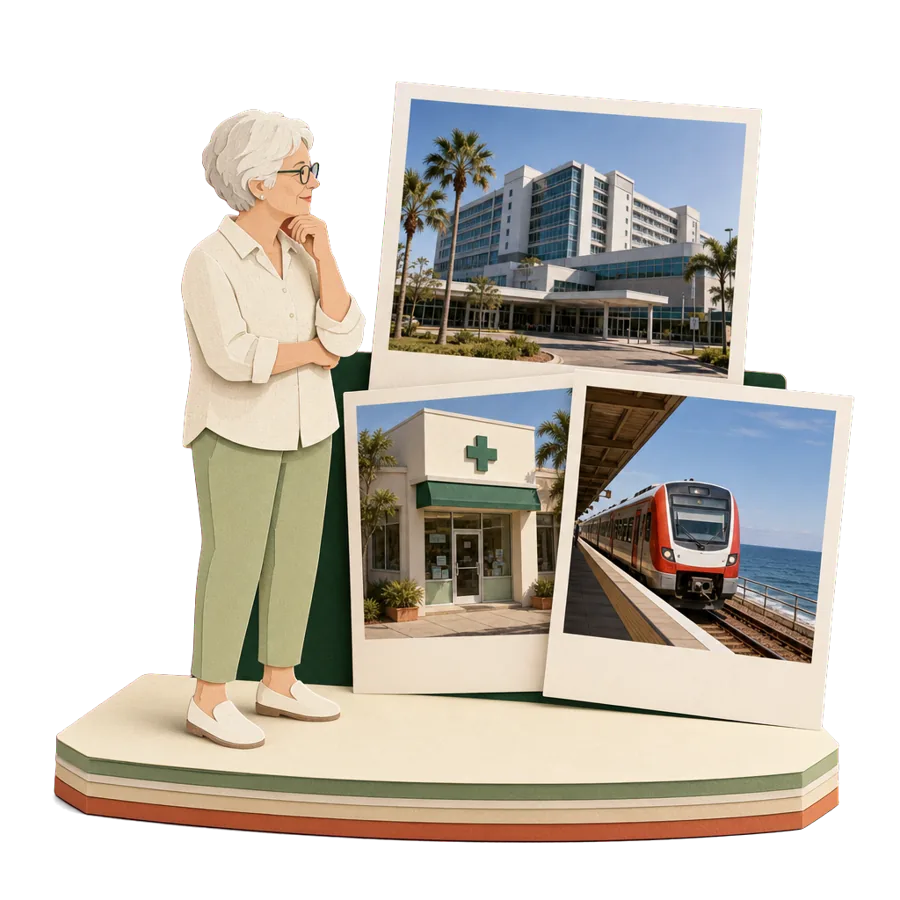
Smartraveller says the standard of medical facilities in Spain is similar to Australia’s. It also says “Most doctors don’t speak English”, and points to the Australian Embassy’s list of English-speaking doctors and facilities. In an emergency, call 112, where English-speaking staff are available. Medicare pays for none of it, so a visitor pays for everything, including a hospital stay.
What is where, by type. Andalusia’s public health service (SAS) lists two hospitals in Málaga city and one serving the Axarquía, the coast east of the city, including Nerja. GOV.UK’s list of medical facilities, last updated in June 2025, names private ones:
| Type | Where | Source |
|---|---|---|
| Public hospitals (two) | Málaga city | Andalusian Health Service (SAS) |
| Public hospital for the eastern coast (Hospital Axarquía) | The Axarquía district, which includes Nerja | SAS |
| Public hospital for the western coast | Marbella, serving Marbella and the western Costa del Sol | El Español, March 2026 |
| Private hospitals, all specialisations (two) | Málaga city | GOV.UK list |
| Private hospital, all specialisations | Torremolinos | GOV.UK list |
| Private clinics | Benalmádena (Arroyo de la Miel), Marbella and San Pedro Alcántara | GOV.UK list |
SAS also groups public health care on the coast into districts, with health zones for Fuengirola, Marbella and Torremolinos-Benalmádena. The hospital near Marbella opened a large extension in March 2026, El Español reported. GOV.UK says its list isn’t complete and that it doesn’t endorse anyone on it.
Public cover as a resident. Spain’s convenio especial lets residents with no other public cover pay in for the public system after a year on a town’s padrón. A 2013 royal decree sets it at 60 euros a month under 65 (about A$100) and 157 euros at 65 and over (about A$260). The non-lucrative visa still asks for private insurance.
Heat and fire. Smartraveller says heatwaves are becoming more common in southern Spain in summer, and that forest fires can occur from May to September, with the risk higher in rural areas.
Your medicines. Smartraveller says some medicines legal in Australia are illegal elsewhere, so check yours, take enough for the whole trip, and carry a copy of the prescription and a letter from your doctor. Our Spain page explains the rules for strong painkillers and other controlled medicines, and our guide to taking medicines overseas covers the Australian side.
Which cover. A season away usually means travel insurance; see travel insurance for long stays. Living there means private health insurance from an insurer authorised in Spain, priced on your age and health. If you’re not sure which fits how you’d go, book a free planning session on Zoom.
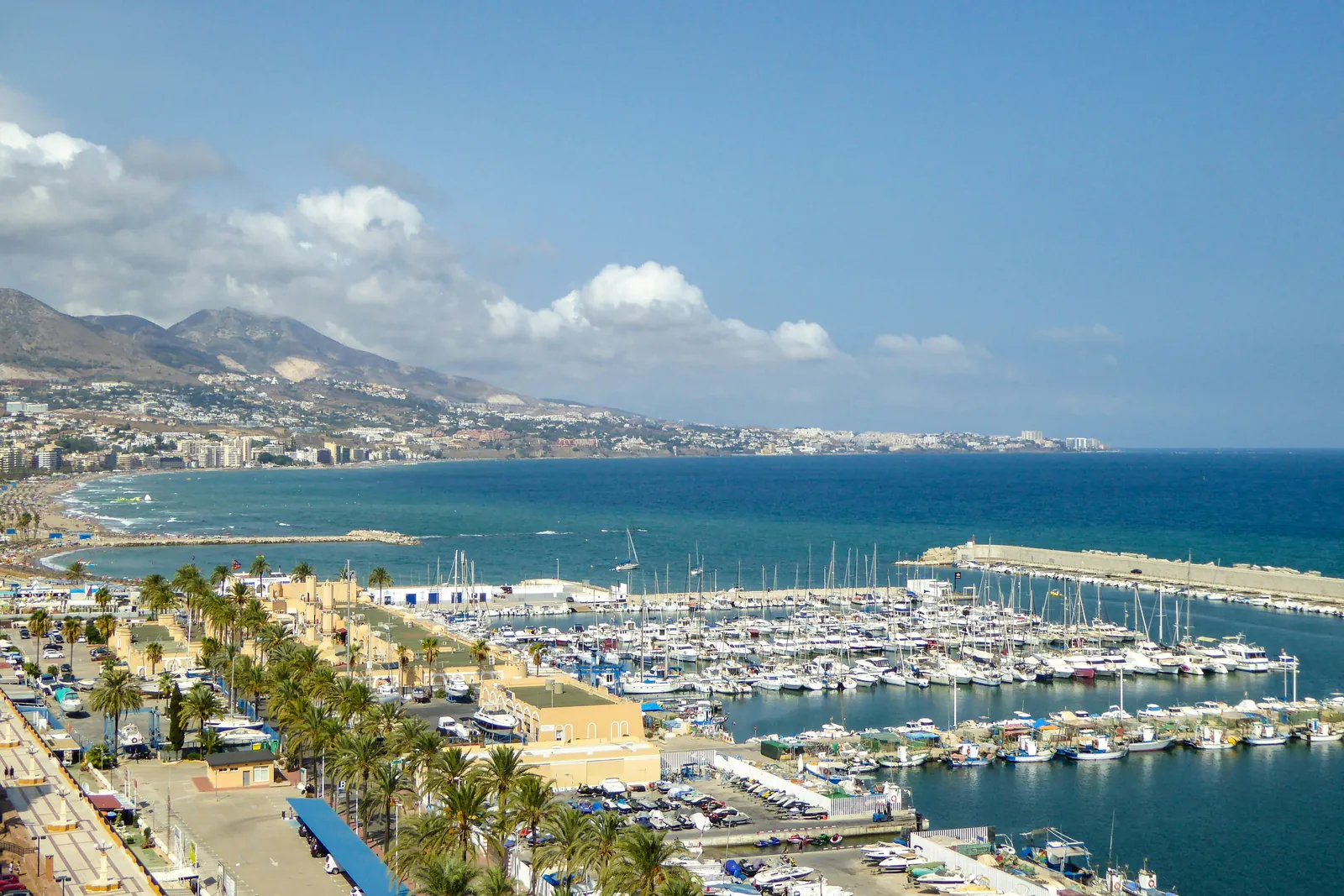
There are no official figures on where Australians live on the Costa del Sol. These are the places along the coast that Wikivoyage and Spain’s tourism board describe, from east to west.
| Area | What it’s like | Getting around |
|---|---|---|
| Nerja | A hillside town east of Málaga with a historic centre that still feels like a village, Wikivoyage says | No train; buses from Málaga |
| Pedregalejo and El Palo, Málaga | Two old fishing villages on the city’s east side, with quieter beaches | City bus to the centre |
| Central Málaga and La Malagueta | The old centre, best seen on foot, and the nearest beach to it | On foot; metro, buses and the commuter train |
| Torremolinos and Benalmádena | Resort towns between the airport and Fuengirola | Commuter train stations |
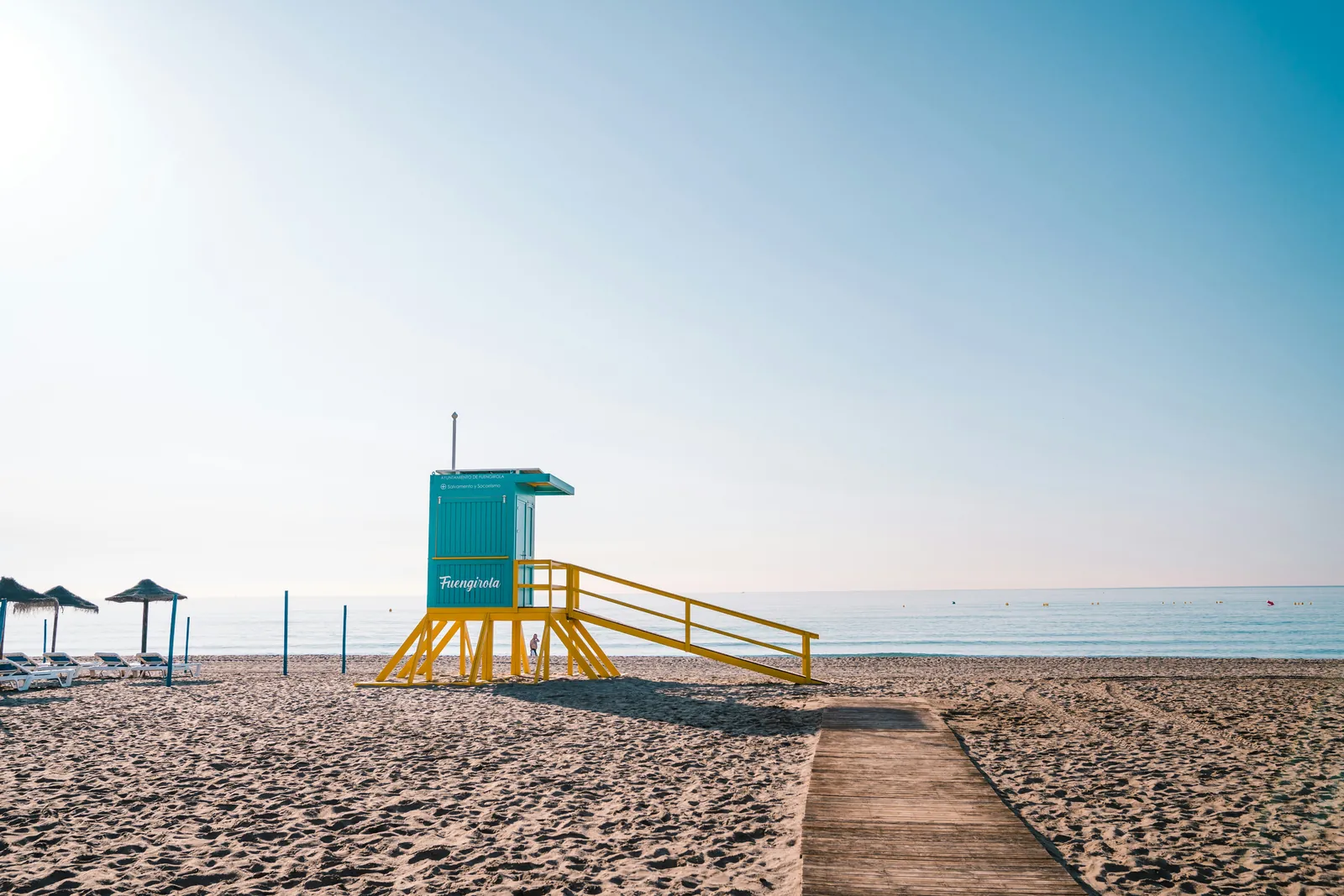
| Fuengirola and Los Boliches | A resort town with more than 8 km of beaches, about 35 km from Málaga | The end of the commuter line; local buses |
Málaga is the place to start if you want hospitals, trains and city life close by. Wikivoyage says the castle on Gibralfaro hill above the centre takes a hefty hike or a bus ride, so check the climb from any flat you look at.

Fuengirola is the last stop on the train from the airport, about 35 minutes away, and Wikivoyage’s Fuengirola page puts the trains about every 20 minutes. Its shops and restaurants cater to British, Finnish, Irish and other visitors.
Nerja is quieter, and the town is built on a hillside, with steep stairways down to some beaches. There’s no train; buses run from Málaga. The Axarquía district’s public hospital serves it, SAS’s list shows, so ask how far that is from the street you’d rent.
Foreigners can buy property in Spain, but since 3 April 2025 buying a home no longer leads to a residence visa: the Government of Spain ended the golden visa that day. You still need the non-lucrative visa or another permit to live there. Our Spain page covers the purchase checks, the land registry and the proposed tax on non-EU buyers under renting or buying a home. The person to ask is a property lawyer in Spain who acts for you, not the seller.
Spain’s tax agency treats you as tax resident in a calendar year if you spend more than 183 days in Spain, or if your main economic interests are there. Australia and Spain have had a tax treaty since 1992.
At home, a foreign resident for Australian tax loses the tax-free threshold, and Australian income such as rent is taxed at 30% from the first dollar (2025-26). Our Spain page explains tax there and at home. Talk to a registered tax agent in Australia and a tax adviser in Spain before your first 183 days there.
Your pension is paid in Australian dollars and your rent is in euros. On Numbeo’s central rent of about 1,316 euros a month (about A$2,210), a 10% fall in the Australian dollar would make it about A$2,450. Services Australia can pay into a Spanish account in euros; bank accounts and moving money are on our Spain page under money and banking.
Language. Spanish is the language of landlords, the health centre and the market, and even a little helps.
Getting around without driving. The C1 commuter train runs from the airport into Málaga and along the coast to Fuengirola. Wikivoyage says it costs 1.80 euros (about A$3) from the airport, runs every 20 to 40 minutes and takes 8 minutes to Málaga’s main railway station. Málaga also has a small two-line metro and city buses, at 1.40 euros a ride (about A$2). Smartraveller says to watch for bag snatching, pickpocketing and theft from cars in large cities, at beaches and on transport.
Driving. To drive on a visit, Smartraveller says you need your Australian licence and an International Driving Permit, or you may be fined and the car impounded. Once you live in Spain, the DGT, its traffic authority, says a licence from outside the EU is valid for only 6 months, and Australia isn’t on its list of licences that can be exchanged. After that you’d need a Spanish licence.
Safety. Smartraveller’s advice for Spain is to exercise normal safety precautions (updated 23 October 2026).
The weather, month by month. Winters are mild; summers are hot and dry:
| Month at Málaga airport | Average high | Average low | Rain | Rain days |
|---|---|---|---|---|
| January | 16.8°C | 7.4°C | 69 mm | 6 |
| February | 17.7°C | 8.2°C | 60 mm | 5 |
| March | 19.6°C | 9.8°C | 52 mm | 4 |
| April | 21.4°C | 11.1°C | 44 mm | 5 |
| May | 24.3°C | 14.2°C | 20 mm | 3 |
| June | 28.1°C | 18.0°C | 6 mm | 1 |
| July | 30.5°C | 20.5°C | 0 mm | 0 |
| August | 30.8°C | 21.1°C | 6 mm | 1 |
| September | 28.2°C | 18.8°C | 20 mm | 2 |
| October | 24.1°C | 15.0°C | 57 mm | 4 |
| November | 20.1°C | 11.3°C | 100 mm | 6 |
| December | 17.5°C | 8.9°C | 100 mm | 7 |
Figures: AEMET, Spain’s weather agency, for its Málaga airport station, 1981 to 2010; rain days are days with 1 mm or more, rounded to whole days. The station gets about 2,900 hours of sunshine a year.
Making friends. Go to a Spanish class or a weekly walking group for a few months and you start to know people by name. If you’re going alone, see retiring overseas single.
There are no non-stop flights between Australia and Spain; BITRE’s June 2026 figures show none. There are flights from Doha to Málaga, and the airport operator, Aena, announced in November 2024 that the route would run all year. Flightmapper lists the flights for this northern winter too. On its schedules, Sydney to Doha takes about 15 hours, and Doha to Málaga 7 hours 15 minutes to 8 hours 40 minutes. Otherwise you change in a European city: Madrid to Málaga takes about 1 hour 10 minutes.
Málaga airport is 8 km from the city, under 15 minutes by commuter train, Spain’s tourism board says. Mainland Spain is 10 hours behind Sydney and Melbourne in our summer, and 8 in our winter. Check routes from your city when you book.
Spain’s non-lucrative visa has no age limit. As the years go on, the questions are about health cover and how you’d cope with a Málaga summer.
The visa doesn’t allow work, so a move in your 50s runs on savings or passive income of at least 28,800 euros a year for one person (about A$48,350). The ATO says super generally opens at 60 once you retire, or at 65 if you’re still working. A licensed financial adviser can talk about yours.
Age Pension age is 67, and Spain’s social security agreement generally means you can claim it from Spain. At 65 the convenio especial, Spain’s pay-in public cover, rises from 60 euros a month (about A$100) to 157 euros (about A$260), under the 2013 royal decree. On our estimate the base rate falls about A$1,990 a month short of a month in Málaga for a couple.
Málaga has public and private hospitals in the city, and by your 70s that may decide which town you pick. Nerja is built on a hillside, Wikivoyage says, with steep stairways down to some beaches. July and August days average about 31°C at the airport. Fewer insurance policies reach 80: in CHOICE’s May 2026 table, 58 of 76 single-trip policies do, and 15 of 34 annual ones. Our guide to travel insurance for long stays has the age limits.
Living there on the visa means holding private health insurance from an insurer authorised in Spain, and insurers set their own age limits for new members. A December to February stay, with days of about 17°C, misses the summer heat.
One order that works, from a first visit to living there. A month or a winter away needs only some of these steps.
Mild winters, a coast train and medical facilities that Smartraveller rates as similar to Australia’s are the draw. Against them, Málaga’s rent is high on our estimate, the long-stay visa’s means test is above the Age Pension, and summers are hot.
Our estimate is about A$5,700 a month for a couple and A$4,440 for one person, rent included, before health insurance (October 2026). It comes from Numbeo’s Málaga figures, and rent is the biggest part.
Málaga has the public hospitals and the most transport. Fuengirola is a beach town at the end of the train line from the airport. Nerja is a quieter hillside town with no train.
Yes, as long as you live somewhere flat near the train and the hospitals. Smartraveller says medical facilities are similar to Australia’s, and also that “most doctors don’t speak English”. Heatwaves are becoming more common in summer, it says.
Yes, Spain’s non-lucrative visa has no age limit. It asks for means of 28,800 euros a year for one person in 2026 (about A$48,350) and health insurance from an insurer authorised in Spain.
At Málaga airport, average highs run from 16.8°C in January to 30.8°C in August, on AEMET’s figures. November and December are the wettest months, with about 100 mm each, and July is almost dry.
Mild coastal winters and medical facilities of a similar standard to Australia's. Spain also has a social security agreement with Australia.
General information only, not financial, tax, legal, migration or insurance advice. Rules change: check the official source before you act, and talk to a licensed professional about your own situation.
Tell us what you have in mind, and we will help you plan it on a free Zoom call: when to go, how long for, and who with.
No pressure and no card details. You decide what comes next.