
Retiring in France from Australia: costs, the long-stay visitor visa, pension and health cover (2026)
A long-stay visitor visa with no age limit and a published income test, and medical facilities Smartraveller says are similar to Australia's.

Checked 21 October 2026, re-checked monthlyBy the Retirees Abroad teamGeneral information only, how we check
The short answer
Our estimate for a month in Nice is about A$6,240 for a couple or A$4,430 for one person, rent included (October 2026). Australians can stay 90 days in any 180; the long-stay visitor visa asks one person for at least 1,477.93 euros a month (about A$2,480). France has no Medicare or social security agreement with Australia.
France at a glance
- A comfortable month, couple
- About A$6,240
- A comfortable month, one person
- About A$4,430
- Visa for a visit
- 90 days in any 180; long-stay visitor visa for longer
- Weather
- Mild winters on the Riviera; hot summers
- Costs based on
- Nice
- Medicare agreement
- No
- Social security agreement
- No
- Tax treaty with Australia
- Yes, signed 2006, in force 2009
- Long-stay visa
- Visitor, from €1,477.93 a month (about A$2,480) for one person (2026)
- Flight from Sydney
- No non-stop flight; one stop at least
- Time difference
- 10 hours behind Sydney in our summer, 8 in our winter
Costs are mid-range estimates in Australian dollars, rent included, for a comfortable month. For comparison, a comfortable month in Australia is about A$6,580 for a couple who own their home (ASFA, June quarter 2026).
Who France suits, and what to weigh up

France suits a self-funded retiree with a steady income who wants a long stay or a move to Europe. Its long-stay visitor visa has no age limit, just a published income test, and Smartraveller says medical facilities are similar to Australia’s. Department of Social Services figures show 115 people were paid the Age Pension in France in December 2025, a small number that has hardly changed in five years.
The pension comes first. France has no social security agreement with Australia, so the Age Pension claim has to be made while you still live here. Move to France before pension age and you can’t claim it from there. There is no Medicare agreement either, so you pay for all health care until you can join the French system, at the earliest 3 months after you settle.
Costs on the Riviera are high: our Nice estimate is well above what the Age Pension pays overseas. Smartraveller advises a high degree of caution in France because of the threat of terrorism, and it reported large protests across the country on 17 October 2026.
Staying for good gets easier with age. After 5 years, Service-Public says people 65 and over can get the 10-year long-term resident card without the French language test and civic exam that younger people sit.
What a month costs
Our estimate for a month in Nice is about A$6,240 for a couple and A$4,430 for one person, rent included. Nice is the main city of the Côte d’Azur, the Riviera.

| A month on the Riviera (Nice) | Couple | One person |
|---|---|---|
| Rent, one-bedroom flat in the centre | A$1,670 | A$1,670 |
| Living costs (food, transport, bills) | A$3,130 | A$1,740 |
| Eating out, local trips and extras (30%) | A$1,440 | A$1,020 |
| Total | A$6,240 | A$4,430 |
How a month in France compares
For a couple
- France, our estimate
- A$6,240
- Comfortable in Australia
- A$6,580
- Age Pension, the most paid in Australia
- A$4,040
About A$340 a month less than a comfortable month in Australia.
For one person
- France, our estimate
- A$4,430
- Comfortable in Australia
- A$4,680
- Age Pension, the most paid in Australia
- A$2,680
About A$250 a month less than a comfortable month in Australia.
Not built the same way: Australia's figure (ASFA Retirement Standard, comfortable, June quarter 2026) assumes you own your home and includes health insurance; our estimate for France includes rent and leaves health insurance out. Age Pension: the most paid in Australia from 20 September 2026; living overseas for good, the base rate is about A$3,710 a month for a couple and A$2,460 for one person.

Our estimate: Numbeo’s living costs for one person (without rent) plus a one-bedroom city-centre rent, plus 30% for eating out, local trips and extras. For a couple, living costs times 1.8. Converted at the Reserve Bank of Australia’s average exchange rate for the 12 months to September 2026 (A$1 = 0.5957 euros). Health insurance is not included. We use Numbeo’s Nice page, last updated 20 October 2026. Short furnished lets usually cost more than the long-term rent in this table.
In Nice, day-to-day living costs are a bigger part of the bill than rent. Numbeo’s figures (updated 20 October 2026) put a one-bedroom flat in the centre at 994 euros a month (about A$1,670 at the RBA’s 12-month average rate). Our guide to what retiring overseas really costs sets out a month in other places the same way.
Against the Age Pension. After 12 weeks away, the most the pension pays is the base rate. That is about A$2,460 a month for one person and A$3,710 for a couple, before tax (rates from 20 September 2026). That leaves a couple about A$2,530 a month short of our Nice estimate. One person is about A$1,970 short.
What costs more than you’d expect. Health cover is the big one, and our estimate leaves it out. Until you join the French system, all of it is private. Once you’re in, the system still leaves part of each bill to you. A GP visit costs 30 euros (about A$50) and the public system pays back 19 euros (about A$32), Service-Public says.
The paperwork has its own price. The visa, its validation and the first visitor card come to 749 euros (about A$1,260) in fees and taxes, and each renewal costs 250 euros (about A$420).
Buying a home costs extra on top of the price: Notaires.fr puts the costs of buying an older home at around 7 to 8% of the price, mostly transfer taxes. Owners also pay a property tax every year.
Flights home mean at least one stop from the east coast.
Renting long term. Service-Public sets the rules for a lease on your main home. An unfurnished lease from a private landlord runs for at least 3 years, and a furnished one for at least 1 year; both can be renewed. The deposit is capped at 1 month’s rent for an unfurnished home and 2 months’ for a furnished one, charges not included.
You can leave at any time. The notice is 1 month for a furnished home. For an unfurnished one it is 3 months, or 1 month in a “zone tendue”, a town where housing is tight, and in some other cases. The short “bail mobilité”, 1 to 10 months, is only for people such as students, trainees and workers on a posting, so it doesn’t fit a retiree.
A landlord may only ask for documents on a fixed list. For a retiree, that means ID, proof of your current address and proof of the pension paid over the last 3 months. Copies have to be in French or translated, with amounts converted to euros. No money can be asked for before the lease is signed. The list also covers what a guarantor can be asked for, if the landlord wants one.
Questions to ask before signing: what the charges cover and how they are billed. The inventory of the home (état des lieux) at the start and the end of the lease is what any deduction from your deposit has to rest on.
Visas for Australians

Visiting. Smartraveller says Australians can stay up to 90 days in any 180-day period across the whole Schengen area, not 90 days per country. France isn’t one of the countries with a separate visa waiver deal that lets Australians stay longer. The Entry/Exit System (EES) takes your fingerprints and photo the first time you enter, and it is free. ETIAS, a pre-travel approval, has no confirmed start date. Smartraveller warns about fake websites that charge a fee to register for either one.
If you hold an EU passport. You may also be a citizen of another EU country, such as Italy, Greece or Ireland. If so, EU rules let you live in France if you have health insurance and enough income not to need support. After 3 months you may have to register your residence. Once ETIAS starts, Smartraveller says dual citizens of a participating country will have to enter on their European passport.
Staying longer. France has no retirement visa. Retirees use the long-stay visitor visa, which you apply for from Australia through France-Visas, the French government’s visa site. Smartraveller says you can’t apply once you’re in France, or switch to it from a tourist stay. France-Visas asks you to prove your retirement, your income, where you’ll live and your health cover, and to sign a promise not to work. The application fee is 99 euros (about A$170).
For a single stay you won’t extend, France-Visas can issue a temporary long-stay visa (VLS-T) instead. The usual visitor visa (VLS-TS) also serves as your first year’s residence permit.
The money test. Service-Public sets three conditions for the visitor card: enough money to live on for the whole stay, health insurance for the whole stay, and no work, employed or self-employed. The minimum for one person, verified on 1 June 2026, is 1,477.93 euros a month net, after social charges (about A$2,480), or 17,735.19 euros a year (about A$29,770). That is a little more than the Age Pension’s base rate overseas for one person. The money can be your own, such as a pension or rent, or come from a family member, and your housing is taken into account too.
What the visa doesn’t allow. Work of any kind, employed, self-employed or freelance. Whether letting out a flat you own fits that rule is a question for the prefecture or a lawyer in France.
After you arrive. France-Visas says you validate the visa online within 3 months of arriving and pay a tax, which Service-Public says has been 300 euros (about A$500) since 1 May 2026. Miss the 3 months and you are no longer legally resident, and you can’t re-enter the Schengen area on the visa.
To stay past the first year, you apply online for the one-year visitor card between 4 and 2 months before your visa ends. It costs 350 euros (about A$590) the first time and 250 euros (about A$420) at each renewal. Each year you show the income, the insurance, a proof of address and a handwritten promise not to work. The first card also needs a medical certificate from OFII, the French immigration office, and a signed commitment to respect the principles of the Republic.
Living there for good. After 5 years of legal, unbroken residence, Service-Public says you can apply for a long-term resident card (résident de longue durée-UE). It lasts 10 years and can be renewed. Absences of up to 6 months at a time, and 10 months in all, still count towards the 5 years.
You need health cover and steady income of at least the minimum wage, 1,867.02 euros a month before tax (about A$3,130). Under 65, you also need French at B1 level and a pass in a civic exam. From 65, Service-Public lists only the commitment to the Republic’s principles, keeping to them, and an opinion from your local mayor. If you already hold a residence card, the new card costs 250 euros (about A$420).
A partner under the age limit. There is no age limit, so a younger partner applies for the same visa. Service-Public says every adult foreigner staying more than 3 months needs their own long-stay visa or residence card. Its income figure is for one person, and it accepts money from a family member. What France-Visas wants from a couple, and whether one pension can cover both of you, is a question for the consulate.
Documents to get in Australia before you go. The visitor card asks for a full copy of your birth certificate showing its latest annotations, which your state’s registry of births, deaths and marriages issues. Its list doesn’t include a police check; whether the visa application needs one is a question for the consulate.
An Australian Federal Police check costs A$57, and the AFP says most online checks arrive within a few days. One with fingerprints costs A$114, is applied for by post and takes 15 to 30 business days. DFAT legalises Australian public documents with an apostille, at an Australian Passport Office by appointment or by mail, and Smartraveller says processing times vary. Later, a licence swap needs a French translation that is apostilled or legalised if it is done outside France.
Questions to ask. Visa rules change. France’s embassy or a consulate, or a licensed visa agent there, can confirm the current rules. Ask what they need from a couple, whether they accept an Australian pension or super statement as proof of income, and what health cover they’ll take. Our guide to retirement visas by age compares other countries.
Your Age Pension and Medicare in France
Services Australia says your Age Pension can keep paying while you are overseas, for as long as you are away. After 6 weeks away the Energy Supplement stops and your Pensioner Concession Card is cancelled. The Pension Supplement stops completely at 12 weeks (since 20 September 2026). If you lived in Australia less than 35 years between age 16 and pension age, your rate is reduced to a proportional rate after 26 weeks. Our guide to the 6, 12 and 26-week rules explains each step.
France has no social security agreement with Australia. Services Australia says you must be living in Australia and physically here on the day you claim, so you claim before you leave. If you come back to live, start the pension, then travel overseas within 2 years, your payment may stop. It can continue only if you go to an agreement country, and France isn’t one.
Independent Australia reported in December 2025 on Australians in France who moved before pension age and now can’t claim, and on their long campaign for an agreement. No agreement has been signed.
If you move for good, you get the base rate only from the day you leave: A$29,520.40 a year single, A$44,506.80 for a couple. The 115 people paid in France in December 2025 got an average of about A$762 a fortnight each, Department of Social Services figures show.
Medicare. Medicare never pays for treatment overseas, and France isn’t one of the 11 countries with a reciprocal health care agreement. If you are an Australian citizen and move overseas, you can still use Medicare on visits home for up to 5 years after you leave, and visits home do not restart that clock. After 5 years, you re-enrol when you move back to live. Permanent residents are different: their enrolment ends 12 months after they leave. Our guide to Medicare overseas has the detail.
Health care and insurance

Smartraveller says the standard of medical facilities in France is similar to Australia’s, and that visitors must pay for all medical care, evacuation included. Before they treat you, hospitals usually want a guarantee of payment, a copy of your insurance and a deposit up front. A stay in a public hospital can cost thousands of dollars. In an emergency, call 112.
Joining the French system. Service-Public says someone without a job who lives in France on a residence permit can join PUMa, the public health insurance, after 3 months. They have to live in France at least 6 months of the year to keep it. You apply to the local health insurance fund, the CPAM. A law of 30 December 2025 brings in a new contribution for residents who don’t work and pay no French social charges, and its amount is still to be set by decree.
Inside the system, you choose a GP as your médecin traitant and declare them to the fund. A visit to that GP costs 30 euros (about A$50). The fund pays 70%, less a 2-euro charge (about A$3), so 19 euros (about A$32) comes back. See a doctor who isn’t your declared GP, outside the exceptions, and the fund pays 30% instead.
Top-up cover, the complémentaire santé or mutuelle, pays some or all of the rest, depending on the contract. With the common “responsible” contract, Service-Public’s example leaves you paying just the 2 euros (about A$3) of a 30-euro GP visit (about A$50). The visitor card needs health insurance for the whole stay in any case.
What is near each area. The federation of French public hospitals lists university hospitals (CHU) in Nice, Bordeaux, Montpellier, Toulouse, Marseille and Paris, among 31 across France (page dated 2015). In the Dordogne, the public hospitals are in Périgueux, Bergerac and Sarlat.
Emergency care there has been stretched. The regional health agency said that from 17 May to 30 September 2023, the Dordogne’s four emergency departments took night patients only after a call to 15, the medical emergency line. In October 2024 it reported a crisis: Bergerac’s emergency department closed for a night, and the university hospital in Bordeaux joined the response.
When care means travelling. For anything a local hospital can’t do, care usually means a trip to a university hospital in a bigger city. Getting you home to Australia is another matter. Smartraveller’s retirement page says a medical repatriation can cost hundreds of thousands of dollars.
Your medicines. French customs (updated 19 March 2026) say you can bring the quantity your prescription covers, or 3 months’ worth without a prescription. Customs only need to see the prescription if it covers more than 3 months. Narcotic and psychotropic medicines are stricter: you carry them yourself, up to the prescription’s length or 1 month, and the prescription must be shown.
Smartraveller adds that some medicines legal in Australia may be illegal elsewhere, and to carry a letter from your doctor. Our guide to taking PBS medicines overseas covers the Australian side.
Which cover. For a winter away, the usual type of cover is travel insurance for a single long trip. The questions to ask are whether it covers your whole stay at your age, and any conditions you already have. If you live there, the usual type is international health insurance, at least until PUMa starts. Our guide to international health insurance by age covers the age limits. If you’d like help working out where to start, book a free planning session on Zoom.
Where Australians live
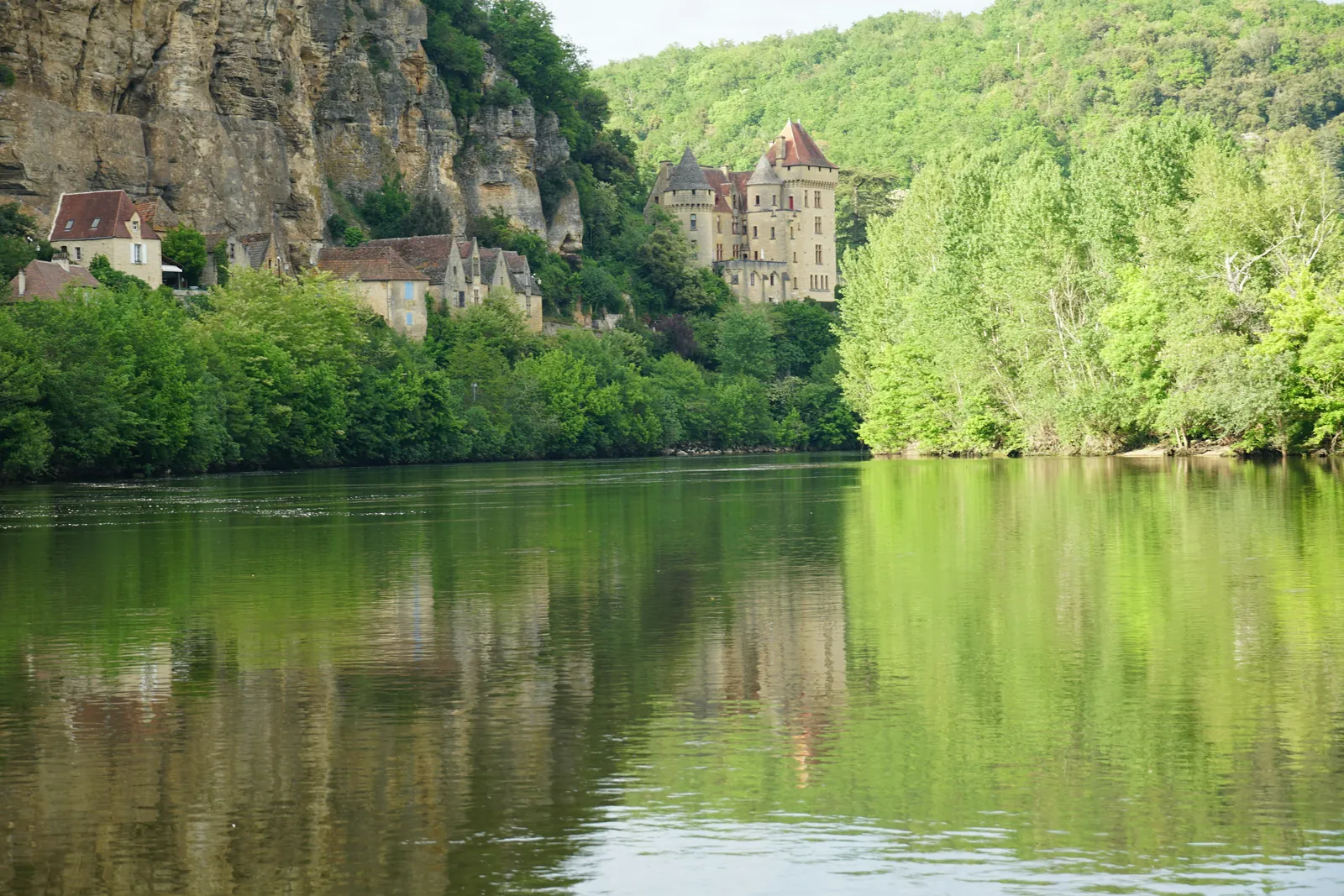
There is no official count of where Australians settle in France. Here are five areas to compare. Driving times are rough.
| Area | What it’s like | Getting around | Hospital | Airport |
|---|---|---|---|---|
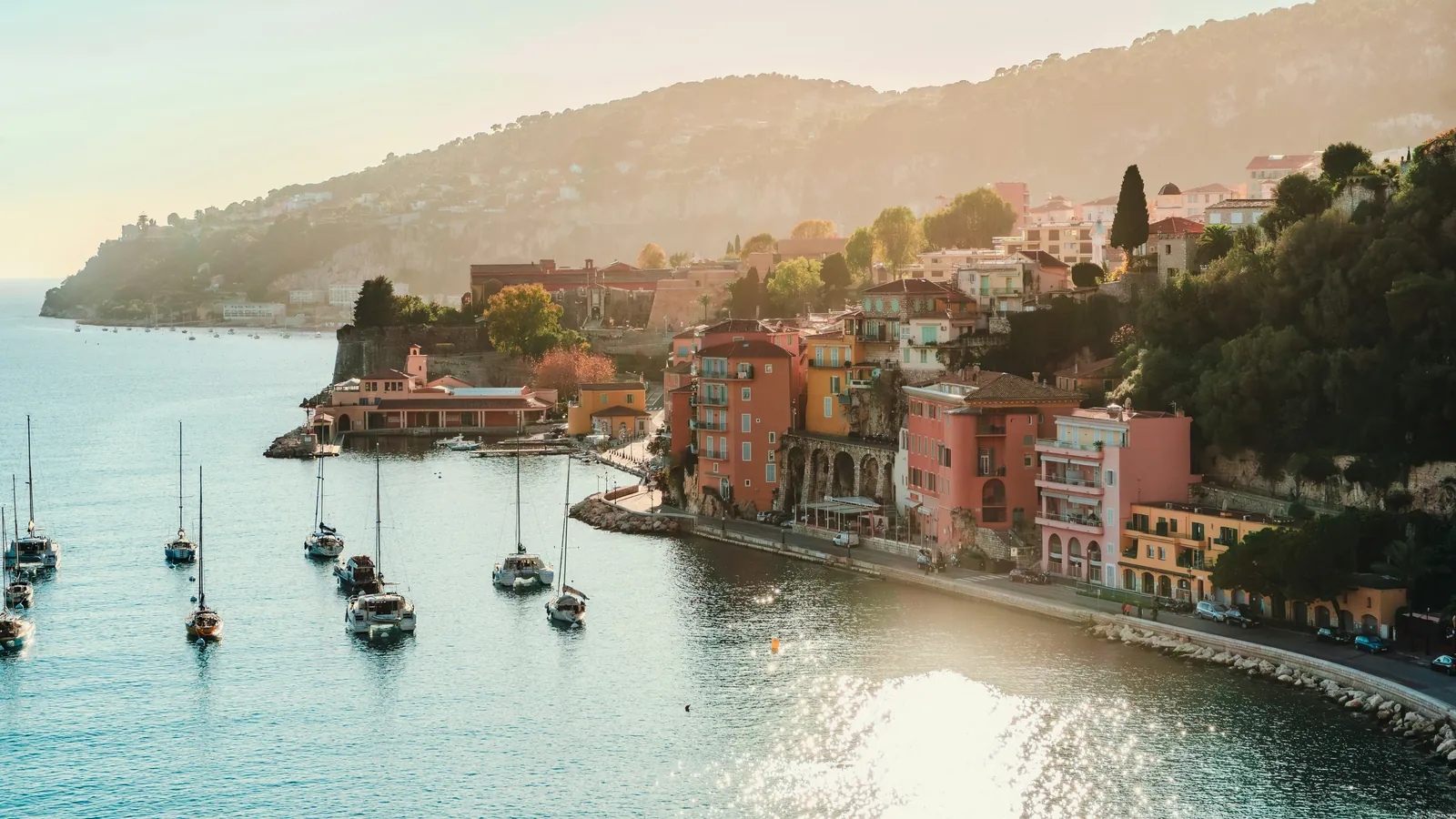
| Nice and the Côte d’Azur | Riviera city on the Mediterranean; our cost base | Flat along the seafront, hills behind; city buses | University hospital (CHU) | Nice Côte d’Azur, about 20 minutes |
| The Dordogne | Rural south-west: river valleys, villages and market towns | Spread out; most trips by car | Public hospitals in Périgueux, Bergerac and Sarlat | Bergerac; Bordeaux about 1 and a half hours by road |
| Bordeaux | Regional capital of Nouvelle-Aquitaine, on the Garonne | Mostly flat; city public transport | University hospital (CHU) | Bordeaux-Mérignac, about 30 minutes |
| Montpellier | Mediterranean city in Occitanie | City public transport; the coast close by | University hospital (CHU) | Montpellier-Méditerranée, about 20 minutes |
| Paris | The capital, home to the Australian Embassy | Metro, buses and trains | University hospitals | Orly, about 30 minutes; Charles de Gaulle, about 45 minutes |
Nice and the Côte d’Azur run along the Riviera coast from Nice east to the Italian border. Costs on this page are based on Nice. It has the mild winters in the weather table below, and its airport is busy: France’s civil aviation authority counted about 2.7 million passengers between Paris and Nice in 2025.
The Dordogne is inland south-west France, in the Nouvelle-Aquitaine region, with rural villages and market towns. We don’t have a Numbeo cost figure for its towns. Emergency care there has been stretched: its four emergency departments took night patients only after a call to 15 from May to September 2023, and Bergerac’s closed for a night in October 2024. Bergerac’s small airport handled about 242,000 passengers in 2025, almost all of them international, France’s civil aviation authority counted.
Bordeaux is the region’s main city, and its university hospital joined the response to the Dordogne’s 2024 emergency department crisis. Its airport handled about 5.9 million passengers in 2025, about 3.8 million of them international, the civil aviation authority’s figures show.
Montpellier is on the Mediterranean in Occitanie. Its airport is smaller, with about 1.7 million passengers in 2025, and about 608,000 passengers flew between Paris and Montpellier that year, the civil aviation authority counted.
Paris has the Australian Embassy (4 Rue Jean Rey, in the 15th arrondissement) and both of the big airports. Smartraveller says serious crime is more common in large cities, including Paris, and that groups of thieves work the busy metro lines.
If you are weighing France against its neighbours, see our Spain page and Italy page.
Renting or buying a home
Foreigners can rent or buy in France. The Local, an English-language news site, reported in June 2024 that France has no rules against non-citizens buying property, and no need to live there to buy. Owning a home gives you no right to stay, so the visa rules above still apply.
Borrowing is harder. The Local reported that banks want proof you can stay legally for the whole loan, and lend less readily to people near or past retirement age.
How a purchase works. Service-Public says the deed of sale must be drawn up by a notary (notaire), who checks the seller, the buyer and the property first. Most sales start with a sale agreement, a promesse or compromis. A buyer who isn’t a professional can withdraw within 10 calendar days of being notified of it, by registered letter. Notaires.fr says buying costs come to around 7 to 8% of the price for an older home and 2 to 3% for a new one.
Yearly taxes. Service-Public says owners pay the property tax (taxe foncière) every year, even when the home is let to a tenant. The housing tax on main homes was abolished on 1 January 2023, but a furnished home that isn’t your main residence still attracts the second-home housing tax.
Your estate. French law reserves part of an estate for children: half with one child, two-thirds with two and three-quarters with three or more, Service-Public says. Smartraveller suggests reviewing your will if you buy a house or other assets overseas. How French rules sit with an Australian will is a question for a notary in France.
The people to ask are a notary in France, who handles the sale, and a property lawyer there who acts only for you. Our guide to overseas property and visa scams covers the warning signs. For the Australian side, see whether to keep, rent or sell the family home.
Tax: there and at home
Service-Public lists four tests for being tax resident in France, and meeting any one is enough. Your home and family are in France. France is your main place of stay, which means at least 183 days in the year. Your main work is in France. Or the centre of your economic interests is there, such as your main investments.
A French tax resident is taxed in France on income from France and abroad, the French tax administration says.
Australia and France signed a tax treaty on 20 June 2006, and it has been in force since 1 June 2009, Treasury says. If both countries treat you as resident, the treaty’s article 4 settles it. It looks first at where you have a permanent home, then at where your personal and economic ties are closer, then at citizenship.
The treaty’s article 17 says pensions and annuities paid to a resident of one country are taxed only in that country. Pensions for government service have their own rule. How that applies to your Age Pension, a super income stream or a lump sum depends on the details.
At home, the ATO’s residency tests decide whether you are still an Australian resident for tax; our guide to tax residency when you retire overseas walks through them. As a foreign resident you lose the tax-free threshold, so Australian income such as rent is taxed at 30% from the first dollar (2025-26), as the foreign resident tax rates show. Sell your Australian home while you are a foreign resident and, for sales after 30 June 2020, you generally lose the main residence exemption from capital gains tax, apart from narrow life events.
Talk to a registered tax agent in Australia, and to a tax adviser in France about how it treats your pension and super, before you go.
Money and banking
Your pension. Services Australia pays every 2 weeks into your Australian account if you’ll be away less than 12 months. Away longer, it pays every 4 weeks into an Australian or an overseas account. Paid overseas, the money comes in the local currency or US dollars, depending on the country, and usually arrives within 2 to 6 days. Bank fees are yours. Our guide to living overseas on the Age Pension has the numbers.
A local account. Service-Public says opening an account takes official photo ID and proof of address. If banks turn you down and you live in France, the Banque de France can name a bank that has to open a basic account for you, under the “droit au compte”. That account and its basic services are free.
Moving money. The main options are a transfer from your Australian bank, a currency transfer service, or cash from an ATM on an Australian card. Each can charge a fee and build a margin into its exchange rate, so both are worth asking about. Smartraveller says card skimming happens at automated service stations and in tourist areas, and suggests ATMs in banks and shopping centres.
Cash at the border. Travelling between France and a country outside the EU, you declare cash of more than 10,000 euros (about A$16,790), Smartraveller says.
Currency swings. Your pension is in Australian dollars and your bills are in euros, so the exchange rate sets what a month really costs. At the RBA’s 12-month average rate (A$1 = 0.5957 euros), a bill of 1,000 euros (about A$1,680) would cost about A$1,870 if the Australian dollar fell 10%.
Day to day
Language. French is the language of the Republic under article 2 of the Constitution, and it is the language of every office you’ll deal with. Rental papers have to be in French or translated, and so does a licence you swap. Under 65, the 10-year card needs French at B1 level.
Getting around without driving. Smartraveller says to use only licensed, metered taxis; private car services are legal but have to be booked ahead. Strikes happen often and can stop trains and flights. Keep your public transport ticket until you leave the system, because inspectors give on-the-spot fines.
Driving. Smartraveller says you need your Australian licence, and car hire firms may want an International Driving Permit as well. If you live in France, you swap your Australian licence for a French one within your first 12 months. Service-Public says a non-European licence is valid for 1 year from when you take up residence, and the swap is done online.
Drivers give way to traffic from the right unless signs say otherwise, the “priority of the right”. Most city centres have a 30 km/h limit, and every car must carry a reflective vest and a warning triangle.
Safety beyond health. France’s national alert system is at its second level, enhanced vigilance. Smartraveller says the large protests on 17 October 2026 may continue, and authorities may impose local curfews. Pickpocketing, bag and phone snatching and burglaries are common, especially in the holiday seasons. Thieves also take bags from cars, rental cars included, even in small towns.
You must always carry photo ID. Failing to help someone in danger, such as at a road accident, is a crime with a fine of up to 100,000 euros (about A$168,000). Penalties for drug offences are severe. Forest and grass fires often break out in summer, flash floods have killed people, and Smartraveller warns that the beaches on the Atlantic coast, the south-west especially, can be dangerous.

The weather, month by month. Nice is mild in winter and warm and dry in summer, with about 2,760 hours of sun a year. October and November bring the heaviest rain (Météo-France normals for Nice, 1991 to 2020):
| Month in Nice | Average high | Average low | Rain |
|---|---|---|---|
| January | 13.3°C | 5.8°C | 74 mm |
| February | 13.5°C | 6.1°C | 54 mm |
| March | 15.4°C | 8.3°C | 51 mm |
| April | 17.4°C | 10.8°C | 69 mm |
| May | 21.0°C | 14.5°C | 40 mm |
| June | 24.7°C | 18.1°C | 36 mm |
| July | 27.5°C | 20.8°C | 14 mm |
| August | 27.9°C | 21.1°C | 17 mm |
| September | 24.8°C | 17.7°C | 81 mm |
| October | 21.0°C | 14.0°C | 128 mm |
| November | 17.0°C | 9.7°C | 138 mm |
| December | 14.1°C | 6.6°C | 90 mm |
Public holidays. France has 11 public holidays. The rest of 2026 brings Toussaint on Sunday 1 November, Armistice Day on Wednesday 11 November and Christmas on Friday 25 December. Only 1 May is a day off by law for all employees, Service-Public says, so whether a business shuts on the others varies.
Household help. If you are tax resident in France, Service-Public says half of what you spend on help at home comes back as an income tax credit. Cleaning, gardening and help for older people all count. Spending up to 12,000 euros a year (about A$20,140) qualifies, plus 1,500 euros (about A$2,520) if someone in the household is over 65, to 15,000 euros at most (about A$25,180).
Making friends. A French class or a walking group gives you the same faces each week. If you’re going alone, see retiring overseas single.
Getting there and coming home
There is no non-stop flight from Sydney, Melbourne or Brisbane to France. BITRE counted 2,974 passengers on Perth to Paris flights in June 2025, and none in June 2026. From the east coast, expect at least one stop and a full day of travel or more.

In our summer, France is 10 hours behind Sydney and Melbourne. In our winter it is 8 hours behind. A 9am call from Nice reaches Sydney at 7pm in our summer. From Perth, France is 7 hours behind in our summer and 6 in our winter.
Our guide to coming home covers your pension and Medicare if you move back.
Your first steps
One order that works, from a first visit to living there. The right order for you depends on your health, your home and your money.
- Ask for help first. Book a free planning session on Zoom, or contact our team. Once we understand your situation, we can point you in the right direction.
- Talk it over with your partner and family early. Our guide to talking to your family has ways to start.
- Spend a season in France within the 90 days in any 180. Smartraveller suggests a temporary move of 6 to 12 months before committing; see trying before you move.
- If you are close to pension age, the claim has to be made while you live in Australia. See taking your Age Pension overseas.
- Put the base rate against a year in France, with insurance and card fees. See moving overseas for good.
- Work out what happens to the house, and whether it counts for the pension while you are away.
- Find out what health cover you can get at your age for the months before PUMa. Start with travel insurance for long stays.
- Papers come from Australia: Service-Public’s list asks for a full birth certificate, and the consulate can say whether apostilles or a police check are needed.
- The long-stay visitor visa is applied for through France-Visas from Australia; Smartraveller says you can’t apply once you’re in France. Our visa guides cover the age rules elsewhere.
- Services Australia needs to know you are leaving, and how your pension will be paid.
- In France, France-Visas requires the visa to be validated online within 3 months of arriving. Under Service-Public’s rules, a furnished lease runs at least 1 year and an unfurnished one 3 years.
- After 3 months, Service-Public says you can apply to the local health insurance fund (CPAM) to join PUMa, and declare a médecin traitant.
- The licence swap is due within the first year, and the visitor card application between 4 and 2 months before the visa ends.
Questions people ask
Can an Australian retire in France?
Yes, on the long-stay visitor visa, if you can show at least 1,477.93 euros a month (about A$2,480) for one person, have health insurance and don’t work. There is no age limit. Without a visa, you can stay 90 days in any 180 across Schengen.
How long can an Australian stay in France?
Up to 90 days in any 180-day period across the whole Schengen area, without a visa. For longer, the long-stay visitor visa covers the first year, and the visitor card can be renewed each year after that.
Can Australians live in France permanently?
Yes, in steps. After 5 years of legal residence you can apply for the 10-year long-term resident card, with income of at least the minimum wage, 1,867.02 euros a month before tax (about A$3,130). From 65, Service-Public doesn’t ask for the French language test or the civic exam.
What is the France retirement visa income requirement?
France has no retirement visa as such. For the visitor visa and card, Service-Public’s minimum for one person is 1,477.93 euros a month net, after social charges (about A$2,480), or 17,735.19 euros a year (about A$29,770), checked on 1 June 2026. What a couple needs is a question for the consulate.
Can I get my Australian pension in France?
Yes, if you claim before you go. It keeps paying in France, but there is no social security agreement, so the claim has to be made while you live in Australia. After 26 weeks your rate is proportional if you lived in Australia less than 35 years between 16 and pension age.
Can Australians buy property in France?
Yes. The Local reported in 2024 that France has no rules against foreigners buying, and no need to live there. A notary draws up the deed, buyers get 10 days to withdraw from a sale agreement, and buying costs come to around 7 to 8% on an older home.
Is Nice, France expensive to live in?
On our estimate, a month in Nice costs about A$6,240 for a couple and A$4,430 for one person, rent included, before health insurance. That is well above the Age Pension’s base rate overseas: about A$3,710 a month for a couple and A$2,460 for one person.
What are the pros and cons of retiring in France?
On the plus side are a visitor visa with no age limit, health care Smartraveller rates as similar to Australia’s, a path to a 10-year card, and a tax treaty. Against it: no Medicare or social security agreement, high Riviera costs, terrorism and protest warnings, and no non-stop flights from the east coast.
Is France a good fit?
Good for
- Self-funded retirees with a steady income: the visitor visa test is about A$2,480 a month for one person
- Medical care Smartraveller rates as similar to Australia's
- People over 65 who plan to stay: the 10-year card after 5 years has no French language test at that age
Think about
- No social security agreement, so you claim the Age Pension before you leave
- No Medicare agreement, so you pay for all care until you join the French system
- Smartraveller's advice is to exercise a high degree of caution, because of terrorism
- Our Nice estimate is well above the Age Pension
- Rural emergency departments, in the Dordogne for one, have been short of doctors
Places to compare
- SpainMild coastal winters and medical facilities of a similar standard to Australia's. Spain also has a social security agreement with Australia.
- PortugalMild winters, and a long-stay visa whose income test is set at the Portuguese minimum wage. Portugal also has a social security agreement with Australia.
- ItalyItaly has a social security agreement and a Medicare agreement with Australia, and on our figures Puglia costs less than Tuscany.
- CroatiaCroatia has a social security agreement with Australia, and a Croatian passport takes the visa problem away.



Guides for this place
- Claim before you leaveCan you claim the Age Pension while overseas? You must be living in and physically in Australia on the day you claim. The agreement countries, checked 2026.
- The 6, 12 and 26-week rulesWhat happens to your Age Pension at 6, 12 and 26 weeks overseas, updated for the Pension Supplement change of 20 September 2026. Checked October 2026.
- Medicare overseasDoes Medicare cover me overseas? No. The 11 reciprocal agreement countries, none in Asia, and the 5-year rule for Medicare on visits home. Checked 2026.
- Health insurance by ageInternational health insurance for over 70s living overseas: why age matters, the types of cover, and the questions to ask a broker. Checked October 2026.
- Tax residencyIf you retire overseas, do you still pay tax in Australia? The ATO's four tax residency tests, what it weighs, and what changes for a foreign resident.
- Retirement visas by ageRetirement visa age requirements by country for Australians: the youngest age and the money rules in Thailand, Malaysia, the Philippines, Portugal and Spain.





Sources
- Smartraveller: France, checked 21 October 2026 (page updated 20 October 2026)
- Smartraveller: Travelling to Europe and the Schengen Area, checked 21 October 2026 (page updated 18 August 2026)
- Smartraveller: Going overseas to retire, checked 21 October 2026 (page updated 18 August 2026)
- Smartraveller: How to get your documents legalised, checked 21 October 2026 (page updated 30 September 2026)
- Australian Federal Police: National police checks (fees and processing times), checked 21 October 2026
- France-Visas (French government visa site): Tourist stay of more than 3 months, checked 21 October 2026
- France-Visas: Frequently asked questions (visa fees; what to do on arrival with a long-stay visa), checked 21 October 2026
- Service-Public.fr (French government): Temporary residence card 'visitor', checked 21 October 2026 (verified by Service-Public 1 June 2026)
- Service-Public.fr: Quels titres de séjour un ressortissant étranger doit-il avoir pour rester en France plus de 3 mois ?, checked 21 October 2026 (verified by Service-Public 8 July 2026)
- Service-Public.fr: Titre de séjour, augmentation des taxes à compter du 1er mai (news, 22 April 2026, updated 12 May 2026), checked 21 October 2026
- Service-Public.fr: Carte de résident de longue durée-UE (étranger en France depuis 5 ans), checked 21 October 2026 (verified by Service-Public 1 June 2026)
- Campus France (French government agency): Validating your long-stay visa on arrival, checked 21 October 2026
- Your Europe (European Union): Pensioners, residence rights, checked 21 October 2026 (last checked by the EU 1 July 2026)
- Services Australia: Travel outside Australia rules for Age Pension, checked 21 October 2026 (page updated 4 December 2025)
- Services Australia: Payment schedule and rates for people outside Australia, checked 21 October 2026 (page updated 24 September 2026)
- Services Australia: International social security agreements, Europe (France is not listed), checked 21 October 2026 (page updated 27 July 2026)
- Services Australia: Residence rules for Age Pension, checked 20 October 2026 (page dated 27 July 2026)
- Services Australia: Payments while outside Australia (overseas bank accounts), checked 21 October 2026 (page updated 5 March 2026)
- Services Australia: About reciprocal health care agreements, checked 21 October 2026 (page updated 15 September 2026)
- Services Australia: Enrolling in Medicare if you're an Australian citizen, checked 21 October 2026
- Services Australia: Enrolling in Medicare if you're an Australian permanent resident, checked 20 October 2026 (page dated 11 July 2025)
- Department of Social Services: FOI LEX 56898, Age Pension recipients by country (France, December 2025: 115 recipients, A$87,671.60 a fortnight combined), checked 21 October 2026
- Independent Australia: Aussie retirees in France face pension limbo (reported), checked 21 October 2026 (article dated 6 December 2025)
- Service-Public.fr (French government): What is PUMa, universal health protection?, checked 21 October 2026 (verified by Service-Public 13 May 2026)
- Service-Public.fr: Médecin traitant et parcours de soins coordonnés, checked 21 October 2026 (verified by Service-Public 21 August 2026)
- Service-Public.fr: Ticket modérateur, forfait et franchises (Sécurité sociale), checked 21 October 2026 (verified by Service-Public 1 October 2026)
- Service-Public.fr: Couverture maladie complémentaire (mutuelle), checked 21 October 2026 (verified by Service-Public 1 October 2026)
- Fédération Hospitalière de France (hopital.fr): Les centres hospitaliers régionaux universitaires, checked 21 October 2026 (page last changed 7 April 2015)
- ARS Nouvelle-Aquitaine (regional health agency): press release, appel au 15 généralisé en Dordogne pour accéder aux urgences la nuit, 17 May 2023, checked 21 October 2026
- ARS Nouvelle-Aquitaine: press release, situation de crise des services d'urgences en Dordogne, 22 October 2024, checked 21 October 2026
- French customs (douane.gouv.fr): Le transport de médicaments en France par des particuliers, checked 21 October 2026 (updated 19 March 2026)
- Service-Public.fr: Bail d'habitation, quelles différences entre logement vide et logement meublé ?, checked 21 October 2026 (verified by Service-Public 6 March 2026)
- Service-Public.fr: Préavis et formalités du congé donné par le locataire, checked 21 October 2026 (verified by Service-Public 16 April 2026)
- Service-Public.fr: Futur locataire d'un logement privé, justificatifs à donner au propriétaire, checked 21 October 2026 (verified by Service-Public 10 April 2025)
- Service-Public.fr: Dépôt de garantie dans un bail d'habitation, checked 21 October 2026 (verified by Service-Public 9 June 2026)
- The Local France: What restrictions are there on foreigners buying property in France? (reported), checked 21 October 2026 (article dated 13 June 2024)
- Service-Public.fr: Acte de vente d'un logement existant, checked 21 October 2026 (verified by Service-Public 20 June 2025)
- Service-Public.fr: Promesse de vente d'un logement existant, promesse unilatérale ou compromis, checked 21 October 2026 (verified by Service-Public 10 April 2026)
- Notaires de France (notaires.fr): Property purchase, acquisition costs (known as French notaire's fees), checked 21 October 2026 (updated 11 February 2026)
- Service-Public.fr: Taxe foncière sur les propriétés bâties (TFPB), checked 21 October 2026 (verified by Service-Public 25 September 2026)
- Service-Public.fr: Taxe d'habitation sur les résidences secondaires (THRS), checked 21 October 2026 (verified by Service-Public 24 August 2026)
- Service-Public.fr: Règles en matière d'héritage, défunt ayant eu des enfants, checked 21 October 2026 (verified by Service-Public 5 October 2026)
- Service-Public.fr: Comment déterminer son domicile fiscal ?, checked 21 October 2026 (verified by Service-Public 1 January 2026)
- BOFiP-Impôts (French tax administration): BOI-IR-CHAMP-10, personnes imposables et domicile fiscal, checked 21 October 2026
- Treasury: Income tax treaties (France: signed 20 June 2006, in force 1 June 2009), checked 21 October 2026 (page updated 24 March 2026)
- International Tax Agreements Amendment Act (No. 1) 2007, Schedule 1: the 2006 French convention (articles 4 and 17), checked 21 October 2026
- ATO: Your tax residency, checked 21 October 2026 (page updated 3 June 2026)
- ATO: Tax rates, foreign residents (2025-26), checked 21 October 2026 (page updated 1 June 2026)
- ATO: Main residence exemption for foreign residents, checked 21 October 2026 (page updated 22 June 2026)
- Service-Public.fr: Compte bancaire individuel, checked 21 October 2026 (verified by Service-Public 22 May 2026)
- Service-Public.fr: Refus d'ouverture de compte bancaire, droit au compte, checked 21 October 2026 (verified by Service-Public 19 October 2026)
- Conseil constitutionnel: Constitution du 4 octobre 1958 (article 2), checked 21 October 2026
- Service-Public.fr: Échange de permis de conduire obtenu hors Europe (UE/EEE), installation en France, checked 21 October 2026 (verified by Service-Public 1 June 2026)
- Météo-France: Fiche climatologique, Nice (06088001), statistiques 1991-2020, checked 21 October 2026 (sheet issued 6 June 2025)
- Service-Public.fr: Jours fériés et ponts dans le secteur privé, checked 21 October 2026 (verified by Service-Public 1 January 2026)
- Service-Public.fr: Impôt sur le revenu, crédit d'impôt pour l'emploi d'un salarié à domicile, checked 21 October 2026 (verified by Service-Public 15 April 2026)
- Numbeo: cost of living in Nice, checked 21 October 2026 (last updated 20 October 2026)
- Reserve Bank of Australia: Historical exchange rates, F11.1; 12-month average, 1 October 2025 to 30 September 2026, checked 20 October 2026
- DGAC (French civil aviation authority): Bulletin statistique, trafic aérien commercial, année 2025, checked 21 October 2026
- BITRE: International Airline Activity, June 2026, table 5 (Perth to Paris: no passengers in June 2026, 2,974 in June 2025; Sydney to Paris: 4,392 in June 2026), checked 21 October 2026 (latest month published)
General information only, not financial, tax, legal, migration or insurance advice. Rules change: check the official source before you act, and talk to a licensed professional about your own situation.
Thinking about France?
Tell us what you have in mind, and we will help you plan it on a free Zoom call: when to go, how long for, and who with.
No pressure and no card details. You decide what comes next.