
Retiring in Ireland from Australia: costs, Stamp 0, Irish passports, pension and health cover (2026)
An Irish passport makes it straightforward, and Ireland has both a social security agreement and a reciprocal health care agreement with Australia.
Checked 21 October 2026, re-checked monthlyBy the Retirees Abroad teamGeneral information only, how we check
The short answer
Our estimate for a month in Dublin is about A$9,080 for a couple or A$7,180 for one person, rent included (October 2026). Australians can visit for up to 90 days. Retiring there on Stamp 0 takes an income of €50,000 a year (about A$83,930); an Irish passport needs no permission. Medicare doesn't pay in Ireland.
Ireland at a glance
- A comfortable month, couple
- About A$9,080
- A comfortable month, one person
- About A$7,180
- Visa for a visit
- Up to 90 days on arrival; Stamp 0 for longer
- Weather
- Mild and wet; short winter days
- Costs based on
- Dublin
- Medicare agreement
- Yes, for visits: public hospital care that can't wait, within 12 months of arriving
- Social security agreement
- Yes
- Tax treaty with Australia
- Yes, signed 1983
- Long-stay visa
- Stamp 0, income of €50,000 a year per person (about A$83,930)
- Flight from Sydney
- No non-stop flight; one stop at least
- Time difference
- 9 to 11 hours behind Sydney, depending on daylight saving
Costs are mid-range estimates in Australian dollars, rent included, for a comfortable month. For comparison, a comfortable month in Australia is about A$6,580 for a couple who own their home (ASFA, June quarter 2026).
Who Ireland suits, and what to weigh up

Ireland suits you if you have an Irish passport, or an Irish-born parent or grandparent who may make you eligible for one. It also works for a couple where only one of you is Irish: the other partner can join them on a family permission that allows work. Ireland has both a social security agreement and a reciprocal health care agreement with Australia, which helps whether you visit for a few months or move.
Without Irish or EU citizenship, the bar is high. The retirement permission, Stamp 0, asks for €50,000 a year in income per person, about A$83,930, plus a lump sum and private health insurance. The Irish Immigration Service says you can’t use State benefits while you hold it.
Dublin is expensive as well: our estimate for a couple there is above A$9,000 a month, mostly because of rent. Smartraveller puts Ireland at “exercise normal safety precautions”, the lowest of its four levels, and says the standard of health care is similar to Australia’s.
What a month costs
Our estimate for a month in Dublin is about A$9,080 for a couple and A$7,180 for one person, rent included. We base Ireland’s figures on Dublin.
| A month in Dublin | Couple | One person |
|---|---|---|
| Rent, one-bedroom flat in the centre | A$3,700 | A$3,700 |
| Living costs (food, transport, bills) | A$3,290 | A$1,830 |
| Eating out, local trips and extras (30%) | A$2,090 | A$1,650 |
| Total | A$9,080 | A$7,180 |
How a month in Ireland compares
For a couple
- Ireland, our estimate
- A$9,080
- Comfortable in Australia
- A$6,580
- Age Pension, the most paid in Australia
- A$4,040
About A$2,500 a month more than a comfortable month in Australia.
For one person
- Ireland, our estimate
- A$7,180
- Comfortable in Australia
- A$4,680
- Age Pension, the most paid in Australia
- A$2,680
About A$2,500 a month more than a comfortable month in Australia.
Not built the same way: Australia's figure (ASFA Retirement Standard, comfortable, June quarter 2026) assumes you own your home and includes health insurance; our estimate for Ireland includes rent and leaves health insurance out. Age Pension: the most paid in Australia from 20 September 2026; living overseas for good, the base rate is about A$3,710 a month for a couple and A$2,460 for one person.

Our estimate: Numbeo’s living costs for one person (without rent) plus a one-bedroom city-centre rent, plus 30% for eating out, local trips and extras. For a couple, living costs times 1.8. Converted at the Reserve Bank of Australia’s average exchange rate for the 12 months to September 2026 (A$1 = 0.5957 euros). Health insurance is not included. We use Numbeo’s Dublin page, last updated 20 October 2026: about 1,088 euros a month in living costs for one person (about A$1,830) and 2,202 euros for the flat (about A$3,700). Short furnished lets usually cost more than the long-term rent in this table.
Cork costs a little less. Numbeo’s figures (updated 20 October 2026) put a one-bedroom flat in central Cork at 1,930 euros a month, about A$3,240 at the RBA’s 12-month average rate. Worked out the same way, a month in Cork comes to about A$8,240 for a couple and A$6,450 for one person.
Against the Age Pension. After 12 weeks away, the most the pension pays is the base rate: about A$2,460 a month for one person and A$3,710 for a couple, before tax (rates from 20 September 2026). That leaves a couple about A$5,370 a month short of our Dublin estimate. One person is about A$4,720 short.
What costs more than you’d expect. Rent is the big one: the flat alone takes up about 40% of our Dublin figure for a couple. Health cover comes next, and our estimate leaves it out. The Health Insurance Authority’s 2024 market report put the average yearly premium for adults 65 and over at €2,367 (about A$3,970) on 1 January 2025. That is about A$330 a month each. Flights home cost more than from Asia because there is no non-stop route, and any trip back takes a full day or more.
Renting long term. Ireland changed its rental law on 1 March 2026. The Residential Tenancies Board (RTB) says new tenancies from that date are rolling tenancies of at least six years, with yearly rent rises capped at 2% or inflation, whichever is lower, for most tenancies. Tenancies that began before then keep their old terms. A landlord can’t ask for a deposit above one month’s rent, or more than one month’s rent in advance. The landlord registers the tenancy with the RTB within a month of it starting.
A signed lease also helps with paperwork. Citizens Information says the HSE may ask for proof that you rent your home before it accepts you as living in Ireland. Before you sign, it helps to have the rent, the deposit, what the rent covers and who fixes what in writing. Some people take a furnished let for the first month or two to see an area in winter.
Visas for Australians

Australians can visit Ireland for up to 90 days without applying for a visa first. To retire there without Irish or EU citizenship, the permission is Stamp 0, approved before you go. With an Irish passport you need nothing at all.
Visiting. Smartraveller says you don’t need a tourist visa before leaving Australia. An immigration officer decides at the airport and can give you up to 90 days. They may ask about your accommodation, your return flight and your contacts in Ireland. Ireland isn’t part of the Schengen area, so time there sits outside Schengen’s 90 days in 180, and Schengen visas aren’t accepted. If you change planes in Britain and pass through UK border control, GOV.UK says you need the UK’s electronic travel authorisation too (see our UK page).
Staying longer: Stamp 0. The Irish Immigration Service says people of independent means need an individual income of €50,000 a year (about A$83,930 at the RBA’s 12-month average rate). You also need access to a lump sum for sudden major expenses, which it compares to the price of a home in Ireland. The money has to be pension income or funds you can get at quickly; investments aren’t normally counted.
Your figures go in a spreadsheet, converted into euros, showing all income and spending month by month. An Irish accountancy firm must certify them. The list also takes in six months of bank statements, private medical insurance with full cover in private hospitals, a police clearance certificate and a health declaration. The page sets no minimum age.
Australians apply from home by post, wait for an approval letter, then fly in. At the airport you get up to 90 days, and within that time you book an appointment, give fingerprints and register for an Irish Residence Permit. Processing averages four months, and you renew the permission through an online portal. Smartraveller says working in Ireland needs an employment permit. Our guide to retirement visas by age compares other countries.
A couple on Stamp 0. The test is written per person, as “an individual income”. The page doesn’t say how a couple’s income is assessed, so the Immigration Service is the one to ask about a joint pension or a partner with no income of their own.
If you hold an Irish passport. You can live in Ireland with no permission at all. Irish citizens are EU citizens, so you can also live in another EU country. After 3 months there, the EU says retirees need health insurance and enough income to live without income support. Under the Common Travel Area, Irish citizens can live in the UK as well. Smartraveller says Ireland recognises dual nationality.
A partner without an Irish passport. The spouse, civil partner or de facto partner of an Irish citizen applies through a separate route, and Stamp 0’s income test doesn’t apply. Immigration Service Delivery says a partner who doesn’t need a visa, such as an Australian, can travel with their Irish spouse without one. Its join family page says a family member tells the immigration officer at the port of entry that they’ve arrived to live as family, so the passport is stamped that way. A spouse then gets Stamp 4, which allows work.
The Irish partner is the sponsor and has their own money test. The 2026 family policy asks for gross income above any State benefits of at least €75,000 (about A$126,000) over the three years before you apply, or €25,000 a year (about A$41,970). It also says savings may be taken into account when income falls short. The Immigration Service can say whether a pension counts as income, and how it weighs savings. Our page for couples covers the other decisions you make together.
Citizenship through family. Ireland’s Department of Foreign Affairs says you are automatically Irish if one of your parents was born on the island of Ireland and was an Irish citizen when you were born. If a grandparent was born in Ireland, or a parent was Irish but born elsewhere, you can become a citizen through the Foreign Births Register. It costs €278 for an adult (about A$470) and takes about 12 months. A great-grandparent only helps if your parent was on the register before you were born.
Citizenship by living there. Immigration Service Delivery’s citizenship guide asks for 5 years of legal residence in the last 9, including the full year before you apply. In that last year you can’t be away more than 70 days. The guide lists Stamp 0 among the permissions whose time counts. Some other guides say it doesn’t, so the Immigration Service is the one to confirm it for your case. The spouse of an Irish citizen needs 3 years in Ireland out of 5, and 3 years of marriage. The fees are €175 to apply (about A$290) and usually €950 (about A$1,590) for the certificate.
Documents to get in Australia before you go. Stamp 0 asks for a police clearance certificate, copies of your birth and marriage certificates and every page of your passport. An Australian Federal Police national police check costs A$57, and the AFP says most online checks arrive within a few days; one with fingerprints costs A$114 and takes 15 to 30 business days. For the spouse route, Immigration Service Delivery says certificates from outside Europe must be apostilled in the country that issued them. In Australia that is DFAT, at an Australian Passport Office by appointment or by mail, and Smartraveller says processing times vary. The Foreign Births Register wants original civil certificates for you, your parent and your grandparent, witnessed by someone on its list.
Fake sites. Immigration Service Delivery warns that cloned websites copy its online visa system, and that an application made anywhere else isn’t received.
Visa rules change. Ireland’s embassy in Canberra or the Irish Immigration Service, or a licensed visa agent there, can confirm the current rules. Questions worth asking: what counts as income for Stamp 0, which health insurance they accept, and how long renewals are taking.
Your Age Pension and Medicare in Ireland
Your Age Pension can keep paying while you live in Ireland. Ireland is a social security agreement country, so you can generally claim it from there.
Services Australia says the usual travel rules apply. After 6 weeks away the Energy Supplement stops and your Pensioner Concession Card is cancelled. The Pension Supplement stops completely at 12 weeks (since 20 September 2026). If you lived in Australia less than 35 years between age 16 and pension age, your rate can be reduced after 26 weeks. Our guide to the 6, 12 and 26-week rules explains each step. If you move for good, you get the base rate only from the day you leave: A$29,520.40 a year single, A$44,506.80 for a couple.
The agreement helps in two ways, according to Services Australia’s fact sheet. Your years as an Australian resident and your years of social security cover in Ireland can be added together to reach the 10 years the Age Pension needs. And you can claim the Age Pension from Ireland, through Ireland’s Department of Social Protection. Claiming from outside Australia, you generally need at least 12 months of Australian residence between 16 and pension age, 6 months of it in one stretch. Claims can generally go in up to 13 weeks early, with every document at once.
Department of Social Services figures released under freedom of information show 601 people getting the Age Pension in Ireland at the end of 2025. Their payments averaged about A$460 a fortnight each. The figures count where people were on the day, which may not be where they live.
An Irish pension too. If you ever worked in Ireland, the Department of Social Protection says to apply for the State Pension (Contributory). It starts at 66, needs at least 520 full-rate contributions in most cases, and isn’t means-tested in Ireland. Years in an agreement country can help you qualify. Ireland decides it, and Services Australia can take your claim from Australia. Services Australia counts income from all sources in the Age Pension income test, so an Irish pension can reduce your Age Pension. A licensed financial adviser can help you see how the two fit.
Medicare. It never pays for treatment overseas, even in Ireland; the reciprocal agreement works through Ireland’s public hospitals instead (see the next section). If you are an Australian citizen and move overseas, you can still use Medicare for treatment in Australia, on visits home, for up to 5 years after you leave. Visits home do not restart that clock. After 5 years, you re-enrol when you move back to live. Permanent residents are different: their enrolment ends 12 months after they leave. Our guide to Medicare overseas has the detail.
Health care and insurance

On a visit, the reciprocal agreement covers care that can’t wait, as a public patient in a public hospital, within 12 months of arriving. If you live there, public health care depends on being ordinarily resident. On Stamp 0, private health insurance is a condition of staying.
On a visit. Services Australia says the agreement covers care as a public patient in a public hospital. It also pays part of the cost of prescription medicines if you spend over a set amount in a month. It doesn’t cover visits to a GP, care as a private patient, or anything you arranged before you arrived. You pay a fee for each service. Services Australia says to show your passport and valid Medicare card, and to keep your receipts for medicines. Smartraveller adds that you usually pay up front. The agreement doesn’t cover ongoing treatment for a condition you already have, or the cost of getting you home. Smartraveller says you still need travel insurance that covers evacuation.
Living there. Citizens Information (an Irish government service) says everyone ordinarily resident can use public health services, free or at a reduced cost. Ordinarily resident means you have lived in Ireland for at least a year, or intend to. The HSE may ask for proof such as a lease, a bank statement or a utility bill dated in the last 12 months.
Without a medical card you pay to see a GP and pay for medicines. The Drugs Payment Scheme caps a household’s prescription costs at €80 a month (about A$130). Public in-patient charges were abolished on 17 April 2023. Going to an emergency department without a GP’s letter costs €100 (about A$170), and an injury unit €75 (about A$130).
From 70. The HSE says everyone over 70 living in Ireland can get a GP visit card, whatever their income. A medical card at that age has an income limit: gross income of no more than €550 a week single (about A$920) or €1,050 for a couple (about A$1,760). A couple with up to €1,400 a week (about A$2,350) both get GP visit cards if one of them is 70.
Later on. For people 65 and over who need help to stay at home, the HSE’s Home Support Service is free and isn’t means-tested, Citizens Information says. The Fair Deal scheme helps pay for a nursing home if you are ordinarily resident, with your share based on your income and assets. The retirement permission says you can’t access State benefits, so the HSE is the one to ask whether a Stamp 0 holder can use either. Our guide to aged care overseas or at home sets out the Australian side.
Private health insurance. Stamp 0 asks for full cover in private hospitals. The Health Insurance Authority says Irish insurers must accept every applicant, whatever their age or health, and must renew a policy except in very limited cases. Waiting periods apply to new members: up to 26 weeks for new illnesses and 5 years for conditions you already have, with none for accidents.
The Health Insurance Authority’s lifetime community rating rule adds a loading for joining late: 2% of the price for each year after 34 without cover. It says someone moving to Ireland pays no loading if they buy within nine months of making Ireland their principal residence. The age limits for international health insurance are worth knowing for the time before you move or for long trips.
What is where. The HSE’s urgent care finder lists six public hospitals with adult emergency departments in Dublin and two in Cork city. Galway, Limerick and Tralee each have a public hospital with an emergency department for all ages. Smaller towns may have an injury unit for broken bones and minor burns. Bantry’s, in West Cork, is open 8am to 8pm, and anything serious means the road to Cork city.
Medicines. Smartraveller says not every Australian medicine is sold overseas and some are illegal even with a prescription. Carry a copy of each prescription and a doctor’s letter with the names and doses. Our guide to taking medicines overseas has the Australian side. If you’d like help working out where to start, book a free planning session on Zoom.
Where Australians live
There is no official count of where Australians settle in Ireland. These are five areas to compare, with rough driving times.
| Area | What it’s like | Getting around | Hospital | Airport |
|---|---|---|---|---|
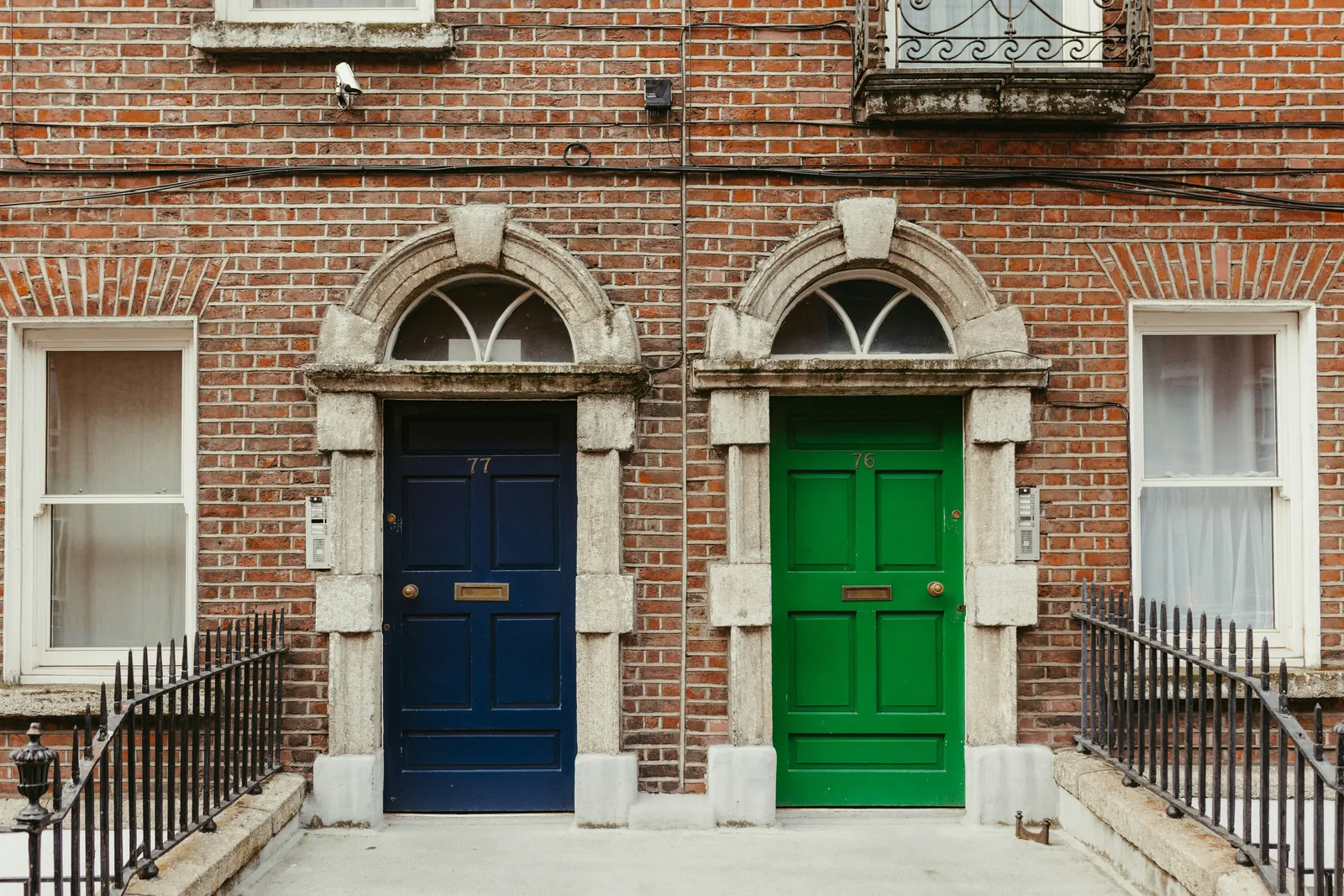
| Dublin | The capital; our cost base; the highest rent on our figures | Flat centre; buses, trains and Luas trams | Six adult emergency departments | Dublin Airport |
| Cork city | Ireland’s second city, on the River Lee | Hilly in parts; city buses; about 3 hours from Dublin | Two emergency departments | Cork Airport |
| West Cork | Small coastal towns to the south-west | Spread out; a car helps; Bantry about 1.5 hours from Cork | Injury unit in Bantry; emergency care in Cork city | Cork Airport |
| Galway | West coast city | Compact centre; about 2.5 hours from Dublin | Emergency department for all ages | Shannon Airport, about 1.5 hours |
| Limerick and Clare | City on the Shannon, with Clare’s coast to the west | City buses; about 2.5 hours from Dublin | Emergency department for all ages | Shannon Airport, about 30 minutes |
Dublin has the Australian Embassy, the immigration office where people register, and six adult emergency departments. Rent is the reason our costs are high. Met Éireann’s averages show Dublin Airport gets about 773 mm of rain a year, less than the south and west.
Cork city costs a little less than Dublin on Numbeo’s figures. Cork Airport records about 1,239 mm of rain a year.
West Cork suits people who want small towns and the coast, and who are happy to drive. Health care thins out: Bantry’s injury unit closes at 8pm.
Galway is a small city on the west coast, with its own public hospital. The nearest airport with long-haul connections is Shannon.
Limerick and Clare sit around Shannon Airport, which Met Éireann’s records put at about 1,020 mm of rain a year.
If you are going back to an Irish family, the county they live in may decide it for you. The HSE’s finder shows the nearest emergency department and injury unit for any address.
Renting or buying a home
Anyone can rent, and anyone can buy. The US State Department’s 2025 investment report says there are no restrictions on foreign ownership of land in Ireland.
Buying goes through a solicitor, who handles the transfer (conveyancing), the searches and the stamp duty. Citizens Information says stamp duty on a home is 1% of the price up to €1 million (about A$1.7 million), with higher rates above that. Local Property Tax is charged every year on every home, based on its value, and your solicitor checks nothing is owing before you complete. Buying a flat makes you a member of the building’s management company, which charges yearly fees for the common areas.
Ownership is recorded on a public register kept by Tailte Éireann. The State Department says every buyer since 2010 has had to register with it, and more than 90% of titles are now on it. Smartraveller’s retirement advice suggests independent local advice before any big financial commitment, and reviewing your will if you buy property overseas.
The person to ask is a solicitor in Ireland. For the Australian side, see whether to keep, rent or sell the family home.
Tax: there and at home
Revenue, Ireland’s tax office, says you are tax resident in Ireland if you spend 183 days there in a calendar year, or 280 days across this year and last. Any part of a day counts. You aren’t resident in a year when you spend 30 days or fewer there.
If you are resident and domiciled in Ireland, you are taxed on your worldwide income. Domicile is a more permanent idea than residence and usually comes from your father at birth. Someone resident but not domiciled or ordinarily resident pays Irish tax on Irish income and only on foreign income brought into Ireland. Revenue calls this the remittance basis.
From 65, Revenue says you pay no income tax if your total income is under €18,000 a year single (about A$30,220) or €36,000 for a couple (about A$60,430).
Australia and Ireland have a tax treaty, signed on 31 May 1983 and on Treasury’s list of income tax treaties. A treaty settles which country taxes which kind of income.
At home, the ATO’s residency tests decide whether you are still an Australian resident for tax; our guide to tax residency when you retire overseas walks through them. If you become a foreign resident, you lose the tax-free threshold, so Australian income such as rent is taxed at 30% from the first dollar (2025-26). The foreign resident tax rates show the brackets. Sell your Australian home while you are a foreign resident and, for sales after 30 June 2020, you generally lose the main residence exemption from capital gains tax, apart from narrow life events.
Talk to a registered tax agent in Australia, and a tax adviser in Ireland, about how each country treats your pension and super before you go.
Money and banking
Ireland uses the euro. Smartraveller says ATMs are widely available, and that credit card fraud and ATM scams are becoming more common, so skip any machine that looks unusual. Travelling between Ireland and a country outside the EU, you must declare 10,000 euros or more (about A$16,790), in any form of money.
A local account. Citizens Information says banks, credit unions and the post office offer current accounts. To open one you show proof of identity and proof of your address. A basic bank account, for people with no account yet, charges no fees for everyday banking in the first year.
Your pension. Services Australia pays every 2 weeks into your Australian account if you’ll be away less than 12 months. Away longer, it pays every 4 weeks into an Australian or overseas account. Paid into an Irish account, it arrives in euros, usually within 2 to 6 days. Bank fees are yours. Our guide to living overseas on the Age Pension has the numbers.
Moving money. The main options are a transfer from your Australian bank, a currency transfer service, or cash from an ATM on an Australian card. Each charges a fee and builds a margin into its exchange rate; ask for both.
Currency swings. Your pension is in Australian dollars and your rent is in euros, so the exchange rate sets what a month really costs. At the RBA’s 12-month average rate (A$1 = 0.5957 euros), €1,000 is about A$1,680. If the Australian dollar fell 10%, the same €1,000 would cost about A$1,870.
Day to day
Language. English is spoken everywhere day to day. Under the Constitution, Irish is the first official language and English the second, so you’ll see both on official forms and signs.
Getting around without driving. Smartraveller says Ireland has well-developed networks of buses, trains and ferries, though strikes, weather and works can disrupt them. From 66, the Department of Social Protection says everyone legally living permanently in Ireland can use the Free Travel Scheme. It covers State-owned buses, trains, Local Link and the Luas, plus some private bus and ferry services. Some cards let a spouse or a companion travel free too. Ask the department whether your residence permission qualifies.
Driving. Smartraveller says you can drive on your Australian licence for up to 12 months. Ireland and Australia have a licence exchange, so you can swap to an Irish licence without sitting tests once you have a Personal Public Service (PPS) number. The electronic version of your licence isn’t accepted. Major roads are good; country roads can be narrow and winding, with animals and farm machinery. Drink driving brings heavy fines and jail.
Safety. Petty crime is common in city centres such as Dublin, Smartraveller says, including bag snatching and pickpocketing. Car break-ins are rising, with thieves targeting rental cars at scenic spots. Possessing even a small amount of illegal drugs can mean a long jail sentence. Protests in Dublin can turn violent. The emergency number for police, ambulance and fire is 112.
Weather. Met Éireann’s 1991 to 2020 averages for Dublin Airport show mild summers, cool winters and rain spread through the year:
| Month at Dublin Airport | Average high | Average low | Rain | Sunshine a day |
|---|---|---|---|---|
| January | 8°C | 2°C | 62 mm | 1.9 hours |
| February | 9°C | 2°C | 52 mm | 2.9 hours |
| March | 10°C | 3°C | 51 mm | 3.7 hours |
| April | 12°C | 4°C | 55 mm | 5.4 hours |
| May | 15°C | 7°C | 57 mm | 6.4 hours |
| June | 18°C | 9°C | 64 mm | 6 hours |
| July | 20°C | 11°C | 61 mm | 5 hours |
| August | 19°C | 11°C | 73 mm | 5 hours |
| September | 17°C | 10°C | 63 mm | 4.4 hours |
| October | 14°C | 7°C | 78 mm | 3.4 hours |
| November | 10°C | 4°C | 83 mm | 2.4 hours |
| December | 8°C | 3°C | 72 mm | 1.7 hours |
Dublin Airport averages 35 days of air frost a year and 12.5 days with snow or sleet. Cork and Shannon are wetter, with about 1,239 mm and 1,020 mm a year.
Public holidays. Ireland has 10. Citizens Information says businesses and schools generally close on them, while public transport runs a reduced timetable. In 2026 they fell on 1 January, 2 February, 17 March, 6 April, 4 May, 1 June, 3 August, 26 October and 25 and 26 December. Good Friday isn’t one.
Help at home. Paid help with cleaning or the garden is arranged privately, and we found no official figure for what it costs in Ireland. The HSE’s Home Support Service, under health care above, is the public side.
Making friends. Family is the obvious start if you are going back to them. Free Travel from 66 also makes it cheaper to get to clubs, classes and the next town.
Getting there and coming home

There is no non-stop flight between Australia and Ireland. Expect at least one stop, usually in Asia or the Middle East, and a full day of travel or more. From Perth, the non-stop flight to London takes about 17.5 hours, and Dublin is a short flight on from there. Routes change, so check when you book.
Ireland is 11 hours behind Sydney in our summer and 9 hours behind in our winter, and 10 for a few weeks around the clock changes.
Moving your belongings. Revenue’s transfer of residence relief lets you bring personal belongings in without duty or tax if you have lived outside the EU for at least 12 months. You must have owned and used the goods for at least six months, and paid duty and tax where you bought them. They have to arrive within six months before or 12 months after you move, and you can’t sell or lend them for 12 months.
Coming home. If you come back to Australia to live, Services Australia says there is no waiting period to claim the Age Pension. You still have to meet the usual rules. If you’re granted it and leave again within 2 years, your payment may stop. Our guide to coming home covers your pension and Medicare.
Your first steps
One order that works, from a first visit to living there. The right order for you depends on your passport, your health and your money.
- Ask for help first. Book a free planning session on Zoom, or contact our team. Once we understand your situation, we can point you in the right direction.
- Visit in winter as well as summer, for as long as the 90 days allow. Our guide to trying it before you move sets out the options.
- Talk it over with your partner and family early, including who would fly over if you got sick. See talking to your family.
- Find out which route is yours: an Irish passport, the Foreign Births Register, the Irish spouse route or Stamp 0. Foreign Births Register applications take about 12 months, so they come first.
- Put your own numbers against the pension: what you’ll get after 12 weeks away, and a year in Ireland with insurance. See taking your Age Pension overseas.
- Work out what happens to the house, and whether it counts for the pension while you are away.
- See your GP, check each medicine is sold and legal in Ireland, and get a doctor’s letter. Read retiring overseas with a health condition if it applies.
- Order your police check, certified copies and any apostilles in Australia. Stamp 0 figures must be certified by an Irish accountancy firm.
- Look at health cover: travel insurance for long stays for visits, and the Health Insurance Authority’s lifetime community rating rule, which charges no loading on Irish cover bought within nine months of moving.
- Find a long-term rental; the RTB caps the deposit at one month’s rent.
- Tell Services Australia you are leaving, and set up how your pension will be paid. If you are going for good, read moving overseas permanently.
- Register with a GP, apply for a PPS number, and swap your licence within 12 months.
- Keep a plan for coming home: where you’d live, and how the pension and Medicare restart.
Questions people ask
Can an Australian retire in Ireland?
Yes. Without an Irish passport, the route is Stamp 0: an income of €50,000 a year per person (about A$83,930), a lump sum for emergencies and private health insurance, approved before you go. With an Irish passport, no permission is needed, and an Irish citizen’s partner can apply to join them.
How much does it cost to retire to Ireland?
Our estimate for a month in Dublin is about A$9,080 for a couple and A$7,180 for one person, rent included, before health insurance. Cork comes to about A$8,240 for a couple. The average private health premium for adults 65 and over was €2,367 a year (about A$3,970) in January 2025.
Is it easy to retire to Ireland?
With an Irish passport you need no permission. Without one, Stamp 0 asks each person for €50,000 a year (about A$83,930), almost twice the Age Pension base rate for a couple (A$44,506.80). Applications take about four months, and an Irish citizen’s partner has a simpler route.
Can I get Irish citizenship through my grandparents?
If a grandparent was born in Ireland, you can apply through the Foreign Births Register. It costs €278 for an adult (about A$470) and takes about 12 months. If a parent was born in Ireland as an Irish citizen, you’re already Irish. A great-grandparent counts only if your parent was registered before you were born.
Does Stamp 0 lead to citizenship?
Immigration Service Delivery’s citizenship guide lists Stamp 0 among the permissions whose time counts towards naturalisation. You need 5 years of residence in the last 9, including a full year with no more than 70 days away. Older guides say otherwise, so ask the Immigration Service before you rely on it.
What changes when you move back to Ireland from Australia?
Public health care opens up once you live there, and from 70 you can get a GP visit card. Under the Health Insurance Authority’s lifetime community rating rule, private health insurance bought within nine months of moving carries no late-joining loading. Your Age Pension can keep paying under the agreement, and any Irish State Pension is claimed separately.
Does Medicare cover me in Ireland?
Medicare doesn’t pay overseas. Under the reciprocal health care agreement you can get urgent care as a public patient in a public hospital within 12 months of arriving. GP visits aren’t covered, and Smartraveller says you still need travel insurance.
Can I get the Age Pension in Ireland?
Yes. It keeps paying, with the usual 6, 12 and 26-week rules, and because Ireland is an agreement country you can generally claim it from there. Years of Irish social security cover can help you reach the 10 years of residence it needs.
Is Ireland a good fit?
Good for
- Australians with an Irish passport, an Irish-born parent or an Irish-born grandparent
- A couple where one partner is an Irish citizen
- A social security agreement and a reciprocal health care agreement with Australia
Think about
- Stamp 0 asks for €50,000 a year per person (about A$83,930), well above the Age Pension
- Dublin rent: about A$3,700 a month for a one-bedroom flat in the centre
- Private health insurance is a condition of Stamp 0
- No non-stop flights
- Citizenship through a grandparent takes about 12 months
Places to compare
- United KingdomFamily, a British passport, or both. With no retirement visa, the passport you hold decides how long you can stay.
- FranceA long-stay visitor visa with no age limit and a published income test, and medical facilities Smartraveller says are similar to Australia's.


Guides for this place
- Claim before you leaveCan you claim the Age Pension while overseas? You must be living in and physically in Australia on the day you claim. The agreement countries, checked 2026.
- The 6, 12 and 26-week rulesWhat happens to your Age Pension at 6, 12 and 26 weeks overseas, updated for the Pension Supplement change of 20 September 2026. Checked October 2026.
- Medicare overseasDoes Medicare cover me overseas? No. The 11 reciprocal agreement countries, none in Asia, and the 5-year rule for Medicare on visits home. Checked 2026.
- Health insurance by ageInternational health insurance for over 70s living overseas: why age matters, the types of cover, and the questions to ask a broker. Checked October 2026.
- Tax residencyIf you retire overseas, do you still pay tax in Australia? The ATO's four tax residency tests, what it weighs, and what changes for a foreign resident.
- Pension and Medicare when you returnReturning to Australia after living overseas: what happens to your Age Pension and concession card, the 2-year rule, and the 5-year rule for Medicare.






Sources
- Smartraveller: Ireland, checked 21 October 2026 (page updated 19 February 2026, still current 21 October 2026)
- Smartraveller: Going overseas to retire, checked 21 October 2026 (page updated 18 August 2026)
- Smartraveller: How to get your documents legalised, checked 21 October 2026 (page updated 30 September 2026)
- Australian Federal Police: Apply for a National Police Certificate (fees and processing times), checked 21 October 2026
- Irish Immigration Service: I want to retire to Ireland (Stamp 0), checked 21 October 2026 (page updated 25 June 2026)
- Immigration Service Delivery: How to Become an Irish Citizen Guide, checked 21 October 2026
- Immigration Service Delivery: Join family visa (joining an Irish national), checked 21 October 2026 (page updated 11 September 2026)
- Immigration Service Delivery: Financial Thresholds for Non-EEA Family Reunification, checked 21 October 2026 (page updated 12 June 2026)
- Immigration Service Delivery: Policy Document on Non-EEA Family Reunification, 12 June 2026, checked 21 October 2026
- Immigration Service Delivery: Security Notice to all Visa Customers, checked 21 October 2026 (notice dated 3 October 2023)
- Department of Foreign Affairs (Ireland): Registering a foreign birth, checked 21 October 2026
- GOV.UK: Get an electronic travel authorisation (ETA), transiting through a UK airport, checked 21 October 2026
- GOV.UK: Common Travel Area guidance, checked 21 October 2026 (page updated 1 January 2026)
- Your Europe (European Union): Residence rights for pensioners, checked 21 October 2026 (page checked 1 July 2026)
- Citizens Information (Ireland): Entitlement to health services, checked 21 October 2026
- Citizens Information (Ireland): Charges for hospital services, checked 21 October 2026 (page edited 1 August 2026)
- Citizens Information (Ireland): Drugs Payment Scheme, checked 21 October 2026 (page edited 13 October 2026)
- Citizens Information (Ireland): Home Support Service, checked 21 October 2026 (page edited 1 July 2026)
- Citizens Information (Ireland): Fair Deal scheme, checked 21 October 2026 (page edited 20 December 2024)
- HSE: GP visit card for people over 70, checked 21 October 2026
- HSE: Medical card for people over 70, checked 21 October 2026
- HSE: Find urgent and emergency care (emergency departments and injury units), checked 21 October 2026
- Health Insurance Authority: Open Enrolment and Lifetime Cover, checked 21 October 2026
- Health Insurance Authority: Moving to Ireland (lifetime community rating), checked 21 October 2026
- Health Insurance Authority: Waiting periods, checked 21 October 2026
- Health Insurance Authority: Health Insurance in Ireland Market Report 2024 (average premiums at 1 January 2025), checked 21 October 2026
- Residential Tenancies Board: What can the RTB investigate (deposits, rent in advance, registration), checked 21 October 2026
- Residential Tenancies Board: Major rental law changes taking effect from 1st March, checked 21 October 2026 (article dated 25 February 2026)
- Citizens Information (Ireland): Costs of buying a home, checked 21 October 2026 (page edited 1 April 2026)
- Citizens Information (Ireland): Stamp duty on property, checked 21 October 2026 (page edited 29 September 2026)
- US Department of State: 2025 Investment Climate Statement, Ireland (foreign ownership of land, real property), checked 21 October 2026
- Revenue (Ireland): How to know if you are resident for tax purposes, checked 21 October 2026 (published 24 November 2025)
- Revenue (Ireland): Tax residence overview, checked 21 October 2026 (published 24 November 2025)
- Revenue (Ireland): What is domicile and the domicile levy? (remittance basis), checked 21 October 2026
- Revenue (Ireland): Exemption limits (age 65 and over), checked 21 October 2026 (published 12 February 2026)
- Revenue (Ireland): Moving to live in Ireland from outside the EU, what rules apply to the relief?, checked 21 October 2026 (published 1 April 2026)
- Treasury: Income tax treaties (Ireland, signed 31 May 1983), checked 21 October 2026 (page updated 24 March 2026)
- ATO: Your tax residency, checked 21 October 2026 (page updated 3 June 2026)
- ATO: Tax rates, foreign residents (2025-26), checked 21 October 2026 (page updated 1 June 2026)
- Department of Social Protection (Ireland): Free Travel Scheme, checked 21 October 2026 (page updated 7 October 2026)
- Department of Social Protection (Ireland): State Pension (Contributory), checked 21 October 2026 (page updated 7 October 2026)
- Citizens Information (Ireland): Opening a bank account, checked 21 October 2026 (page edited 22 July 2026)
- Citizens Information (Ireland): Public holidays, checked 21 October 2026 (page edited 1 January 2026)
- Irish Statute Book: Constitution of Ireland, Article 8 (languages), checked 21 October 2026
- Met Éireann: Dublin Airport 1991 to 2020 averages, checked 21 October 2026
- Met Éireann: Cork Airport 1991 to 2020 averages, checked 21 October 2026
- Met Éireann: Shannon Airport 1991 to 2020 averages, checked 21 October 2026
- Services Australia: Reciprocal health care agreement, visiting Ireland, checked 21 October 2026 (page updated 15 September 2026)
- Services Australia: International social security agreements, Europe, checked 21 October 2026 (page updated 27 July 2026)
- Services Australia: Social Security Agreement between Australia and Ireland (fact sheet INT007, June 2025), checked 21 October 2026
- Services Australia: Travel outside Australia rules for Age Pension, checked 21 October 2026 (page updated 4 December 2025)
- Services Australia: Residence rules for Age Pension, checked 21 October 2026
- Services Australia: Pension rates payable outside Australia, checked 21 October 2026 (page updated 24 September 2026)
- Services Australia: Income test for Age Pension, checked 21 October 2026 (page updated 20 September 2026)
- Services Australia: Payments while outside Australia (overseas bank accounts), checked 21 October 2026 (page updated 5 March 2026)
- Services Australia: Enrolling in Medicare if you're an Australian citizen, checked 21 October 2026 (page updated 30 June 2025)
- Services Australia: Enrolling in Medicare if you're an Australian permanent resident, checked 20 October 2026 (page updated 11 July 2025)
- Department of Social Services: Age Pension recipients by country, December 2020 to December 2025 (FOI LEX 56898), checked 21 October 2026
- Numbeo: cost of living in Dublin (in euros), checked 21 October 2026 (last updated 20 October 2026)
- Numbeo: cost of living in Cork (in euros), checked 21 October 2026 (last updated 20 October 2026)
- Reserve Bank of Australia: Historical exchange rates, F11.1; 12-month average, 1 October 2025 to 30 September 2026, checked 20 October 2026
- BITRE: International Airline Activity, June 2026 (no flights to Ireland listed), checked 21 October 2026
- Flightmapper: all non-stop flights, Perth to London Heathrow (2026 schedules: 17 hours 30 to 50 minutes, daily), checked 21 October 2026
General information only, not financial, tax, legal, migration or insurance advice. Rules change: check the official source before you act, and talk to a licensed professional about your own situation.
Thinking about Ireland?
Tell us what you have in mind, and we will help you plan it on a free Zoom call: when to go, how long for, and who with.
No pressure and no card details. You decide what comes next.